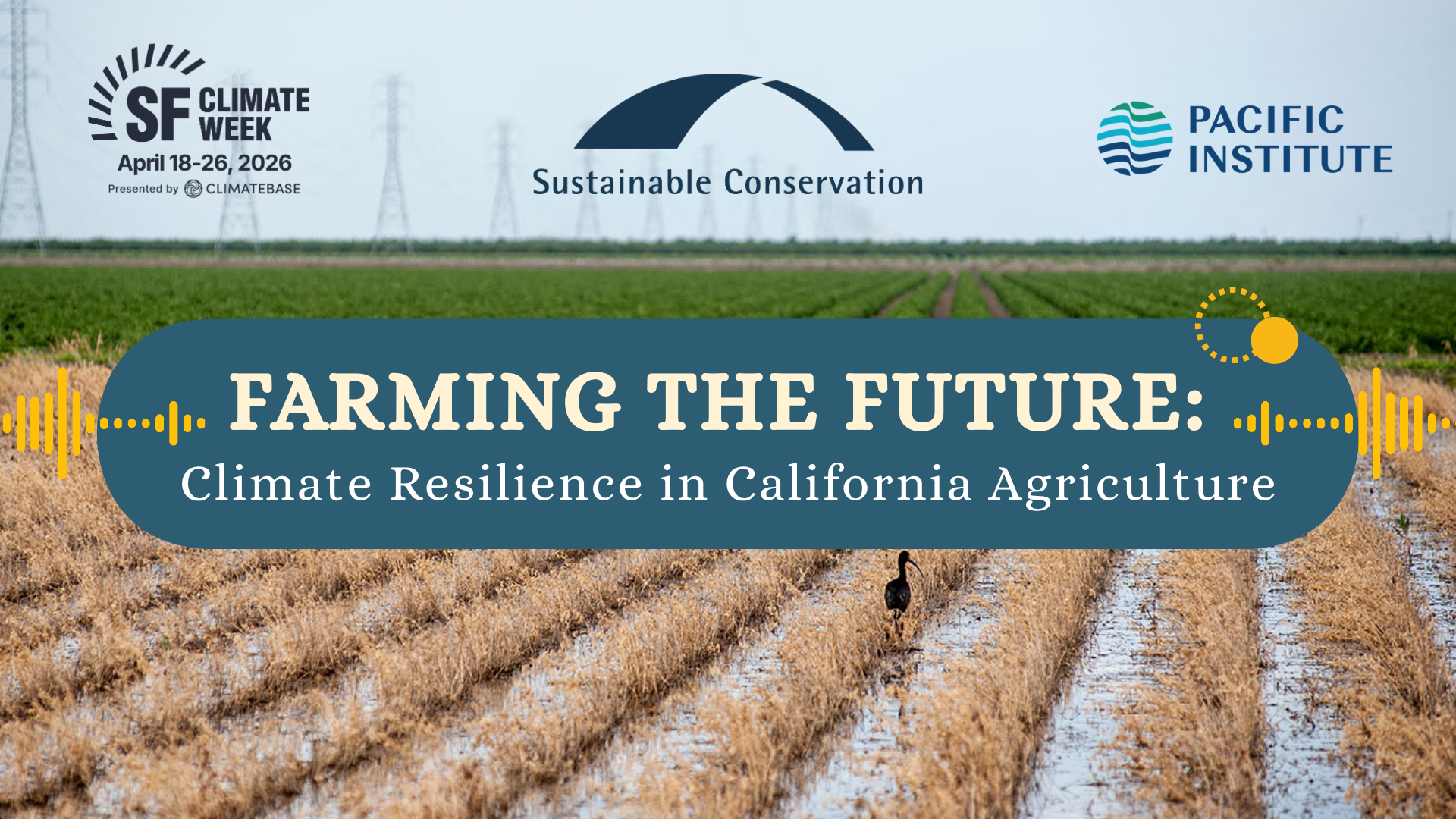
On April 21st, Sustainable Conservation and the Pacific Institute hosted Farming the Future, a panel and networking event through San Francisco Climate Week. Moderated by Sustainable Conservation CEO Dr. Josette Lewis, the panel featured Stuart Woolf (Woolf Farming Company), Cannon Michael (Bowles Farming Company), and Cora Snyder (Pacific Institute) in a candid conversation about what climate resilience looks like on the ground of California’s working lands.
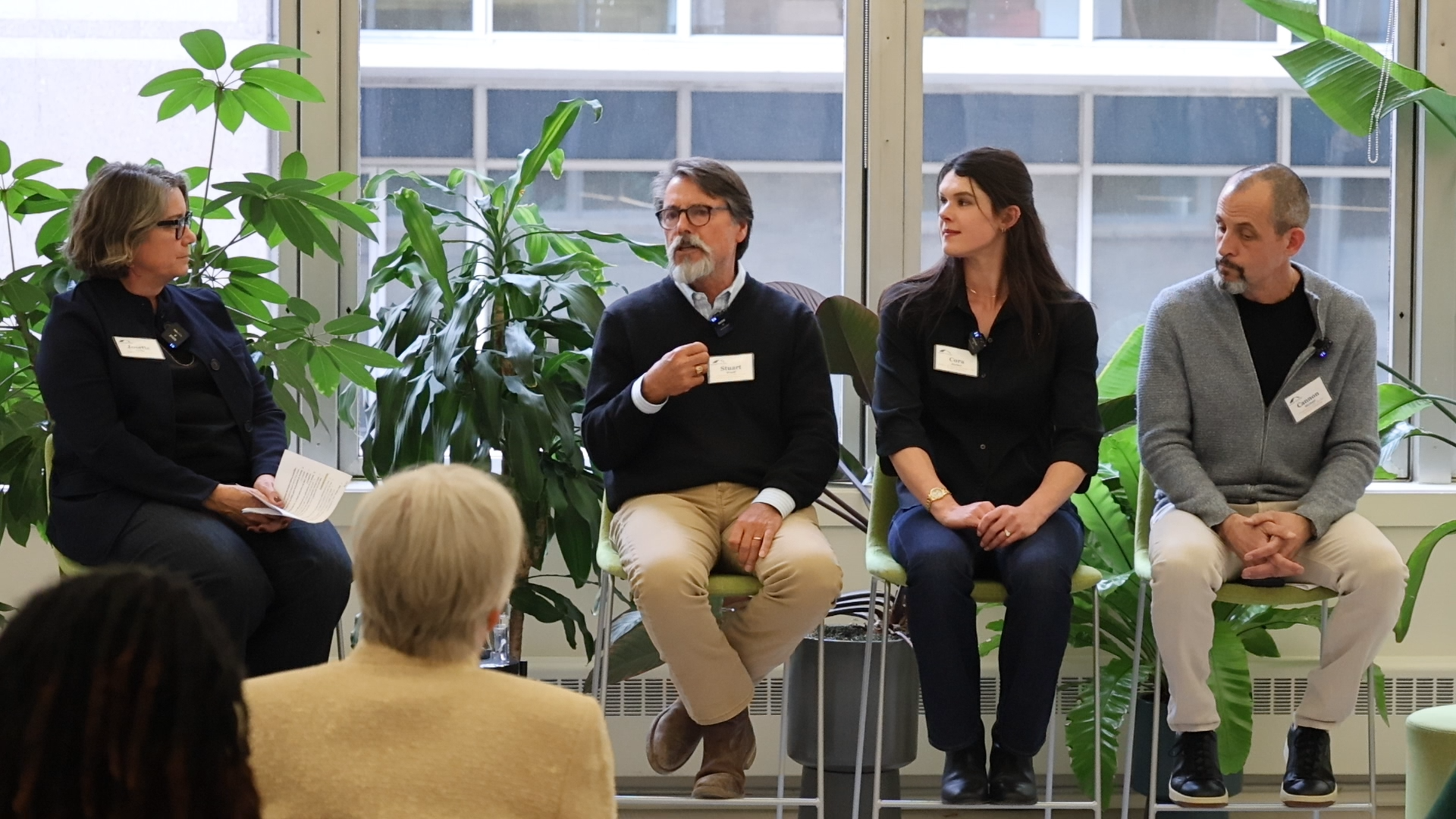
From left to right: Josette Lewis, Stuart Woolf, Cora Snyder, Cannon Michael
Cannon and Stuart shared the on-the-ground pressures growers like them are navigating, including shrinking groundwater allocations, rising costs, and changing product markets. From solar panel installation on fallowed land to groundwater recharge basins, winter vegetable rotations and even California agave spirits, the panel illustrated that adaptation looks different on every farm.
“I think we talk about like it’s agriculture, environment, it’s community, but in the Central Valley, these things are all woven together. They’re not separate, distinct things. They are part of the whole functioning and the holistic part of the Valley is really that fabric that isn’t one component, it’s all of them together.”— Cannon Michael
“Climate resiliency for me is figuring out — recognizing we’re not going to have maybe the water we would like to farm these very productive and diverse lands — what is an ongoing model of crops and land use or what have you that will allow me, our family, to pass this on to the next generation. It’s going to be in a different form, but I’d love to see them receive it and be able to continue to grow it.”— Stuart Woolf
Cora highlighted how corporations are stepping up with water replenishment commitments and co-funding irrigation modernization and land transition projects, showing the potential for public-private partnerships to advance agricultural resilience and resource conservation at-scale.
“Stuart mentioned SGMA, the Sustainable Groundwater Management Act. The reality of SGMA is that there is going to be major land use change across the state, particularly in the San Joaquin Valley. And the risk with this — there are many risks of this — but one, the dystopian future, is that we have a bunch of dry, fallow fields that don’t have water to irrigate their lands and they are causing dust pollution and they are not contributing to economic productivity. That is the future of SGMA that we don’t want to see.”— Cora Snyder
One through line that all panelists consistently touched on was that California agriculture can play an outsized role in realizing true climate resilience for the state, but only if farmers, corporations, communities, and policymakers collaborate to find and scale win-for-all solutions.
“If you think about the geography of California, I mean, we’re all very aware of how much public lands we have. I think about 50% of our state is public lands, but it’s really concentrated in the mountainous areas, whether it’s the coastal range or the Sierras. And if you look at the amount of conserved lands in the Central Valley, it’s very small. And so any kind of environmental goals, particularly around species that we have, monarch butterflies that transit over the Central Valley as part of their migration, kit foxes, certain bumblebees, there’s lots of species that that is their native habitat. You really can’t get conservation of those species unless you engage agriculture.”— Josette Lewis
If you missed the event or want to revisit the panel discussion, watch the full panel recording on our YouTube!
Thanks to our outstanding panelists as well as everyone who attended the event! Check out Sustainable Conservation’s events page to stay tuned for future webinars and in-person events.