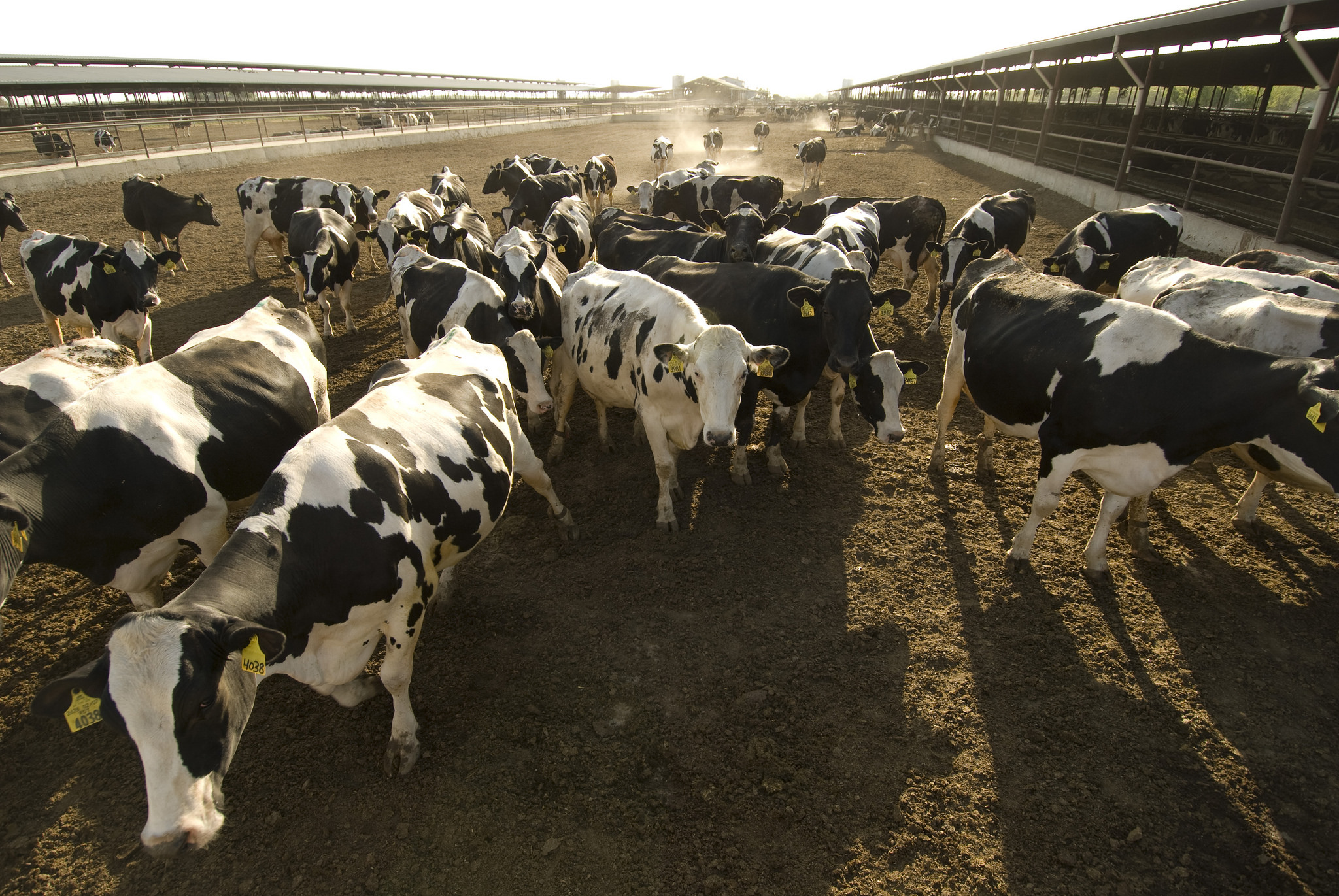
Nitrogen is the most consequential nutrient to manage on a California farm. Underapplication of nitrogen (N) could mean reduced yields, while overapplication risks contaminating local waterways and aquifers and cutting unnecessarily into growers’ bottom lines. Despite its importance, most fertility monitoring of fields relies on laboratory analysis. California dairies often store liquid manure in lagoons until it’s needed to fertilize forage crops. Lagoon samples are collected quarterly in the field, shipped off, and tested for total nitrogen, ammonium, and other key nitrogenous compounds. The process can be cost-prohibitive and too slow to accurately describe the changing nitrogen concentrations in liquid manure. The nitrogen content of a lagoon can vary significantly across seasons or between irrigation events, and outdated data may mean that farmers and their advisers make nutrient management decisions based on a test result that no longer reflects the manure being applied to fields.
But what if there were a way to estimate manure nitrogen levels instantly and affordably? That’s the question at the heart of new research co-led by Sustainable Conservation that looked at whether electrical conductivity (EC) could serve as a potential proxy measurement for N concentrations in liquid manure. Drawing on three years of data from three California dairies, the research found a strong positive correlation between EC and key nitrogen forms (e.g., ammonium, Total Kjeldahl Nitrogen (TKN)) in liquid dairy manure, suggesting that this measurement could give dairy producers a real-time estimate of their nitrogen application. Recent innovations in standalone EC sensors could further increase the accessibility and affordability of measuring lagoon EC. With further validation, EC as a proxy measurement could potentially make nutrient management more precise, responsive, and affordable for operations of all sizes.
Using Existing In-Field Equipment
In 2014, Sustainable Conservation teamed up with Netafim USA and a dairy farm to prototype a Manure Subsurface Drip Irrigation (MSDI) system that blends manure nutrients with water to more precisely irrigate and fertilize dairy feed crops. Each year, these systems irrigate 6,400 acres of feed crops in California, cutting applied water by 3.6 billion gallons, avoiding 9,600 metric tons of CO2 equivalents, and preventing 4 million pounds of nitrogen loading.
Importantly, the MSDI system has a built-in EC sensor to dynamically adjust the concentration of salts, including nutrients, in the blend that is applied to feed crops. Because EC is continuously measured as manure is blended with fresh water for irrigation, the team wondered whether that same signal could tell growers something about the nitrogen being applied to the field. In 2022, Dairy Management Inc. (DMI) partnered with Sustainable Conservation to explore ways to help dairy producers improve N management through irrigation, and the research around the relationship between EC and nitrogen grew out of this partnership.
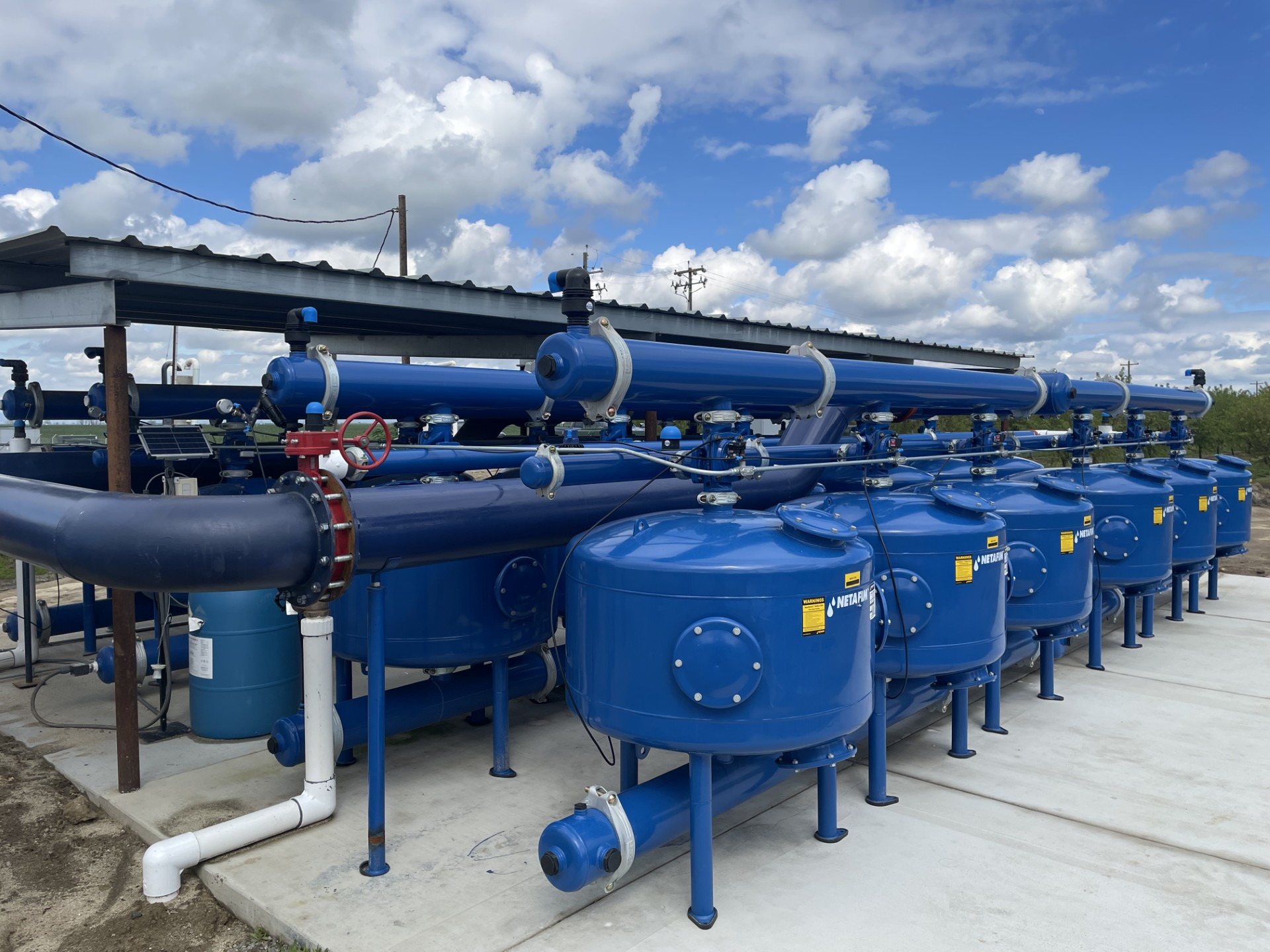
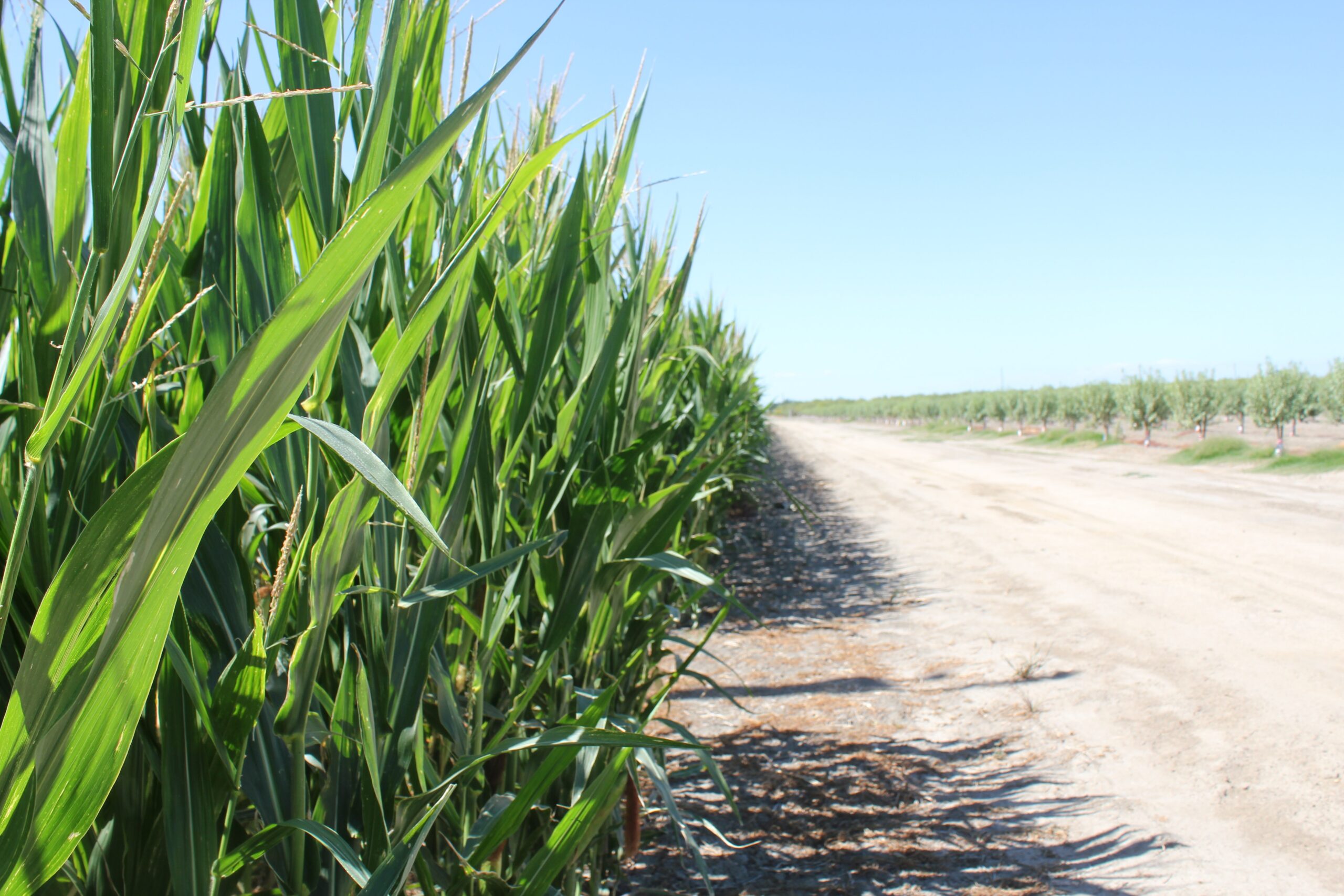
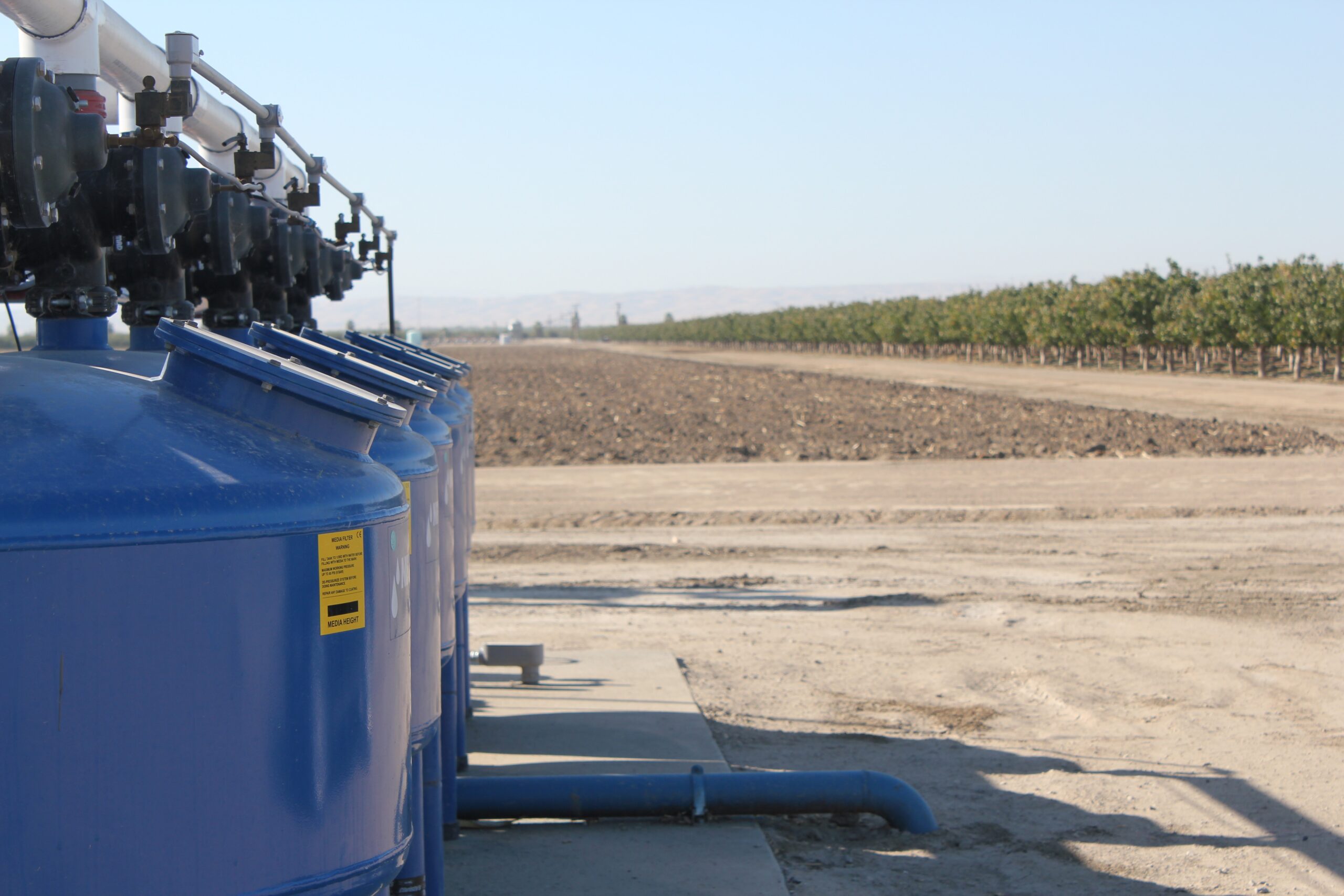
Photos of the MSDI system and silage corn grown with the system
What the Science Could Lead To
Across three California dairies and more than 90 samples, EC measurements closely tracked total nitrogen, ammonium, and estimated plant-available nitrogen concentrations in blended lagoon water. The relationship was strong across farms and different manure management conditions, suggesting EC could provide a useful estimate of nitrogen even as manure composition and dairy characteristics change. Understanding this relationship could enable the use of local dairy manure as an alternative to synthetic fertilizer. Having real-time information about that nitrogen could help dairies make better use of a resource they already have while reducing the risk of applying more nitrogen than crops can use.
Sustainable Conservation is proud to be advancing this work alongside partners across California’s dairy research community. Nathan Sparrow of DMI — the national dairy checkoff organization — and Sustainable Conservation’s John Cardoza and Dr. Emily Waring conducted the analysis for an article recently published in Crops & Soils. Our findings corroborate the results of a University of California Agriculture and Natural Resources (UC ANR) study in which a handheld EC sensor was confirmed as a useful proxy for lagoon water nitrogen (TKN and ammonium-N). The work also builds on the expertise of folks from UC Davis, Dairy Cares, and the California Dairy Research Foundation, and was supported by the USDA Natural Resources Conservation Service’s Conservation Innovation Grants program.
The team is excited by the initial results of this research and is looking forward to seeing how this practical indicator could empower growers with real-time data to confidently put dairy manure nitrogen to beneficial use, while helping protect the groundwater and waterways that California communities depend on.