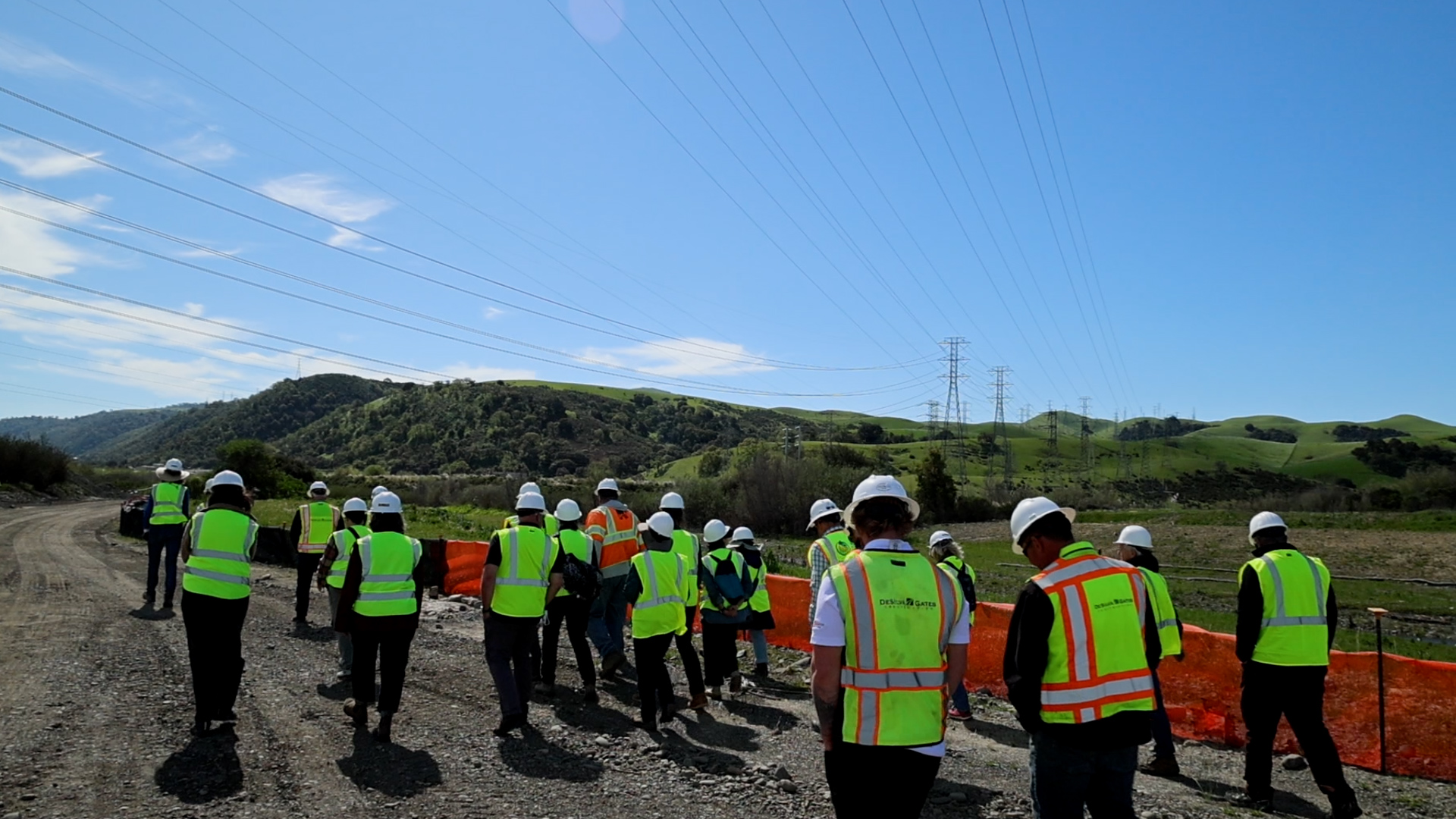
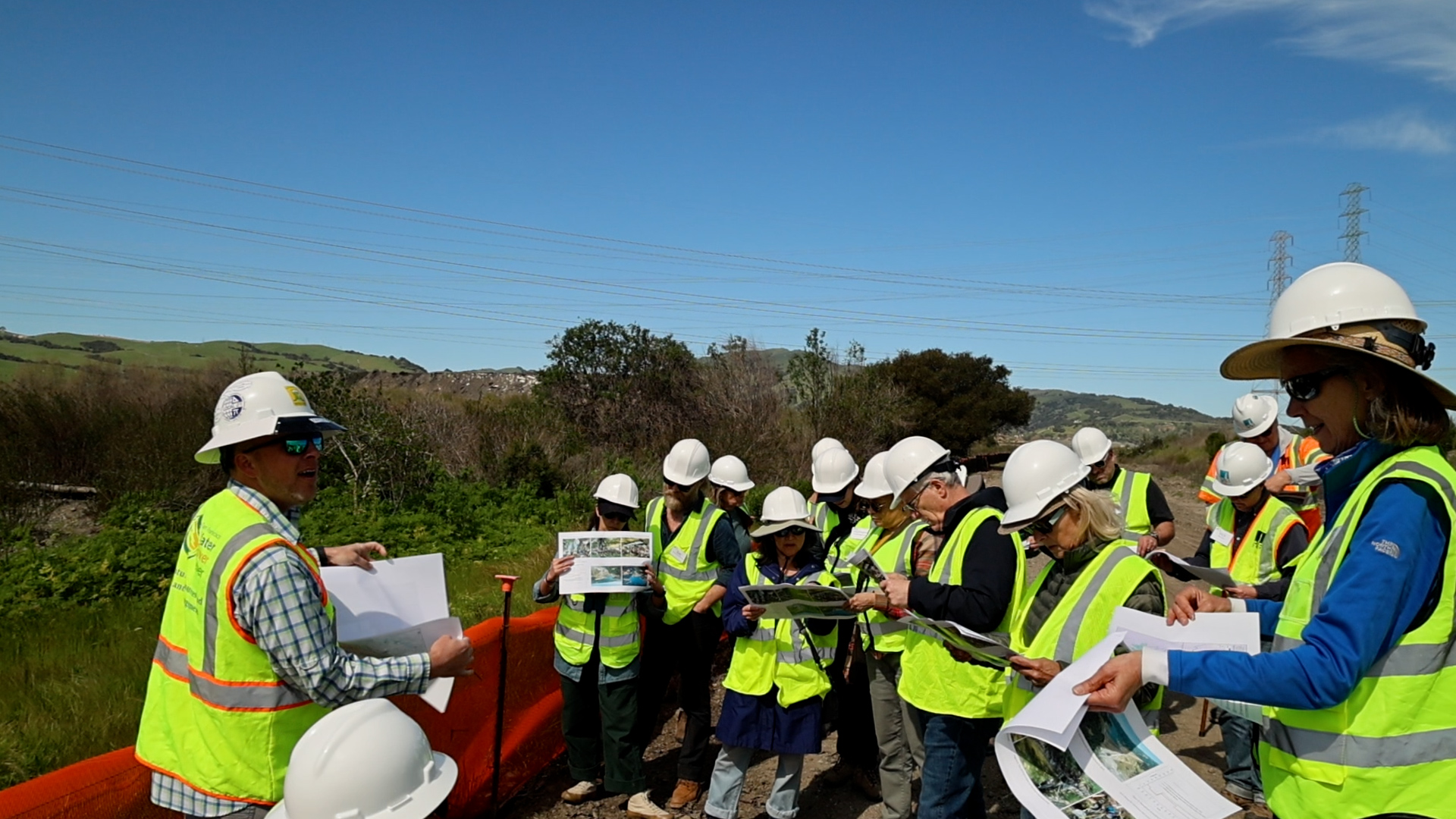
On March 6th, Sustainable Conservation community members gathered to tour the recently completed Sunol Valley Fish Passage restoration project on Alameda Creek, and to witness the positive impact of simplifying California’s permitting processes to implement restoration projects faster, more affordably, and at scale. The project, led by CalTrout and PG&E, successfully connected over 20 miles of habitat for native fish such as Chinook salmon, steelhead trout, and Pacific lamprey on the largest local tributary to the San Francisco Bay.
The day was hosted by DeSilva Gates Aggregates in Sunol, whose active quarry site the group passed through to access and view the restoration site. San Francisco Public Utilities Commission, Applied River Sciences, Hanford ARC, Alameda Creek Alliance, Sequoia Ecological Consulting, Stantec Consulting Services, and Martin Marietta Materials were other key partners that helped the project across the finish line.
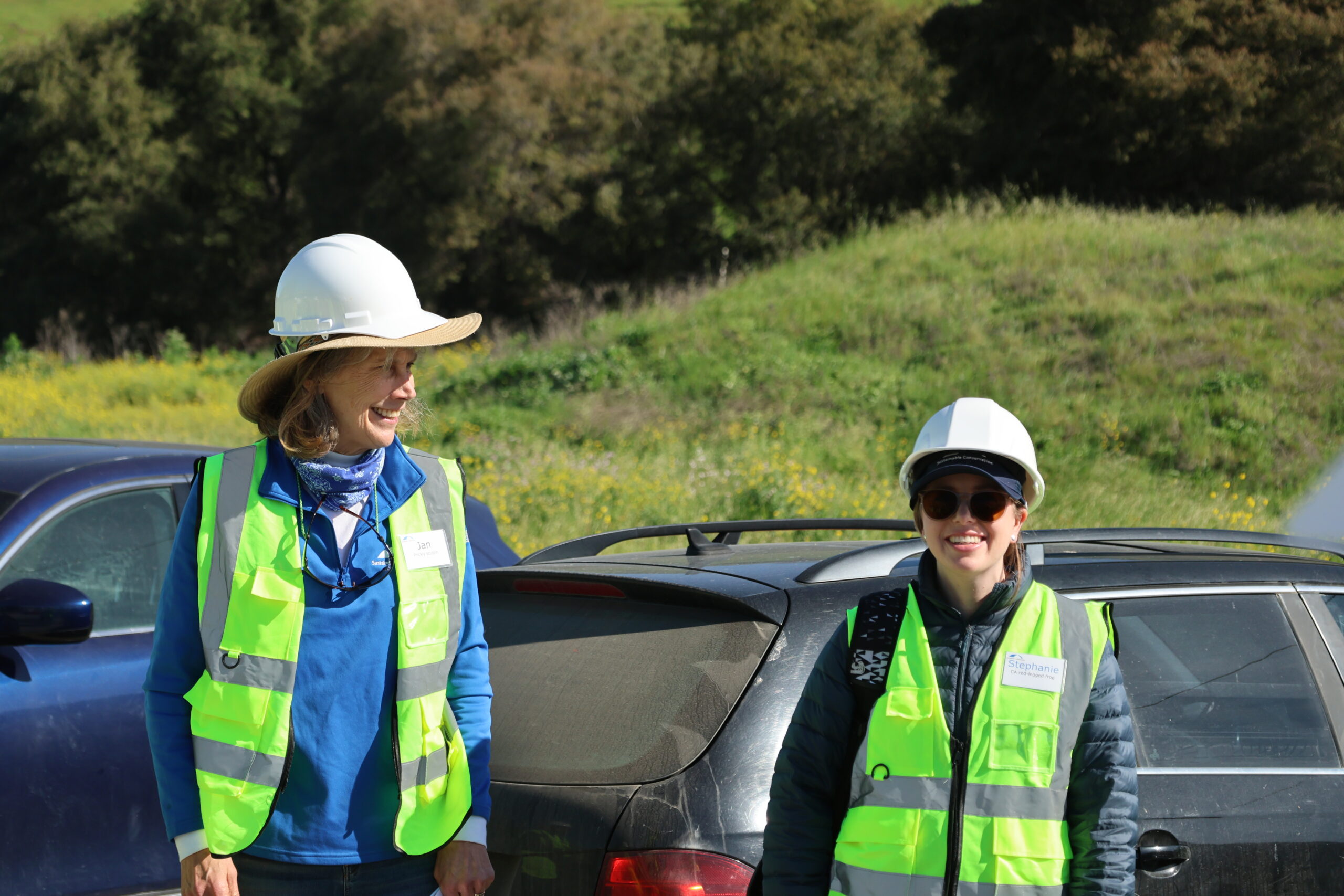
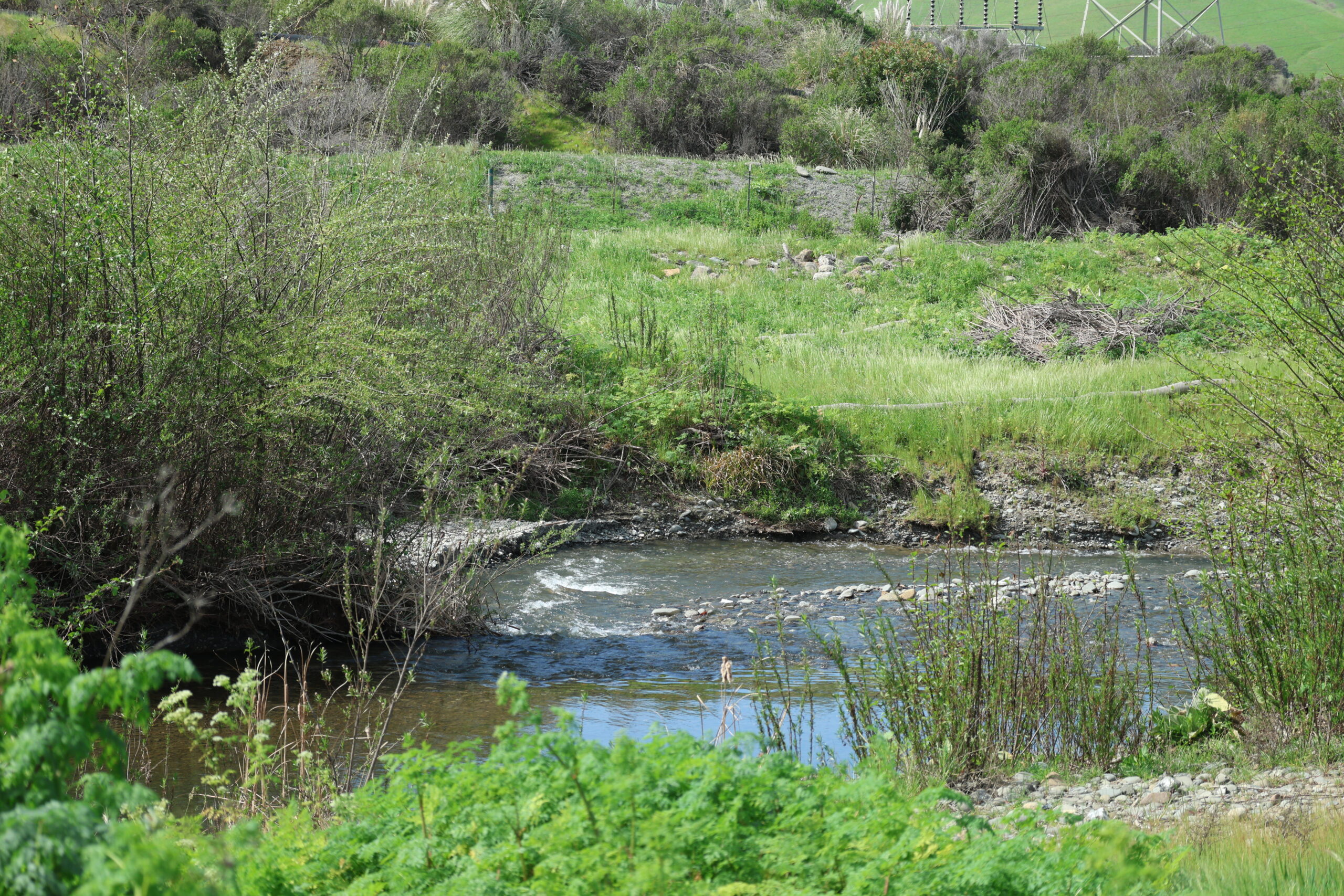
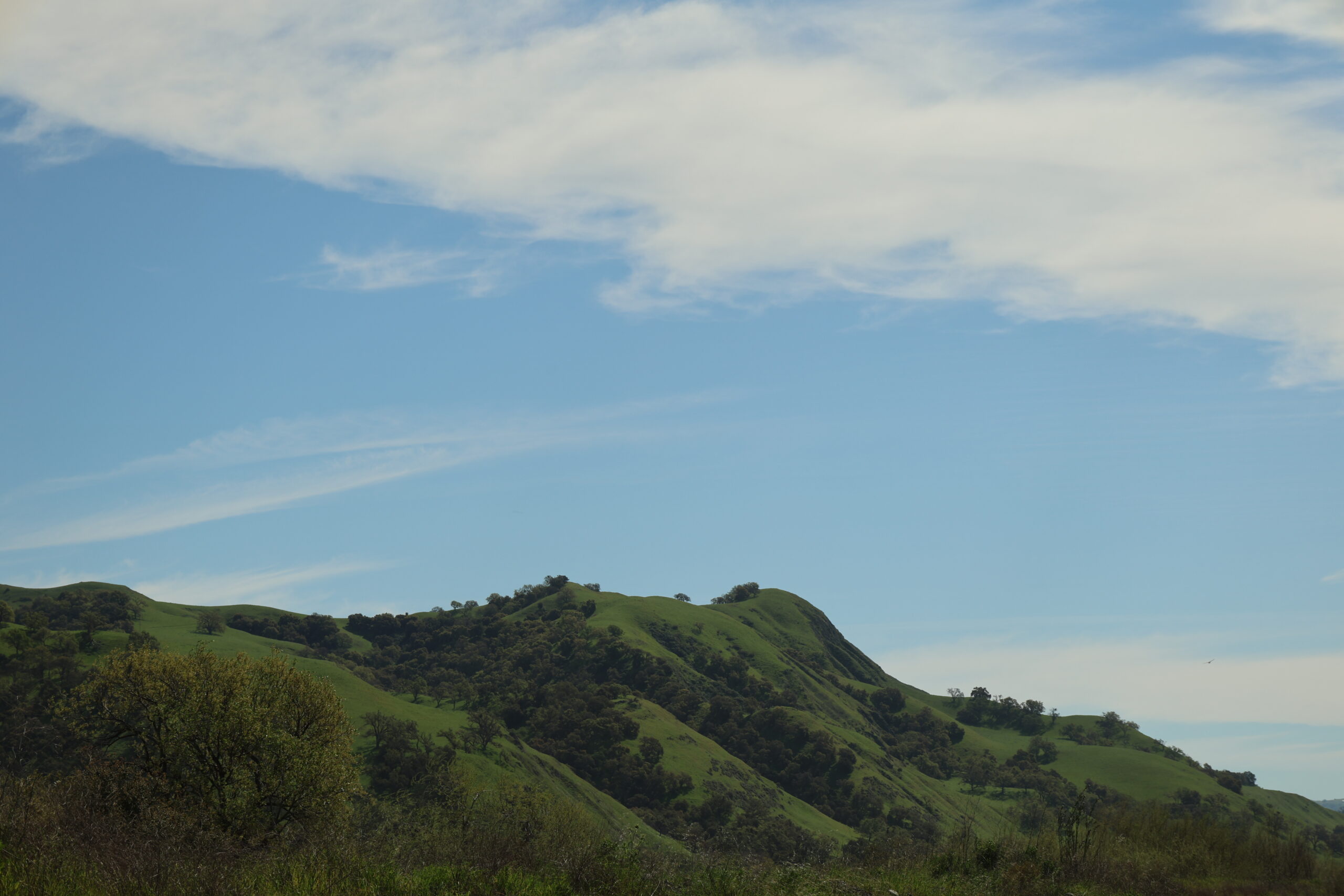
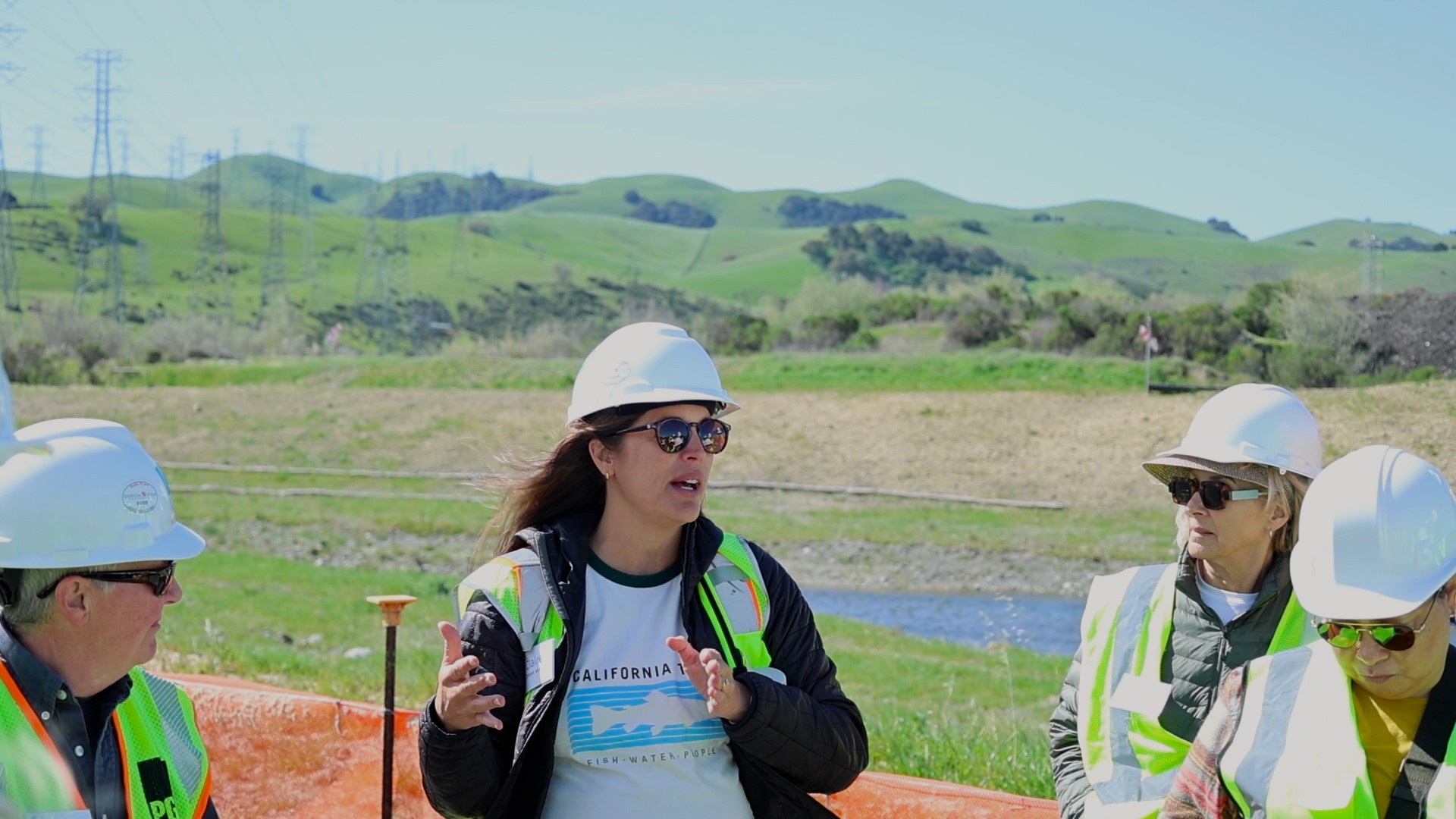
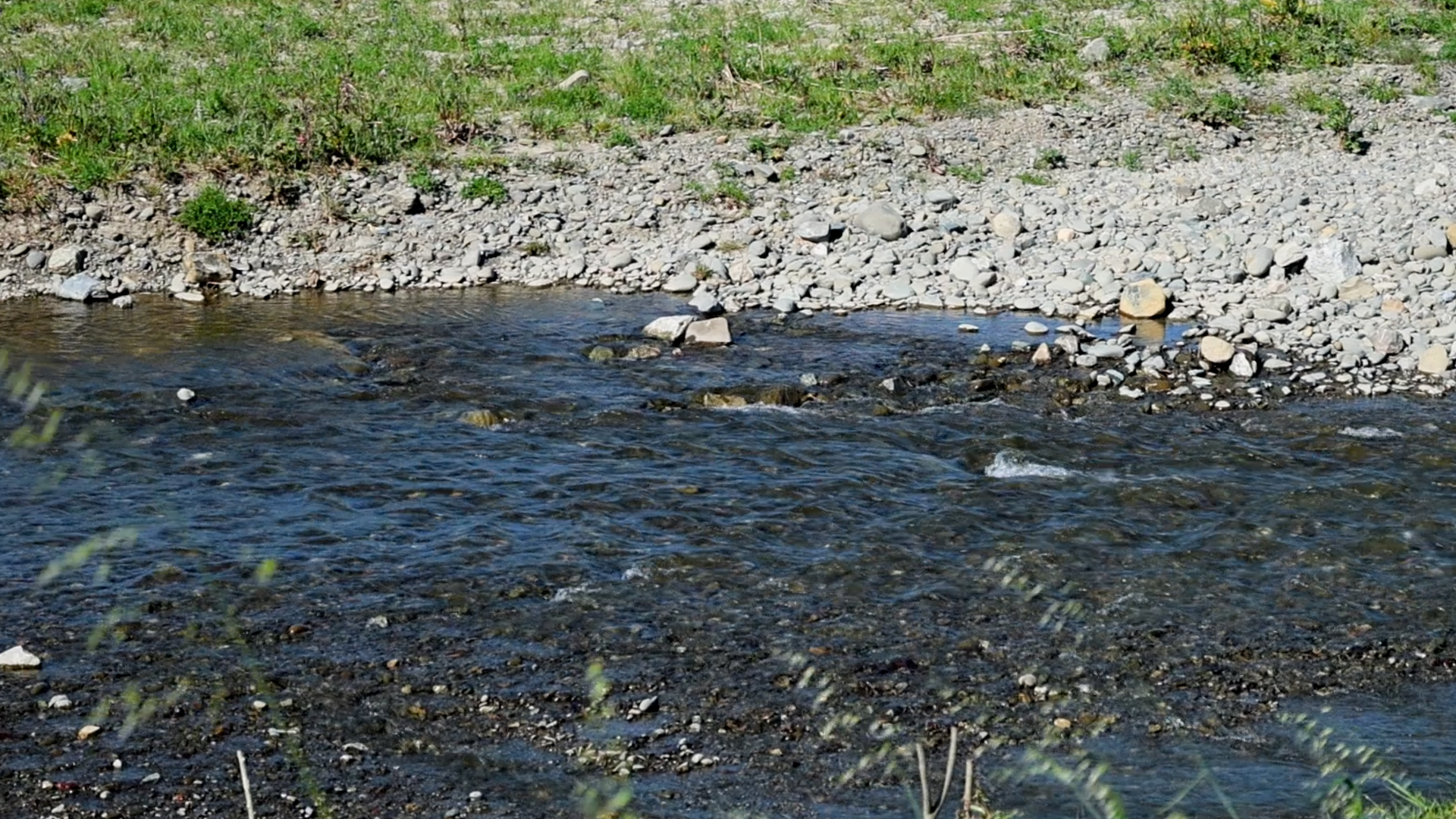
Top: Sustainable Conservation Senior Project Manager Stephanie Falzone speaking to the group about accelerated restoration-specific permitting; Bottom left: A restored section of Alameda Creek, Bottom right: Hills near the project site
Reconnecting Historic Habitat
The Alameda Creek watershed covers an area of nearly 700 square miles and is populated by over 200,000 people. For decades, migrating fish in Alameda Creek were blocked by a gas pipeline and concrete barrier that crossed the creek in Sunol Valley. Although high flows during wet winters occasionally allowed fish to pass, the structure prevented reliable migration for most of the year. By relocating the pipeline approximately 100 feet downstream and burying it 20 feet beneath the creek bed, fish, regardless of species or season, can now move freely upstream for the first time in generations.
Standing along the restored reach of Alameda Creek, CalTrout’s Regional Director Claire Buchanan and Senior Scientist Patrick Samuel walked the group through the creek’s history and its importance to migratory fish, sustainable industry, and communities.
“It’s a particularly hard-working watershed,” Samuel said.
Through decades of advocacy and restoration work, partners in the Alameda Creek Fisheries Restoration Workgroup have gradually removed or modified barriers across the watershed. The Sunol Valley project addressed the final major obstacle along the mainstem creek.
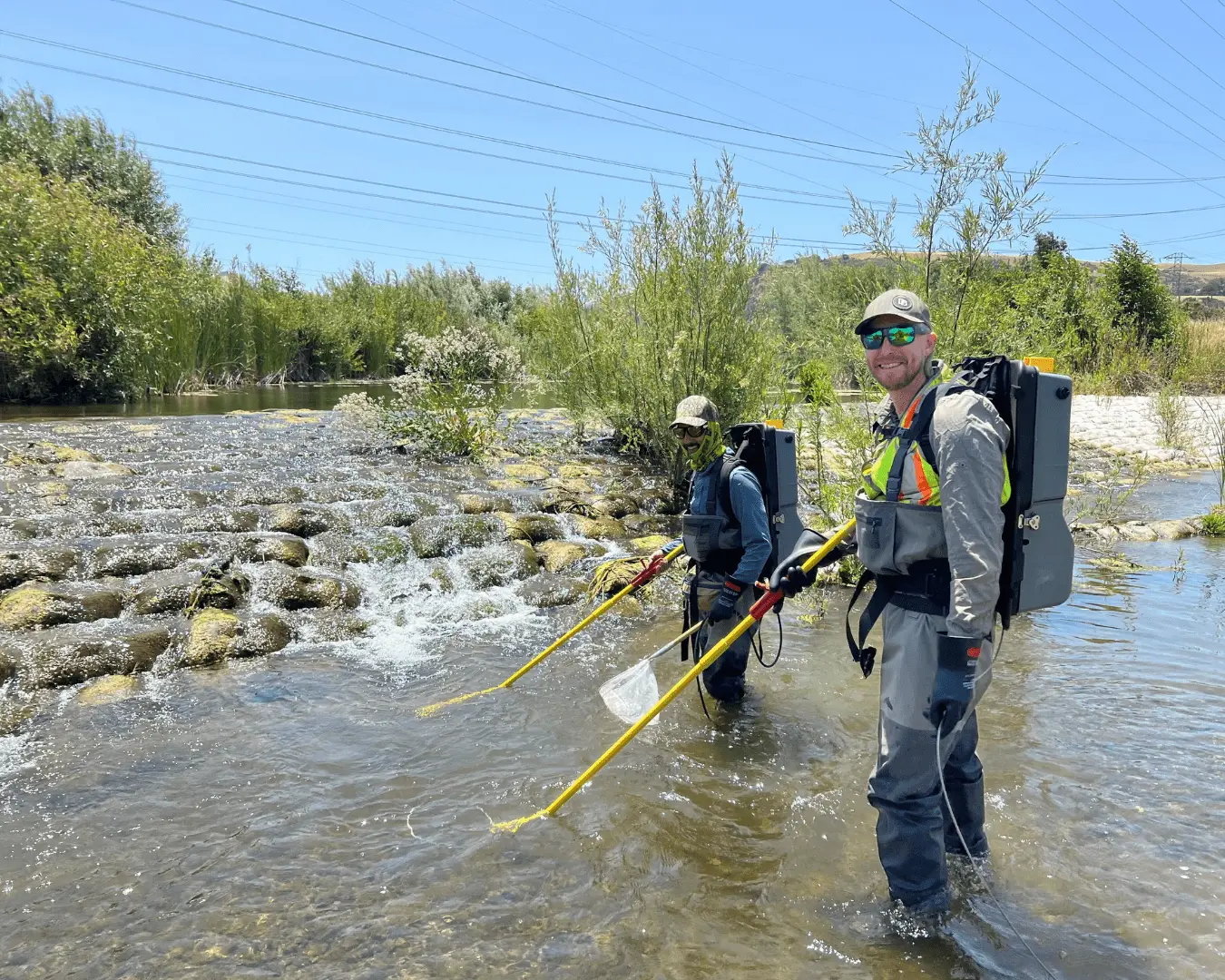
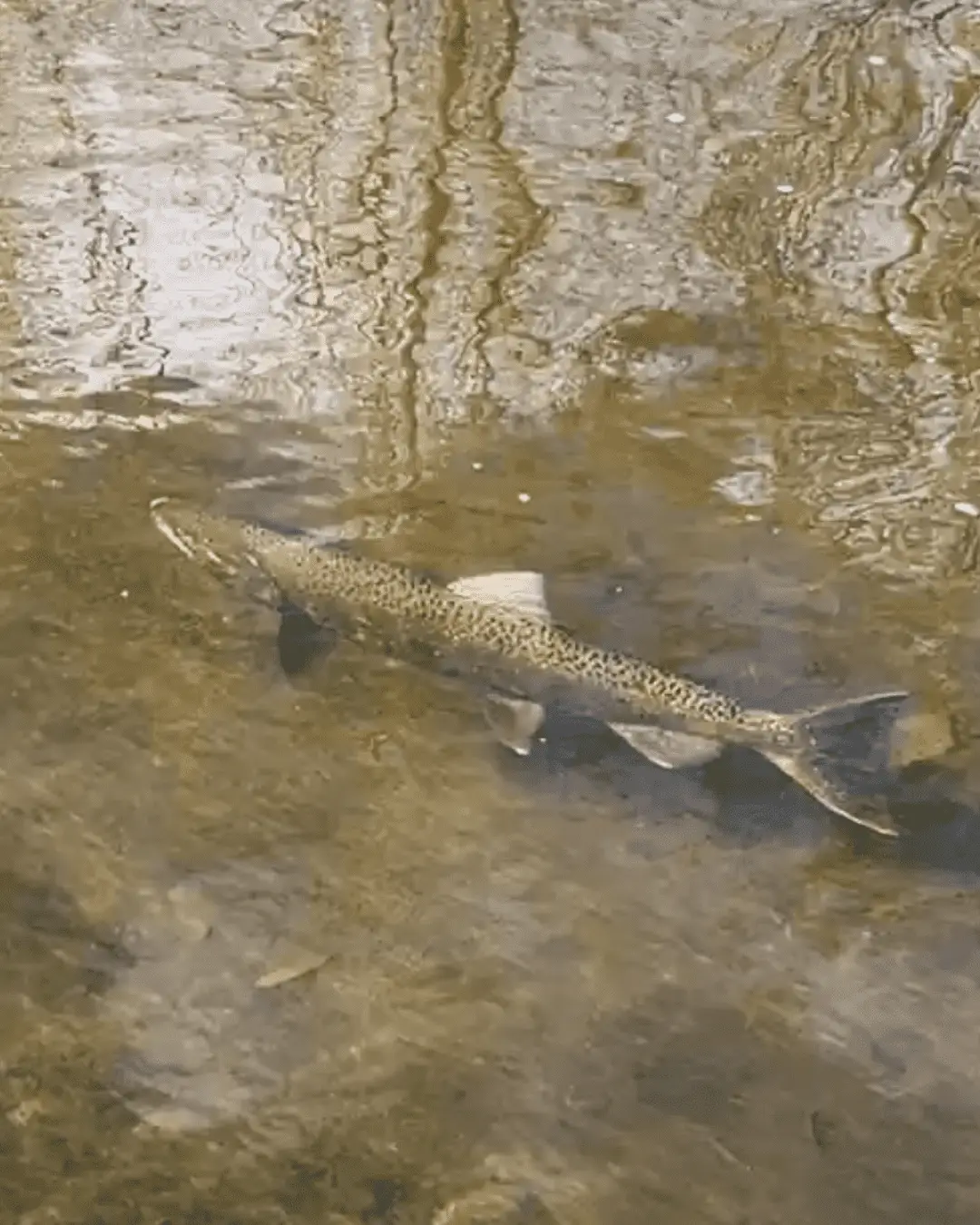
Left: Fish relocation efforts when construction kicked off in June 2025. The concrete barrier that was removed can be seen upstream; Right: Chinook salmon spotted in the upper Alameda Creek watershed. Both photos courtesy of CalTrout
Already, Chinook salmon have been documented upstream of the former barrier for the first time since the 1950s, an incredibly encouraging sign that the ecosystem is beginning to reconnect. The restored reach of Alameda Creek will increase the stream’s ability to flush sediment, woody debris, and nutrients downstream to support a more dynamic and resilient river system.
Following the pipeline relocation, the project team reshaped the creek channel and revegetated the area with native plants to stabilize banks and restore natural stream processes. The corridors along the creek provide habitat for protected native species like the California tiger salamander, Alameda whipsnake, and foothill yellow-legged frog in addition to other native insects and birds. A fence lining a buffered area along the creek has built-in tunnels that allow reptiles and animals entrance into the habitat and a folded top to keep snakes inside.
Field Trip Video Recap
New Permitting Possibilities
For over 20 years, Sustainable Conservation’s Accelerating Restoration team has worked with government agencies and restorationists like CalTrout and its partners to increase the pace and scale of ecological restoration. By developing expedited permitting tools, the program works to put habitat restoration on a more efficient regulatory path separate from traditional development — while maintaining essential environmental regulations.
The Sunol Valley Fish Passage Project is an exemplary proof point for the value of simplified permitting pathways designed specifically for restoration projects.
We were able to use six expedited permitting pathways that saved our team both time and money. One of the pathways was new to our partners, and CDFW’s Cutting Green Tape team was extraordinarily helpful in guiding us through the process. Claire Buchanan, CalTrout Central California Regional Director
Restoration-Specific CEQA and Permitting Pathways used in the Sunol Valley Fish Passage Project:
*Sustainable Conservation provided technical assistance on the development of this or an earlier version of this authorization.
Learn more about the Sunol Valley Fish Passage Project on the California Natural Resources Agency’s Recent Webinar!
Sustainable Conservation is proud to connect our donor community with the restoration efforts their generosity makes possible, as well as celebrating restoration professionals and members of the business community for making these transformational projects happen. Stay connected with us for future opportunities to visit project sites and see how strategic partnerships and smart permitting are helping restore California’s vital ecosystems.