Like many Californians, I have a deeply intimate, yet fragile relationship with water. I learned years ago that the difference between a year of drought and a year of abundance is only one or two good winter storms. The world-famous recreational opportunities our state boasts are often dependent on favorable climate conditions and specific precipitation patterns. Those of us who live in or near California’s agricultural regions see how entire communities (and arguably the whole country) depend on reliable water for their economies and subsistence.
We celebrated Water New Year on October 1st, 2025, and since then the state has seen what can best be described as a herky-jerky first half of the rainy season. Several consecutive storms in November, then again in December-January, eliminated all drought conditions in California for the first time in 25 years, but led to severe flooding in Marin County, Santa Barbara, and other low-lying areas. Reservoirs are nearly all above their usual waterlines. Yet there wasn’t a storm in the state for four weeks in January and snowpack levels are lagging far behind.
The complicated tapestry of this year’s water reality, along with the collective trauma of recent droughts and floods, makes it hard to know where to find or how to celebrate “good” news in the world of California water. But during my tenure as Vice President and Chief Scientific Officer at the Almond Board of California, and since I came on board as Sustainable Conservation’s CEO at the start of 2026, I’ve seen that a roadmap toward climate resilience and water security is not only possible, but already taking shape.
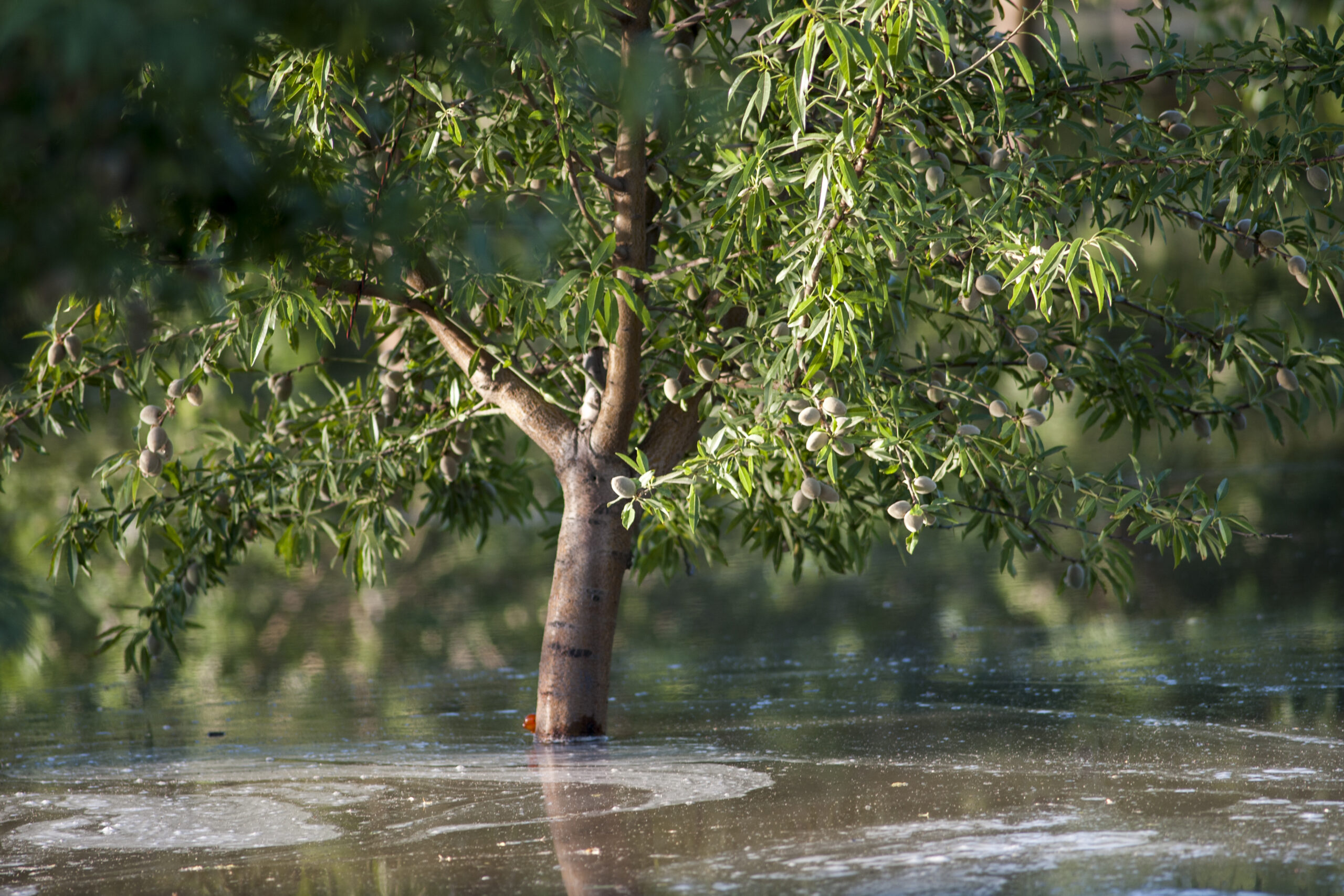
For example, the risks taken by farmers, water managers, and state agencies to test and scale on-farm recharge have been validated by the Public Policy Institute of California’s findings that on-farm recharge volumes nearly doubled between 2017 and 2023. That’s an incredible amount of progress in such a short time frame.
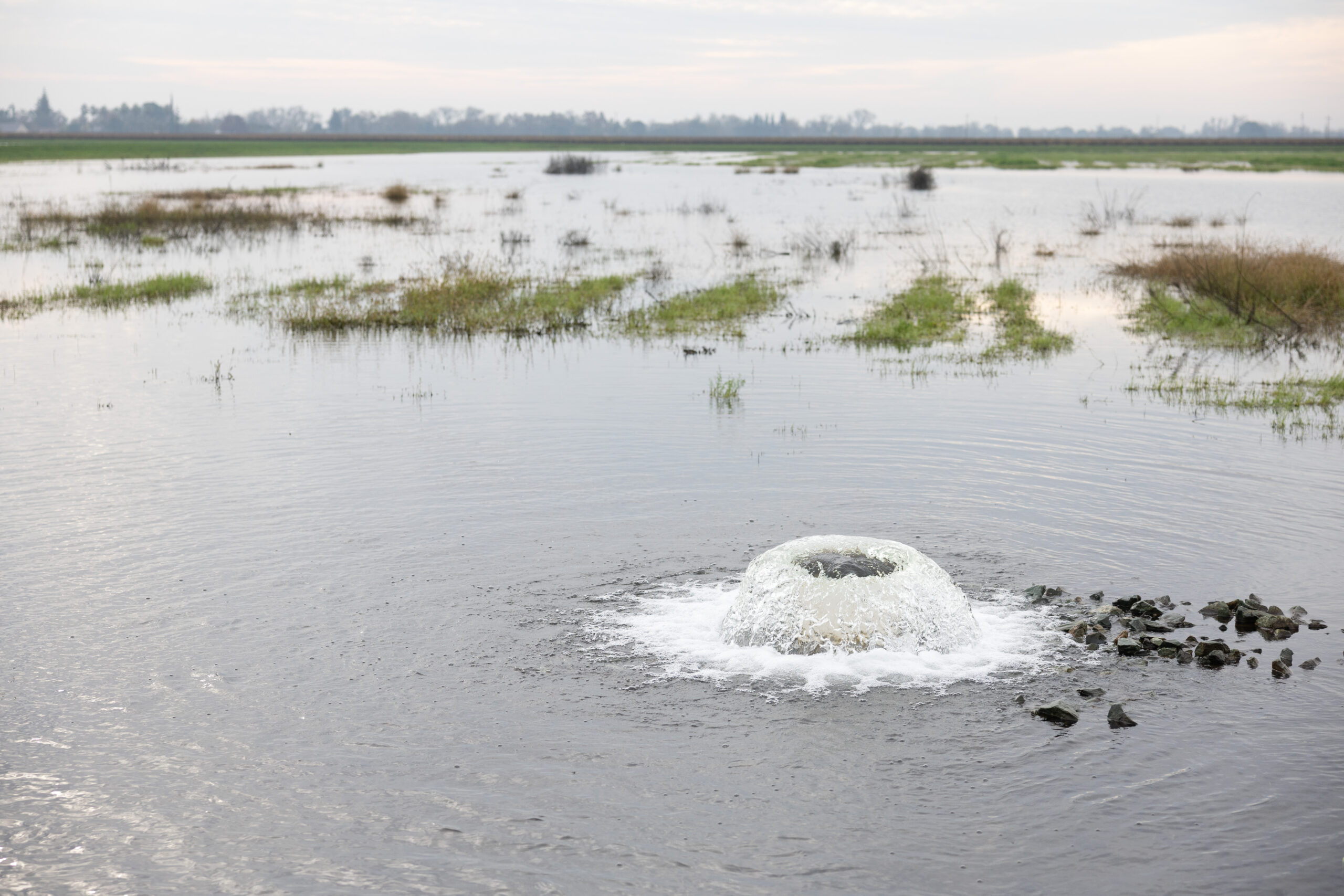
Left: A multibenefit recharge basin in San Joaquin County (Andrew Nixon / Department of Water Resources), Right: On-farm recharge on an almond orchard (Paolo Vescia)
There is no miracle prescription that will solve all of California’s climate and natural resource challenges, but a combination of science-backed solutions that can be feasibly scaled across the state is what gives me hope right now.
In this spirit of hope, I wrote down a few of my early takeaways from listening, learning, and diving into Sustainable Conservation’s work with our staff, partners, and communities.
Our work is hard and complex. But we make it simpler by listening intently.
From a bird’s-eye view, testing and implementing sustainable resource solutions can feel risky and fraught. By working together on the ground, we share that risk and it’s not as scary. When our projects are grounded in local context and community priorities, they move faster, last longer, and deliver the most equitable co-benefits.
Progress is rarely liner, but all progress is meaningful.
Resilience is built through iteration, learning, and lots (I mean lots) of persistence. Setbacks are not indicative of failure. They are part of the work. Our theory of change recognizes incremental progress and course corrections as valuable lessons and necessary steps to landscape-scale progress, helping us embrace small wins, big breakthroughs, and inevitable setbacks alike.
Truly sustainable solutions are intersectional.
Hard problems require complex solutions. The most effective and durable solutions embrace the intersections of people, place, nature, policy, and business. In particular, projects that have multibenefit outcomes have the potential to bring Sustainable Conservation’s programs together and thrive at these intersections.
The best time to prepare for extremes is between them.
Planning, piloting, and especially trust-building between droughts, floods, and storms allows California to respond with intention rather than haste when the next extreme inevitably arrives. The time invested in listening, coordinating, and showing up consistently pays dividends when challenges arise and decisions need to be made quickly.
Now, let’s get to work! I’m excited to continue learning from our staff, partners, and communities to help make California a little bit better each day.
With gratitude,
Dr. Josette Lewis