On January 29, 2026, the California Natural Resources Agency (CNRA) hosted California’s first Nature-Based Solutions Summit, bringing together a diverse group of leaders to share experiences, offer insights, and discuss next steps.
Throughout the day, a consistent message emerged. Nature-based solutions are not a side dish; they are the full meal. They are investments in public safety, economic resilience, workforce development, and cultural restoration. Scaling them will require sustained funding, efficient processes, and collaboration across agencies, communities, and the private sector.
But the true worth of nature-based solutions isn’t measured in conference rooms. A month before guests arrived at the Summit, neighbors in the Bay Area experienced these strategies in action.
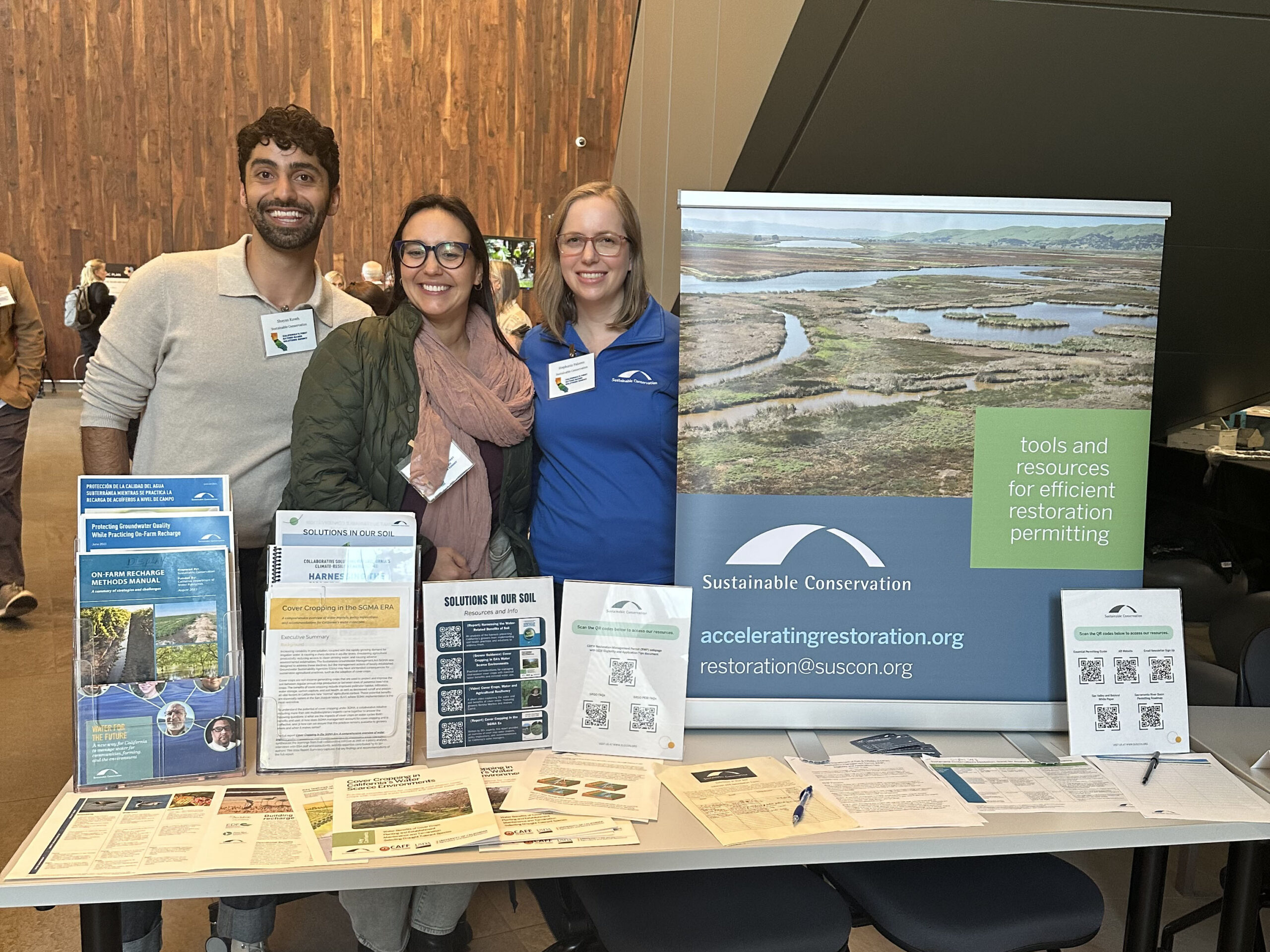
Sustainable Conservation staff tabling
What Are Nature-Based Solutions?
Weeks earlier, a recently built nature-based solution buckled up for its first big test as storms and rising tides swept across the Bay Area.
In late December and early January, near-record king tides and torrential rains flooded parts of five Bay Area counties. Flash floods filled the streets, leading to inundated highways, vehicles swept down roads, and curious kayakers cruising down roadways that normally carry commuters.
Meanwhile, in Palo Alto, the city’s recently constructed horizontal levee pilot project was put to the test—and passed.
As tides surged along the shores of Harbor Marsh in the Palo Alto Baylands, the levee’s gentle slope, layered with native shrubs and plants, protected the shoreline from flooding. Built to adapt to sea level rise while restoring native habitat, the plan is for the levee to be irrigated with treated wastewater from the Regional Water Quality Control Plant. In turn, the plants in the marsh further filter that water before it enters the Bay, improving water quality and buffering against storms.
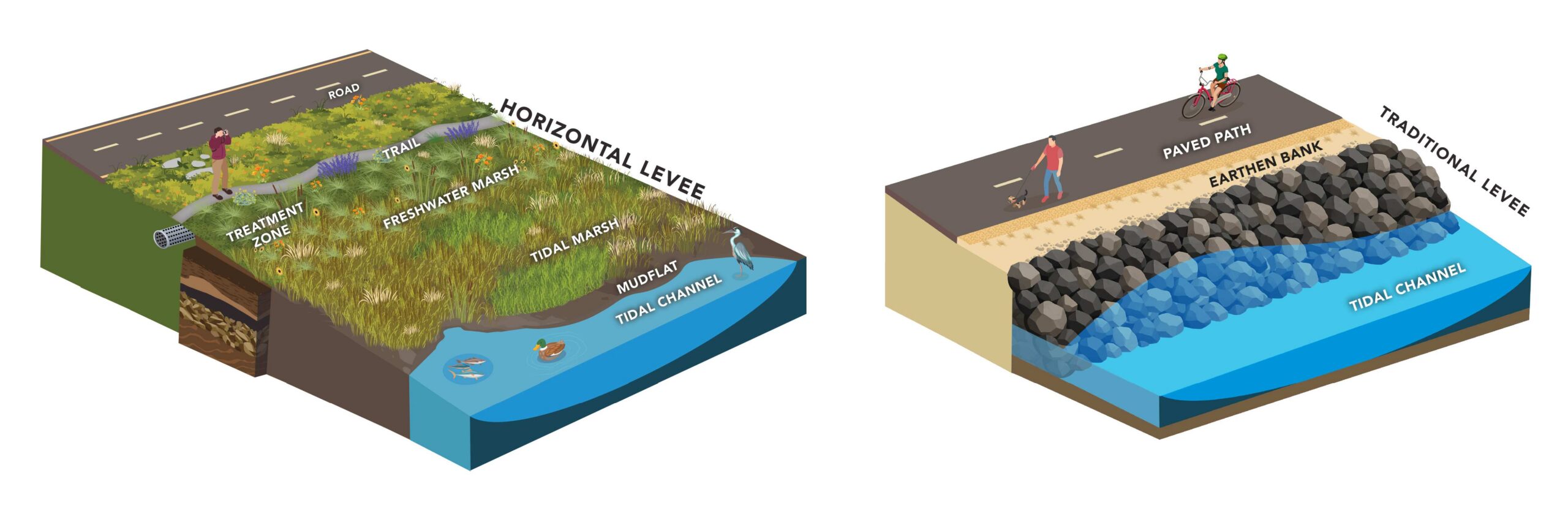
Graphic courtesy of City of Palo Alto.
Even the permitting of the project reflected California’s efforts to put restoration on an accelerated path. The project moved forward using a suite of restoration-specific pathways, demonstrating how policy reform can drive beneficial restoration for ecosystem health and public safety. Tools like the SC-sponsored U.S. Fish and Wildlife Service Statewide Restoration Programmatic Biological Opinion used for this pilot project are part of a broader effort to accelerate restoration across California. Learn more about these restoration-specific pathways on the Accelerating Restoration website.
This is what nature-based solutions look like in practice: infrastructure that works with natural systems rather than against them to protect communities and restore ecosystems. And nature-based solutions are not just ecosystem restoration. The Summit explored how this approach applies not only to wetlands and shorelines but also to soil health, flood risk reduction, and working lands across the state. Read here about the nature-based solutions, like improving soil conditions and groundwater quantity by growing winter cover crops, that the Solutions in our Soils team is implementing and scaling at Sustainable Conservation.
Watch the Nature-Based Solutions Summit here:
The Summit: How Do We Put Nature on the Balance Sheet
In a fireside conversation, California Secretary of Natural Resources Wade Crowfoot joined Dr. Jane Lubchenco (Oregon State University) and Dr. Heather Tallis (University of California, Santa Cruz) to discuss what it will take to integrate nature into decision-making at all levels.
As Lubchenco put it, “We need to put nature on the economic balance sheet of the country.”
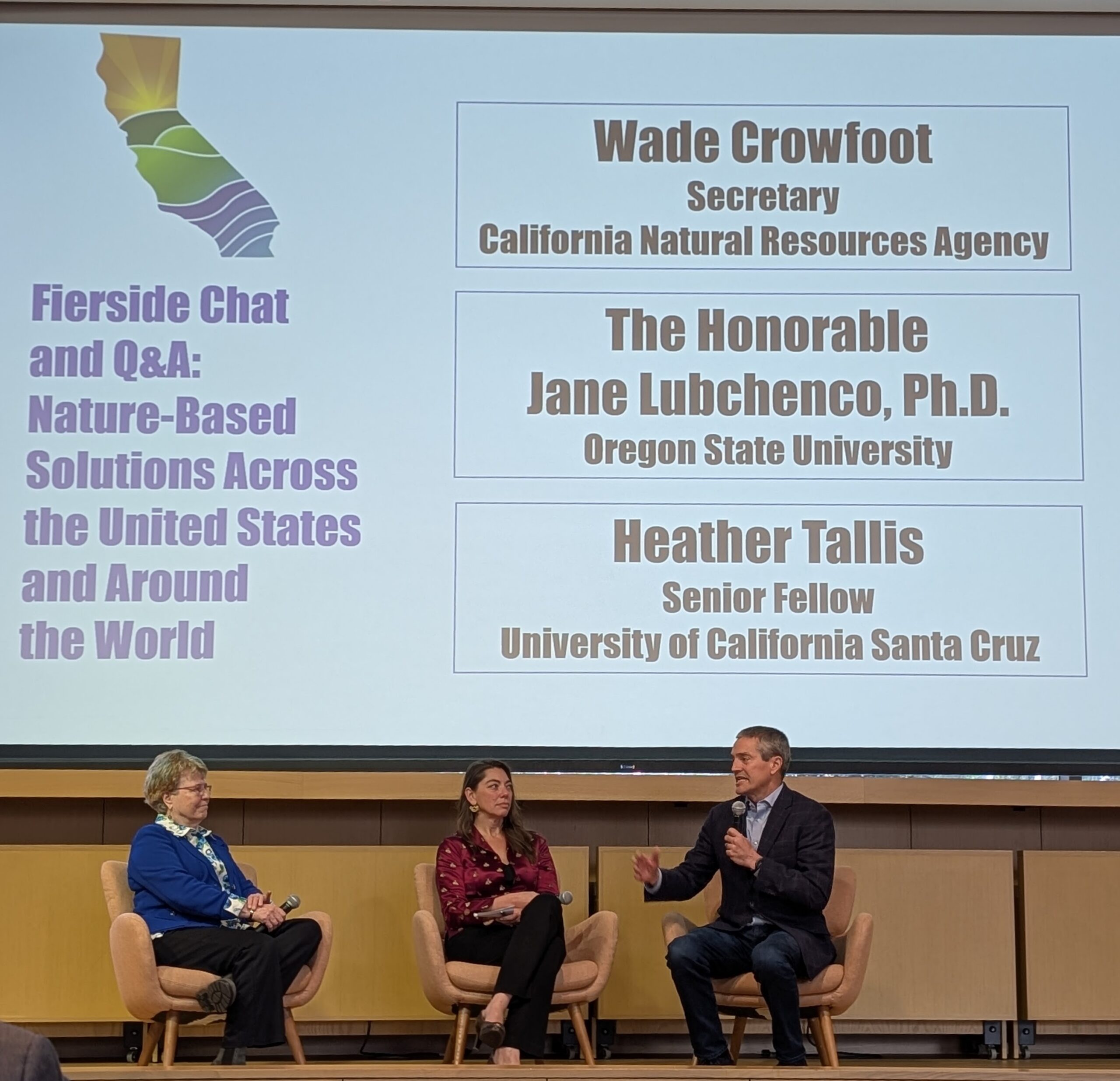
Lubchenco described how natural capital accounting can integrate land, water, oceans, and air into traditional economic indicators. This framing also connects nature to national security, recognizing that economic stability and public safety depend on healthy ecosystems.
Projects like the National Nature Assessment brought together 15 federal agencies to internalize the cost of environmental impacts from economic choices. The project produced a federal roadmap and updated guidance so that investments in resilience could fully account for nature’s value. Despite the federal government cancelling the assessment, entities like The Nature Record continue the work. The Nature Record is the first holistic assessment of U.S. lands, waters, and wildlife, and the benefits they provide. It will be released for public review later this year.
As Dr. Tallis noted, progress continues at different speeds globally. She observed there are “two parallel universes” globally: one attempting to undo decades of environmental progress, while the other invests heavily in nature, recognizing its economic and security value.
Here are some highlights of the many innovations and successes shared at the Summit.
Action on the ground
Policy architecture alone does not move soil or plant hedgerows. Scaling nature-based solutions requires people and partnerships. Here’s a rapid fire of some of the lessons from practitioners on-the-ground.
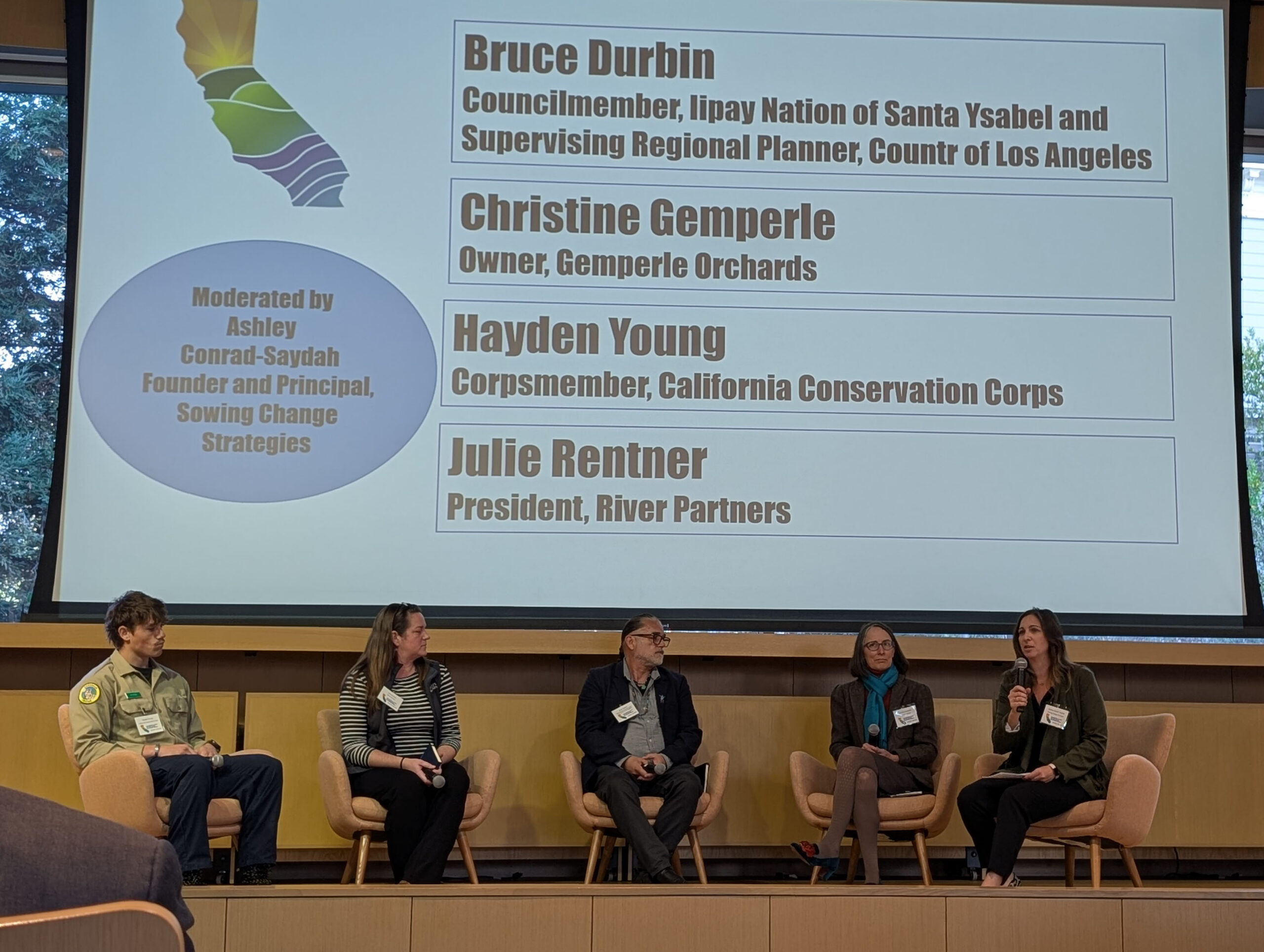
Julie Rentner, President of River Partners, highlighted an economic truth: restoring floodplains is far less expensive than building and rebuilding flood mitigation infrastructure after disasters. Restoration, she emphasized, creates jobs, revives habitat, and, in many cases, restores culture alongside land.
On working lands, Christine Gemperle described how hedgerows bring birds that manage pests naturally, how seasonal flooding can address gopher challenges, and how whole orchard recycling improves soil health. These are not abstract climate solutions; they are daily management decisions that reduce inputs, improve resilience, and support biodiversity.
For Bruce Durbin of the Iipay Nation of Santa Ysabel, restoration is also an act of sovereignty. In his language, the words for soil and soul are the same: maat. On land from which the Tribe was once forcibly removed, the Nation is re-indigenizing more than a thousand acres and building the governance and infrastructure needed to steward nearly 5,000 acres of sovereign territory. The work is ecological, cultural, and intergenerational.
Even schoolyards entered the conversation. A lightning talk from the Trust for Public Land highlighted green schoolyards, replacing asphalt with trees, shade, and permeable surfaces. By greening schoolyards, they become spaces that reduce heat, manage stormwater, and create healthier environments for children.
In this frame, nature-based solutions can begin not just in wetlands or forests, but in neighborhoods.
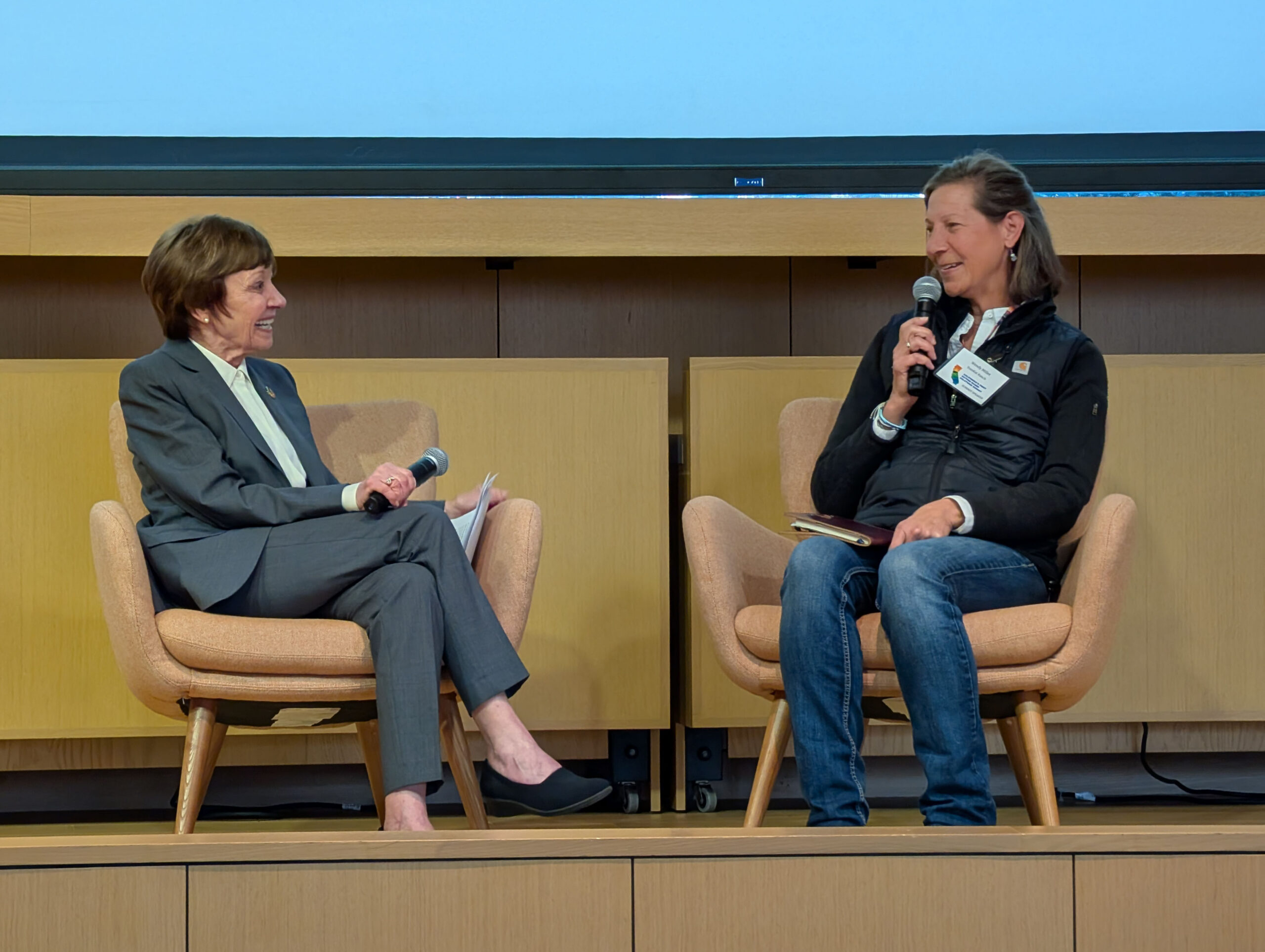
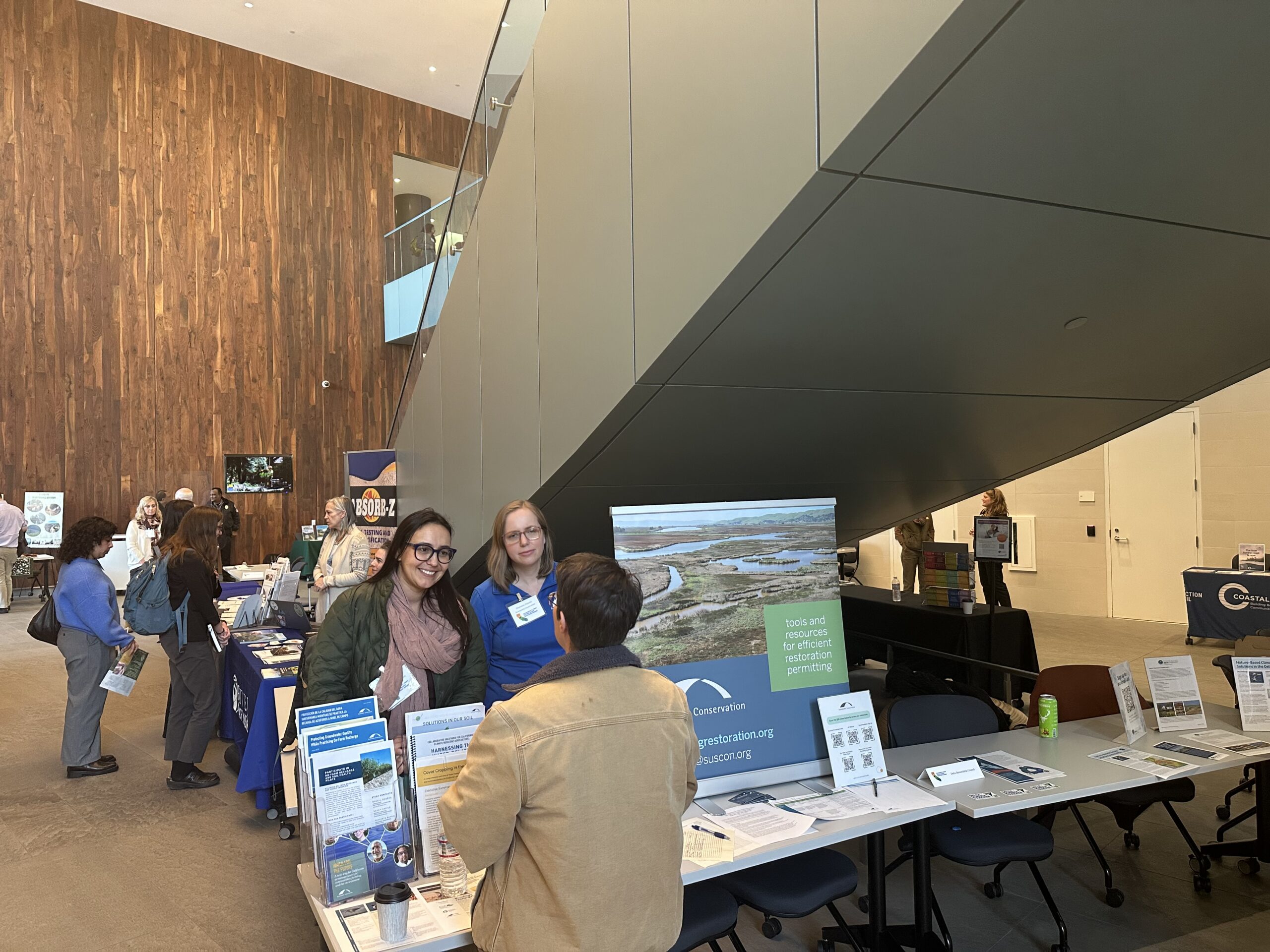
Pictured above: Secretary Karen Ross (California Department of Food and Agriculture) and Wendy Millet (Ranch Director, TomKat Ranch). Pictured below: Kristen Murphy and Stephanie Falzone, Sustainable Conservation
The horizontal levee in Palo Alto did not stop the rain and high tide. It absorbed it, filtered it, and protected a community while restoring habitat.
The Summit made clear that these solutions are already working. The task ahead is to scale them with urgency and intention. Read more about the nature-based solutions Sustainable Conservation is pursuing here.