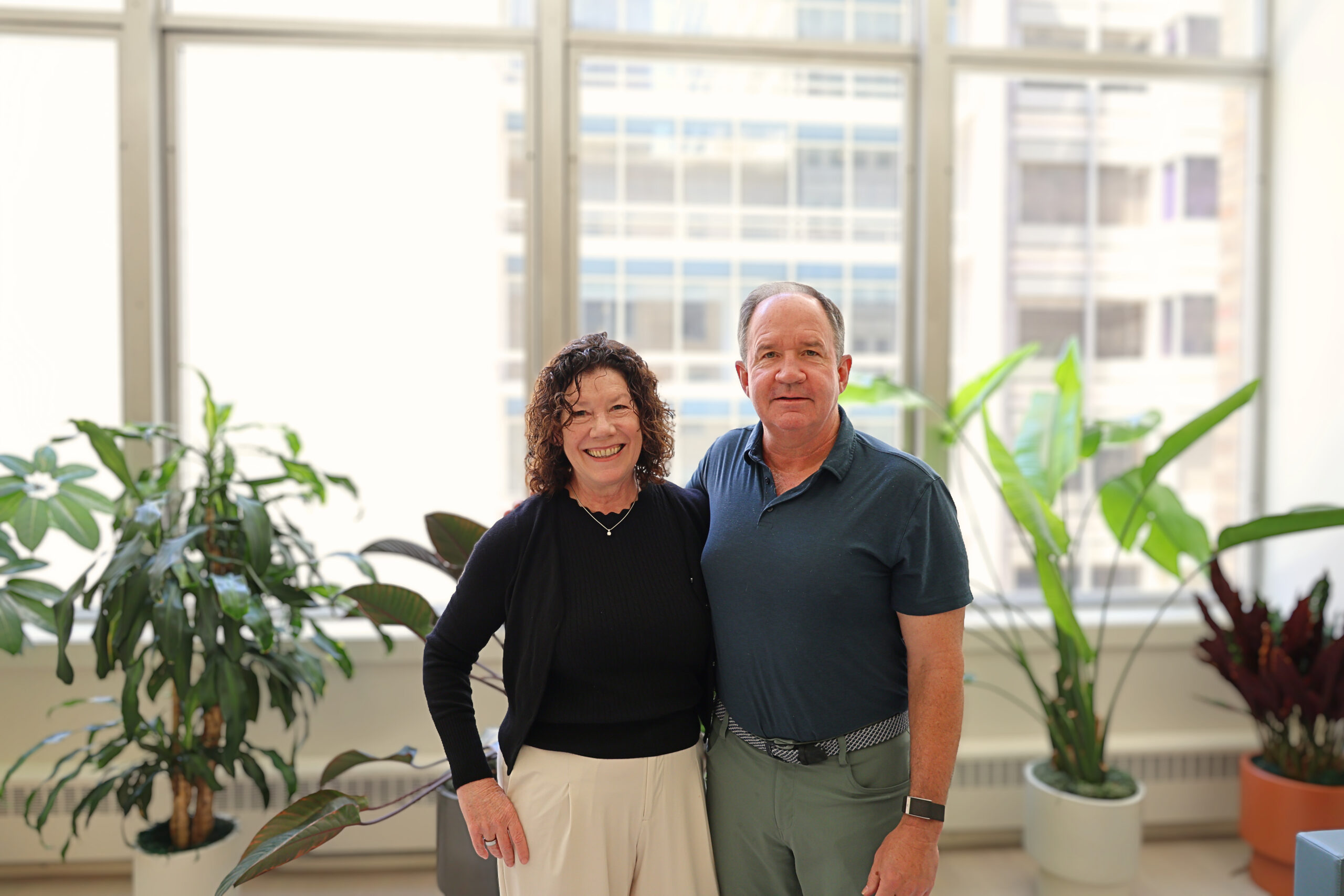
Patricia Munter and Jeff Loomans
Sustainable Conservation Board Chair Jeff Loomans and his wife, Patricia Munter, first became involved with Sustainable Conservation in 2018. Since then, they have become dedicated champions of the organization’s work, with Jeff joining the Board and stepping into the role of Board Chair at the beginning of this year. Guided by the “think globally, act locally” principle, they seek hands-on opportunities to engage deeply with the organizations they support and understand how their investments translate into real-world impact, sometimes in their own backyard.
Today, Jeff and Patricia are helping inspire even greater impact by offering a dollar-for-dollar matching gift challenge this spring and summer, doubling new and increased donations to Sustainable Conservation.
We recently sat down with Jeff and Patricia to talk about what motivates their philanthropy, why they remain committed to Sustainable Conservation’s mission, and what gives them hope for California’s future.
What drew you to conservation? Was there a single moment or place that mobilized you to take action?
Jeff: It’s probably because we ended up buying a home on the Bolinas Lagoon, not that we hadn’t been involved in conservation prior. But the lagoon is one of the most environmentally significant locations on the entire California coast, it’s one of the top overwintering and Pacific Flyway stops for birds, it’s possibly the largest harbor seal rookery on the coast according to the National Park Service. It’s also huge for Dungeness crab incubation, there’s a lot of services it provides ecologically, I could go on and on.
We found the area both fascinating and so important, and we both agreed that we want to be supportive by acting locally for our environment. Also, a lot of people in younger generations don’t want to just spray money at big, national, faceless organizations. They’d like to understand that their money has efficacy, and they want to know what program results are. That was true of us in finding philanthropic causes to involve ourselves in. Participating in hands-on philanthropy and board-level work has massively increased our understanding of environmental issues, especially water issues.
Patricia: I think growing up in San Francisco, and growing up in California, I was aware of water issues, and viewed water as being something both that you have access to and that you need to conserve. I think you’re more aware of it than maybe you are in some parts of the country.

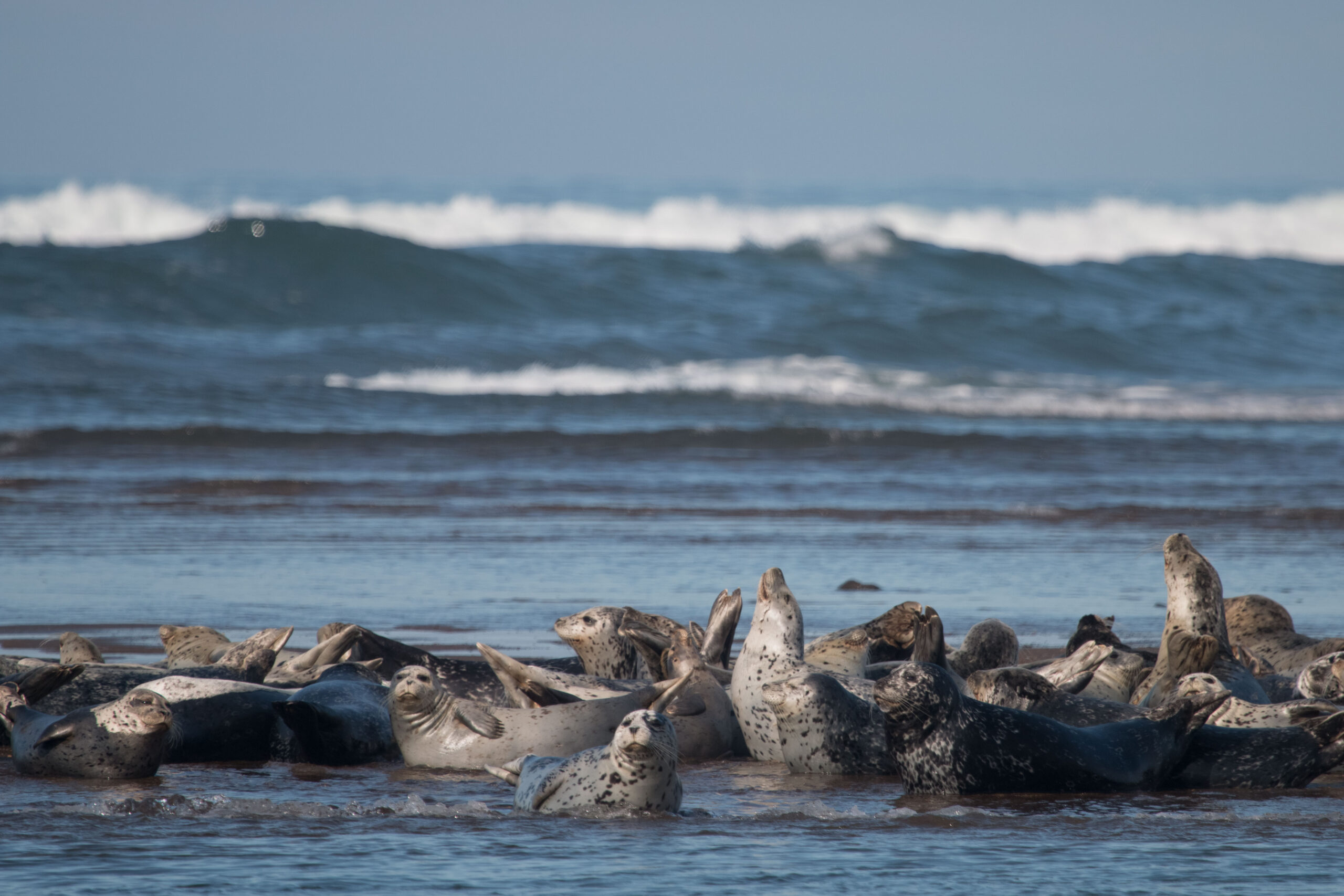
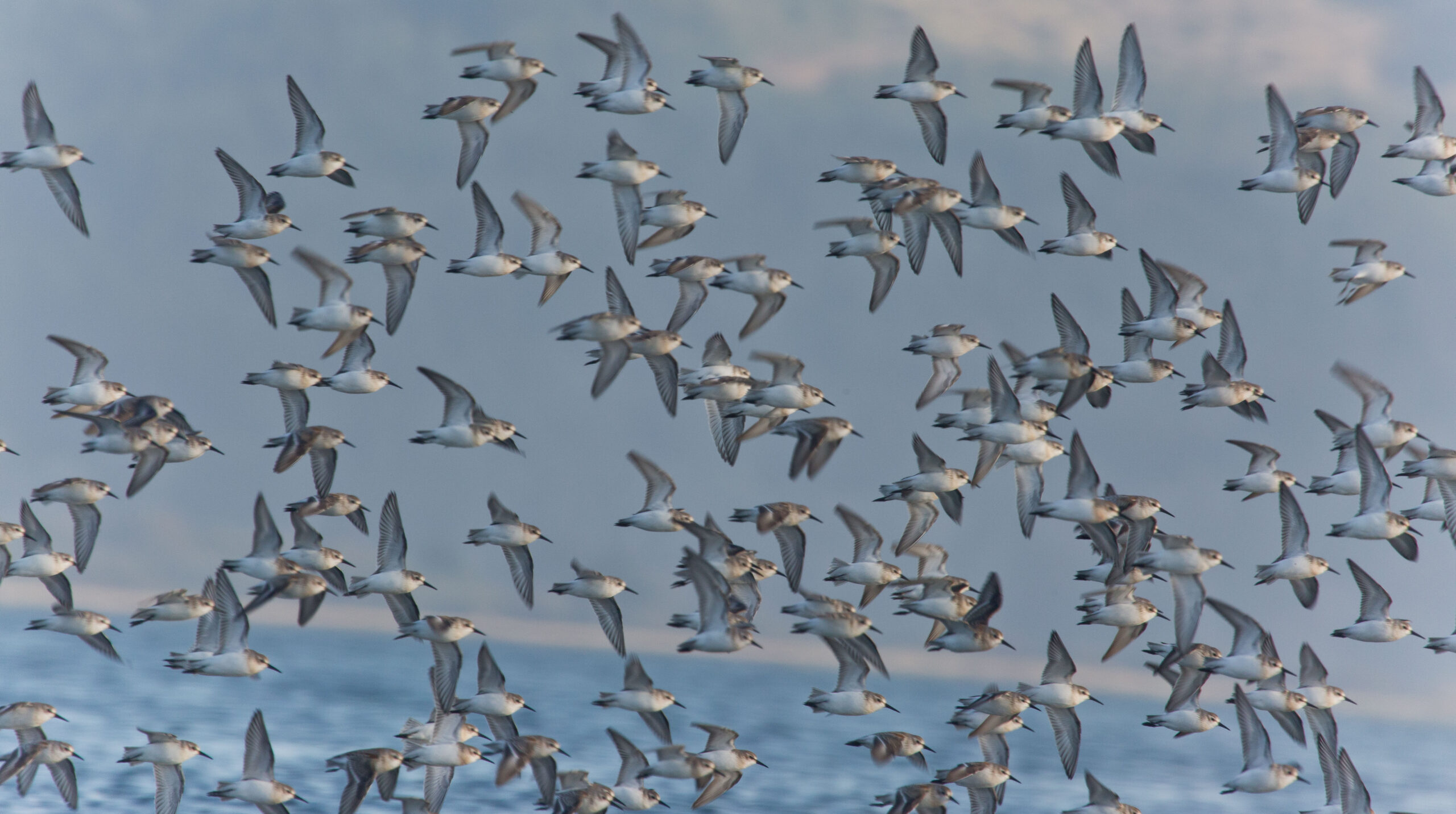
Top: Bolinas Lagoon and Bolinas Bay seen from Mount Tamalpais State Park, Marin County, California (David Abercrombie); Bottom left: Harbor seals (Peter Pearsall/U.S. Fish and Wildlife Service); Bottom right: Western sandpipers (Peter Pearsall/U.S. Fish and Wildlife Service)
What was your first impression of Sustainable Conservation, and what has kept you both engaged since then?
Jeff: We were invited by former Board Member Charlene Harvey to a small focus group session with a couple of other people in 2018. [Former CEO Ashley Boren] was there to work on the first organizational five-year plan, and she was testing the question “should we go all-in on water?” That was an incredibly compelling discussion, it was very thoughtfully presented, and we felt like our input was taken.
The group also discussed how we could be way more efficacious in riparian restoration if we didn’t have seven different permitting agencies that were all at loggerheads, and it took longer to get the permits than it did to do the restoration work. We had seen similar issues by following what was going on in Bolinas Lagoon with restoration programs.
I thought that restoration-specific permitting was just an amazing thing, and then I asked if I could speak with [Senior Accelerating Restoration Program Director Erika Lovejoy] to get more information on the Accelerating Restoration program. I went to the office and spoke with her and I got very excited about programmatic restoration pathways. I think she thought I was some nut and wondered if she needed to call security.
What does Sustainable Conservation do that you genuinely don’t think anyone else does?
Patricia: The methodology of working in things like systems-level infrastructure and permitting by engaging partnerships is unique. It’s not always what makes catchy headlines, but the advances made in restoration permitting support people that are working to remedy real problems and give them the tools and the ability to cut through red tape and make a good project happen.
Jeff: We talk about Sustainable Conservation being the neutral arbiter. We can tackle the hardest problems no one else can because we approach it from science, we don’t take an ideological position, and we work with everyone.
I think we really are seen as kind of the “good guys in the middle” and are willing to work with everyone else to find out what they think we need to do and then go do it. And that’s really, really rare in NGOs and environmental non-profits. They generally start from ideological positions in some sense because that’s what they have to do because of their mission statements and the way they raise money. However, we’ve gone about it from the completely reverse standpoint.
Is there one outcome that comes to mind over the course of your time with Sustainable Conservation that you’re most proud of?
Jeff: I think the thing I’m most proud of is the permanent restoration permitting pathways. I got to attend the celebration when the Acceleration Restoration team had essentially gotten every agency on board with restoration-specific permitting after 15 years of work. We contributed specifically to that program, and it felt pretty good to be at that event in Sacramento with leaders from different agencies celebrating it. It was a neat moment because you don’t often get that as a donor, where you get a real personal connection to a very tangible outcome.
Then the other moment that comes to mind was that I got invited to be head of the Executive Search Committee in 2025 to find a successor to Ashley as CEO. We were just so happy to get [CEO Josette Lewis] on board.
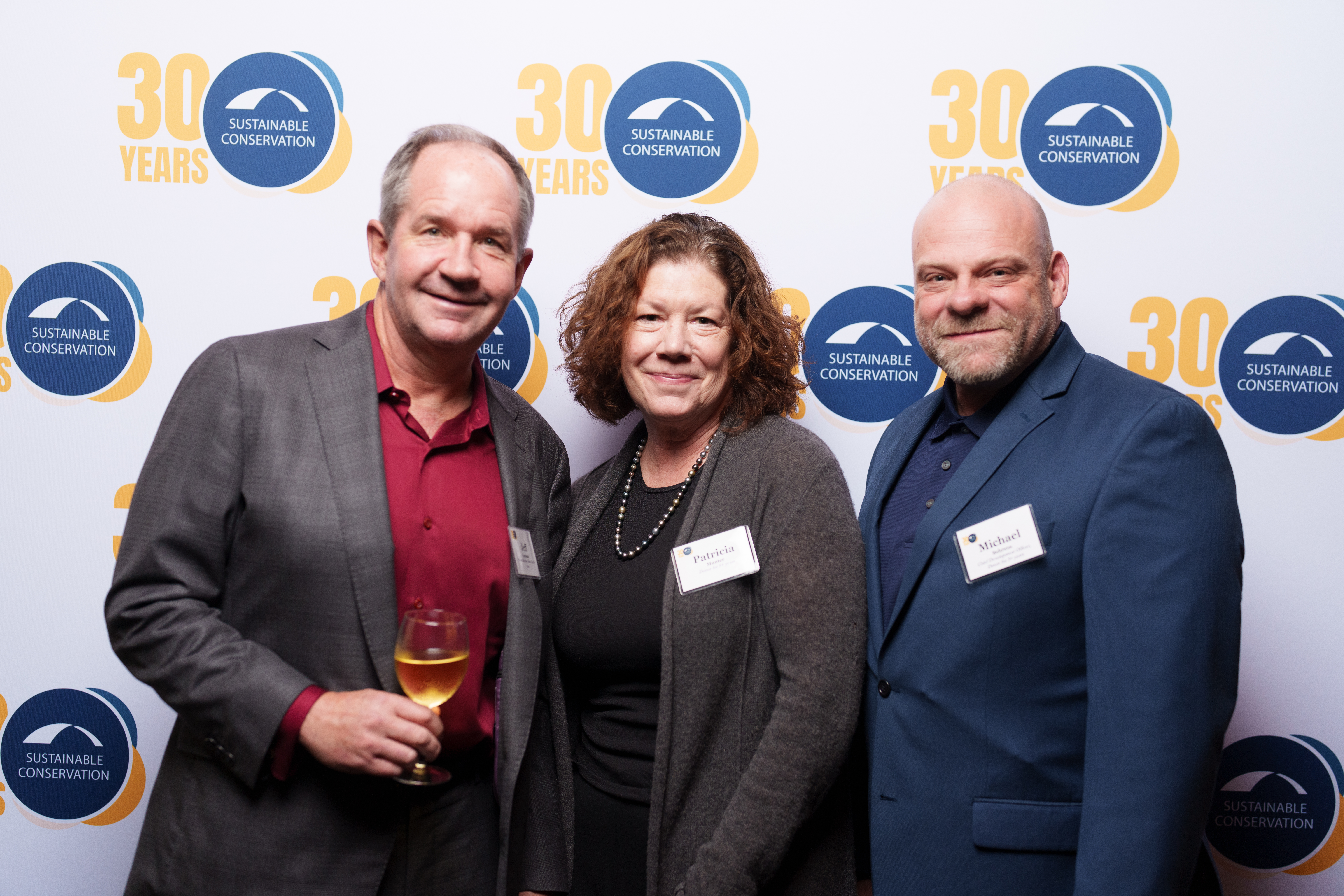
Jeff Loomans, Patricia Munter, and Chief Development Officer Michael Behrens at Sustainable Conservation’s 30th Anniversary celebration in 2023
When you make a gift to Sustainable Conservation, what kind of impact are you envisioning?
Jeff: We’re very certain that the dollars we give here are being extremely highly leveraged and that the outcomes are being tracked. You can do amazing, important, high-scale things that organizations five-to-ten times larger really could never tackle. They could never get California to scale groundwater recharge on farmer’s land through policy alone. That’s huge leverage for such a small organization. We know that our donations to Sustainable Conservation will be spent wisely and lead to good outcomes.
What gives you hope in conservation or environmentalism today?
Patricia: I’ve been inspired by some of the projects that show you can create environmental solutions that are still going to work for businesses like agriculture. California has so many needs for water to support people, habitat, and business, so finding sustainability in a broad sense to support the needs and solutions that work long term is particularly exciting.
Jeff: I have a lot of hope because it’s clear that the next generations are far more interested and unified around the idea that environmental problems at a macro-level need to be addressed and solved. And that’s just going to be a massive political force that will be focused on solving the environmental problems of the world.
What would you encourage your fellow Californians to do to make a difference in conservation?
Patricia: I would encourage all Californians to get involved, to educate yourself about what is going on and what programs are happening to be aware of statewide. Just try to appreciate nature and get your kids out there so you see what it’s all worth.
Jeff: Donate to Sustainable Conservation! Donations will go further here than any other environmental organization. It goes back to the 1960s and 70s, but “think globally, act locally” works. It’s certainly what we have done. You can have so much more impact if every one of us is working in all our little areas. It makes a massive difference because it all adds up.