
As the afternoon sun burned the dense tule fog off the valley floor, a group of growers, water managers, researchers, and curious minds gathered at a Valov Brothers Farm pistachio orchard block in Tulare County. Water pulsed from a pump and spread across the orchard floor as the attendees discussed a shared question: how can we replenish groundwater resources while improving water quality?
The field day brought together partners participating in a pilot research study designed to explore this question. The project examines how soil health practices like cover crops influence the impacts of on-farm recharge on conditions like nitrate leaching and water infiltration. By setting up side-by-side experiments, the project aims to generate data that growers, agencies, and researchers can use to better inform scaling recharge across the Valley.
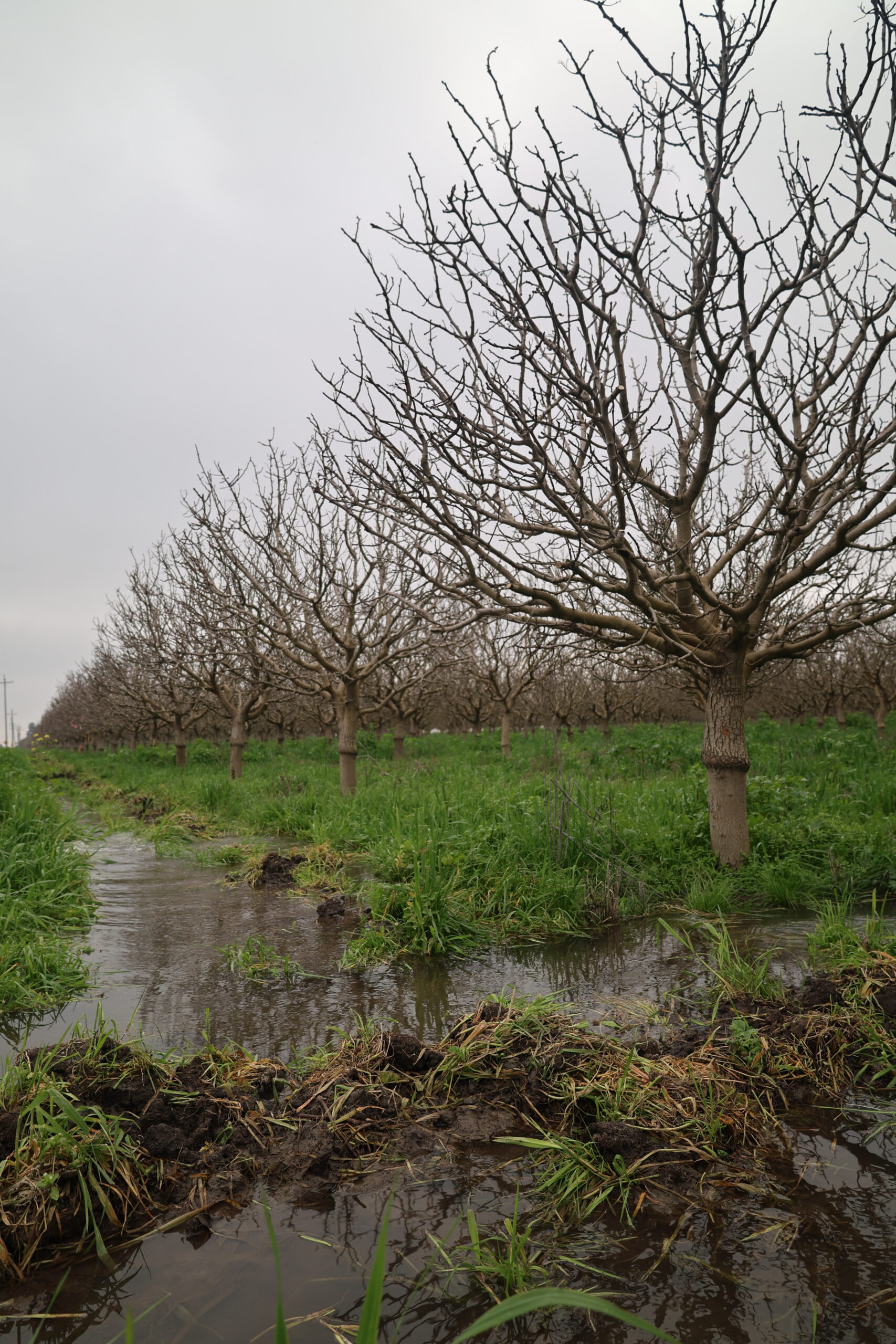
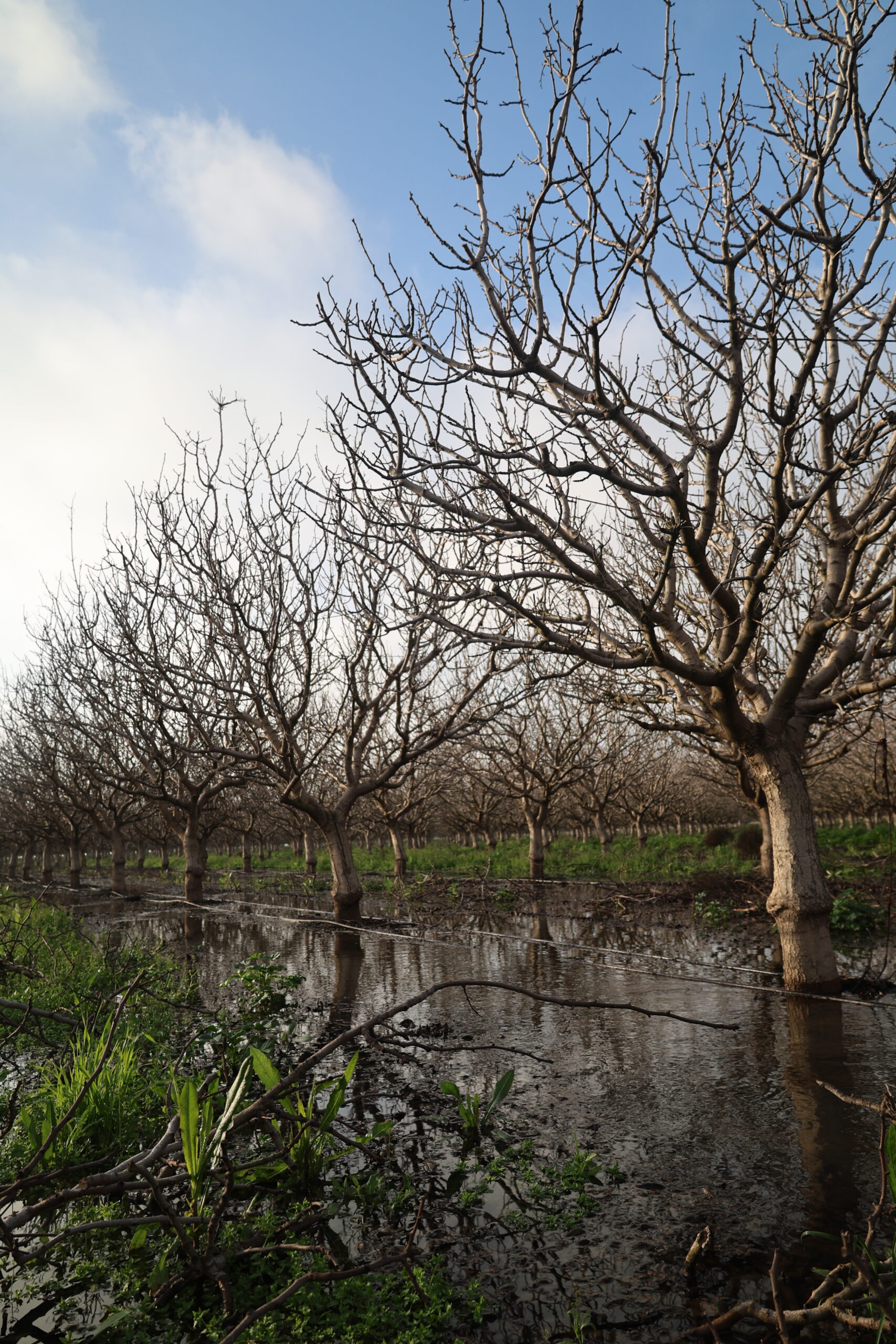
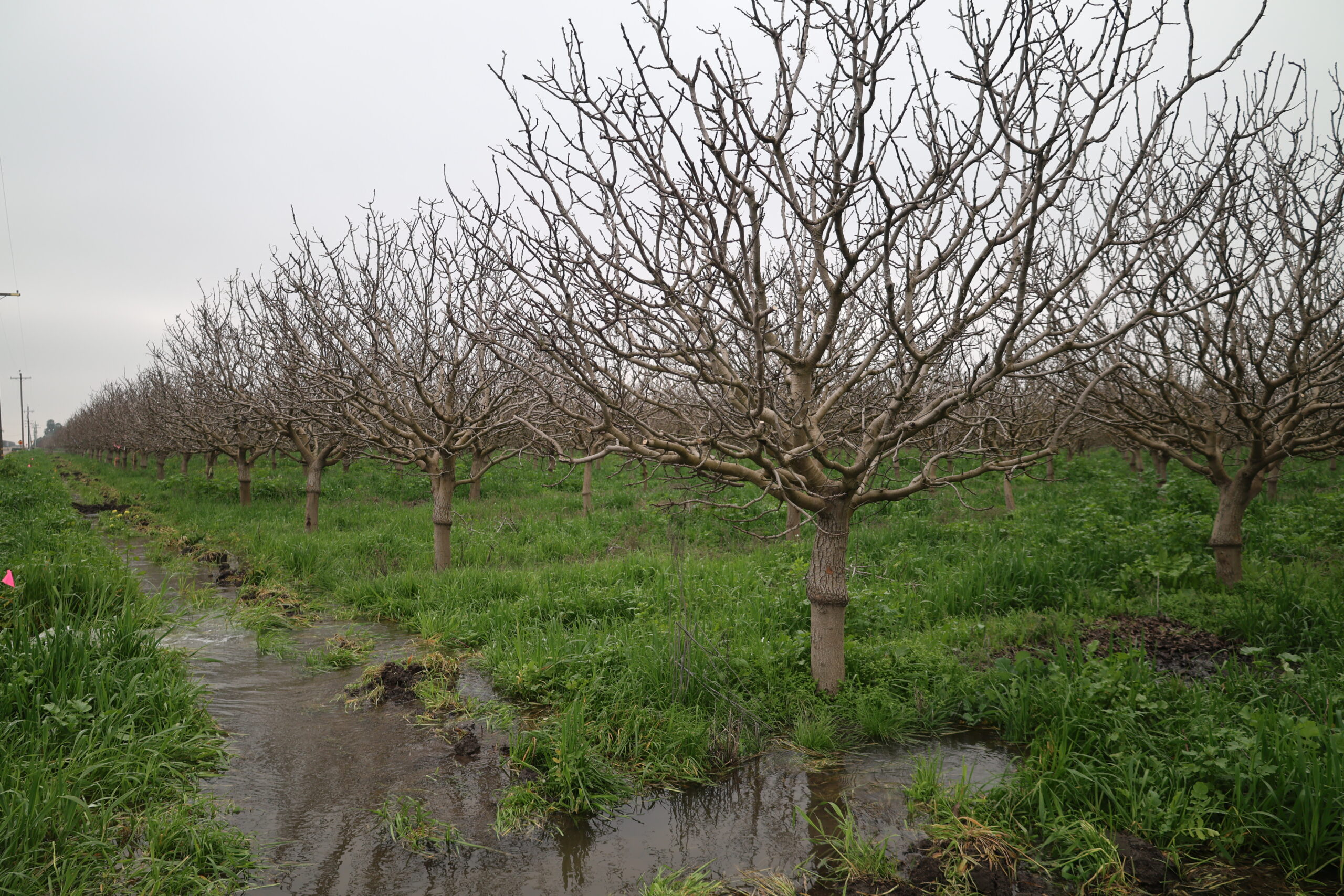
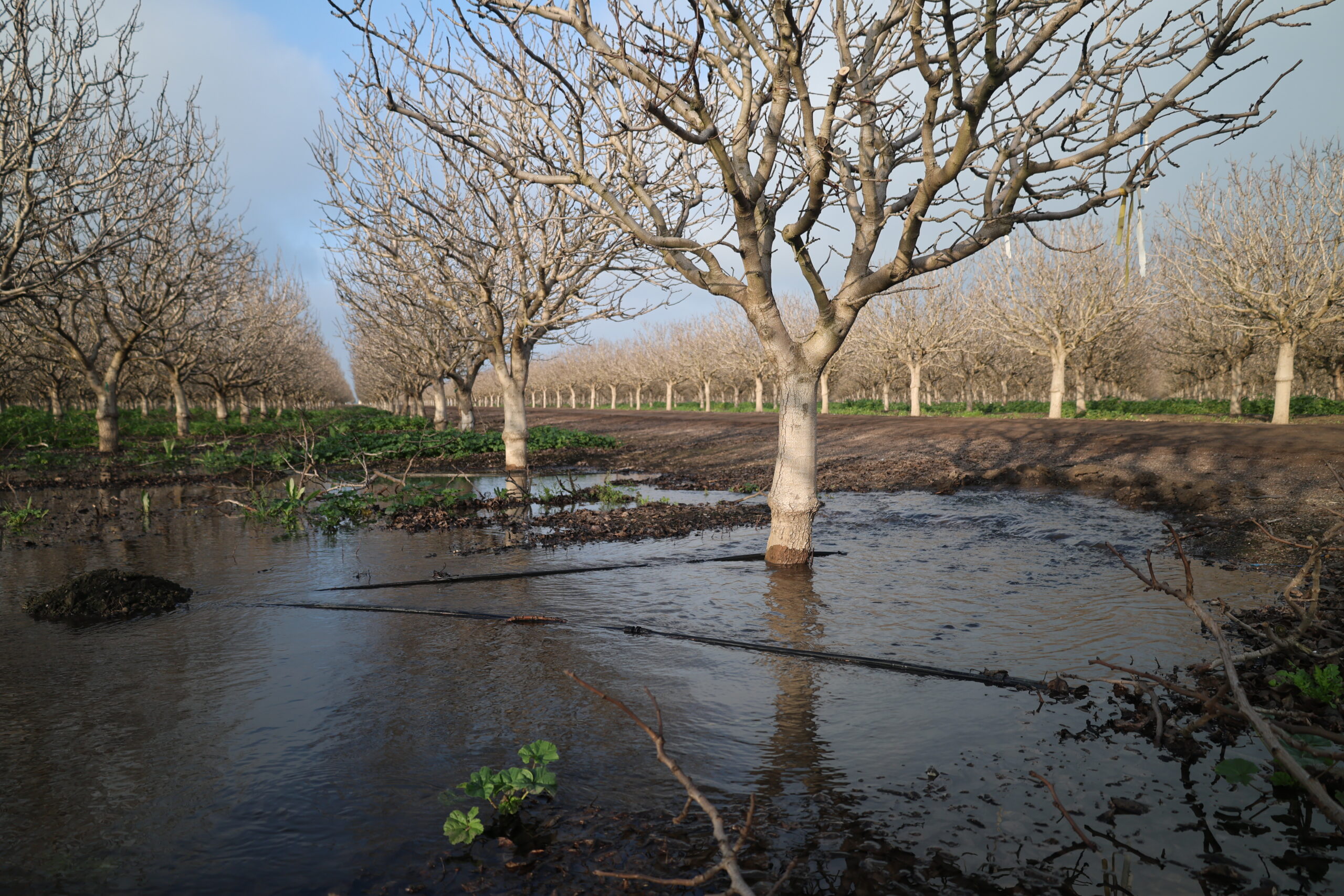
Recharge on cover crop and bare field research sites, Valov Farms
In the field
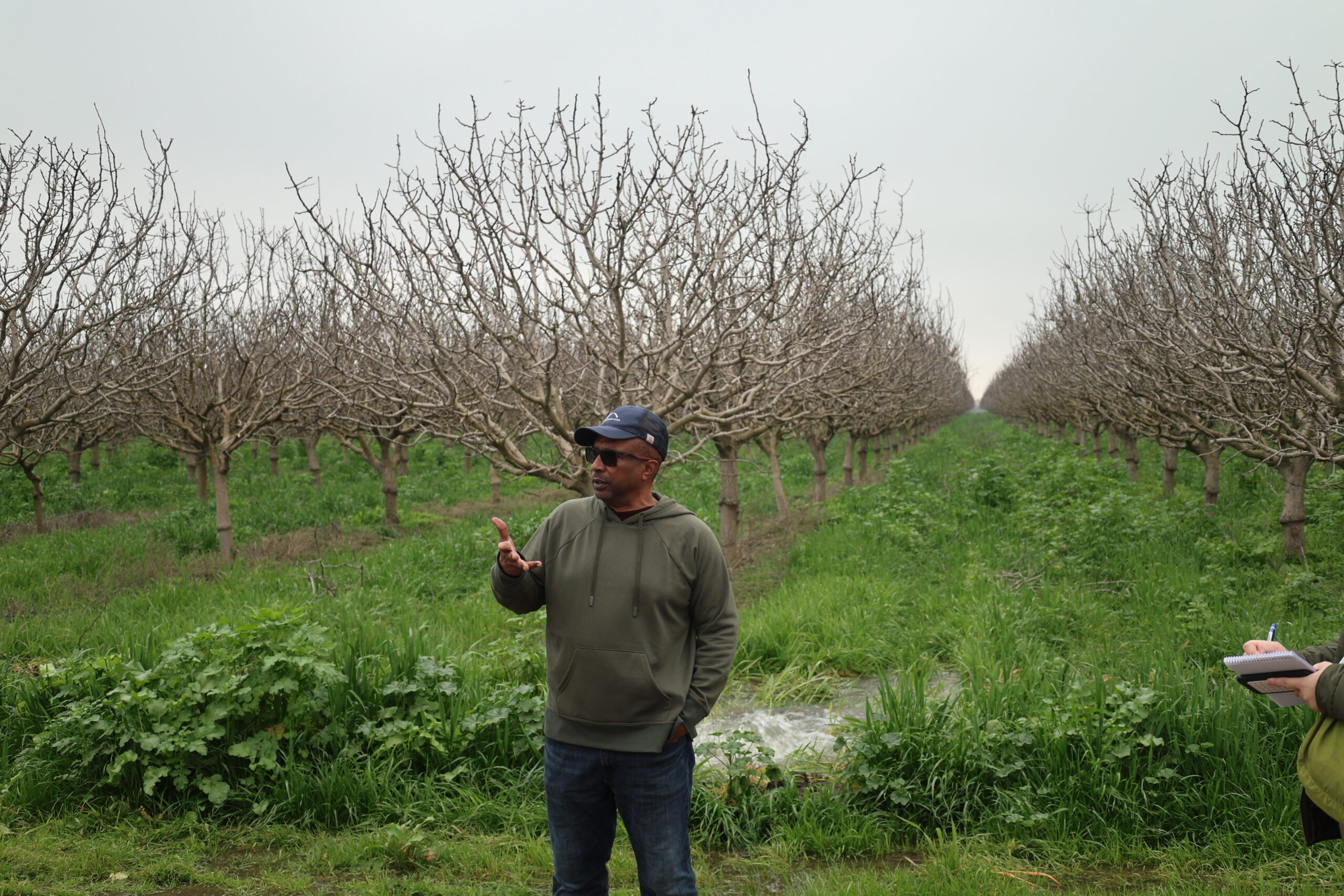
Pilot project grower, Jimi Valov (Valov Brother Farms)
Project partners from Sustainable Conservation, American Pistachio Growers, California State University, Fresno, and participating growers were joined by observers from the Mid-Kaweah Groundwater Sustainability Agency (GSA), Tulare Irrigation District (TID), and media group SJV Water. Pilot project grower Jimi Valov guided attendees through the steps involved in establishing a cover-cropped orchard and preparing it for winter recharge, with active recharge taking place just behind him.
This orchard block is in its thirteenth year, but only its second year of stacked cover crops and winter recharge. The last two years, it has also been a working research site. In one block, diverse cover crops like fescue, vetch, and field peas grew between the tree rows. Just down the road, Jimi’s bare ground block offered a clear comparison of recharge without cover crops. Circled up, the group listened as the project partners described what we could see happening above ground and what was being measured belowground, from water movement to nutrient cycling.
For some attendees, it was their first time seeing recharge paired with planted cover crops. Sustainable Conservation and its partners are studying this combination to better understand how groundwater recharge, soil health, and water quality interact. By directly comparing recharge on cover-cropped and bare pistachio orchards, the partnership aims to clarify how groundwater recharge can be scaled in ways that support water supply, water quality, and soil health.
Where research meets practice
Researcher partners with Dr. Sangeeta Bansal (California State University, Fresno) are measuring how water and nitrate move through the soil during recharge events. Instrumentation installed at multiple depths tracks soil moisture and collects soil pore water for nitrate analysis in both cover-cropped and bare blocks, while soil sampling through the rooting zone helps capture changes in soil nitrate, salinity, and other soil health indicators over time.
For grower Jimi Valov, the research reflects how decisions are often made on the ground.
I believe in cover cropping and the sustainable direction of agriculture right now. But I don’t have the time to dig down and examine the numbers. You all get to do the research and tell us if it’s true, while I look at my field and see how things go in my field. Jimi Valov, Valov Brother Farms
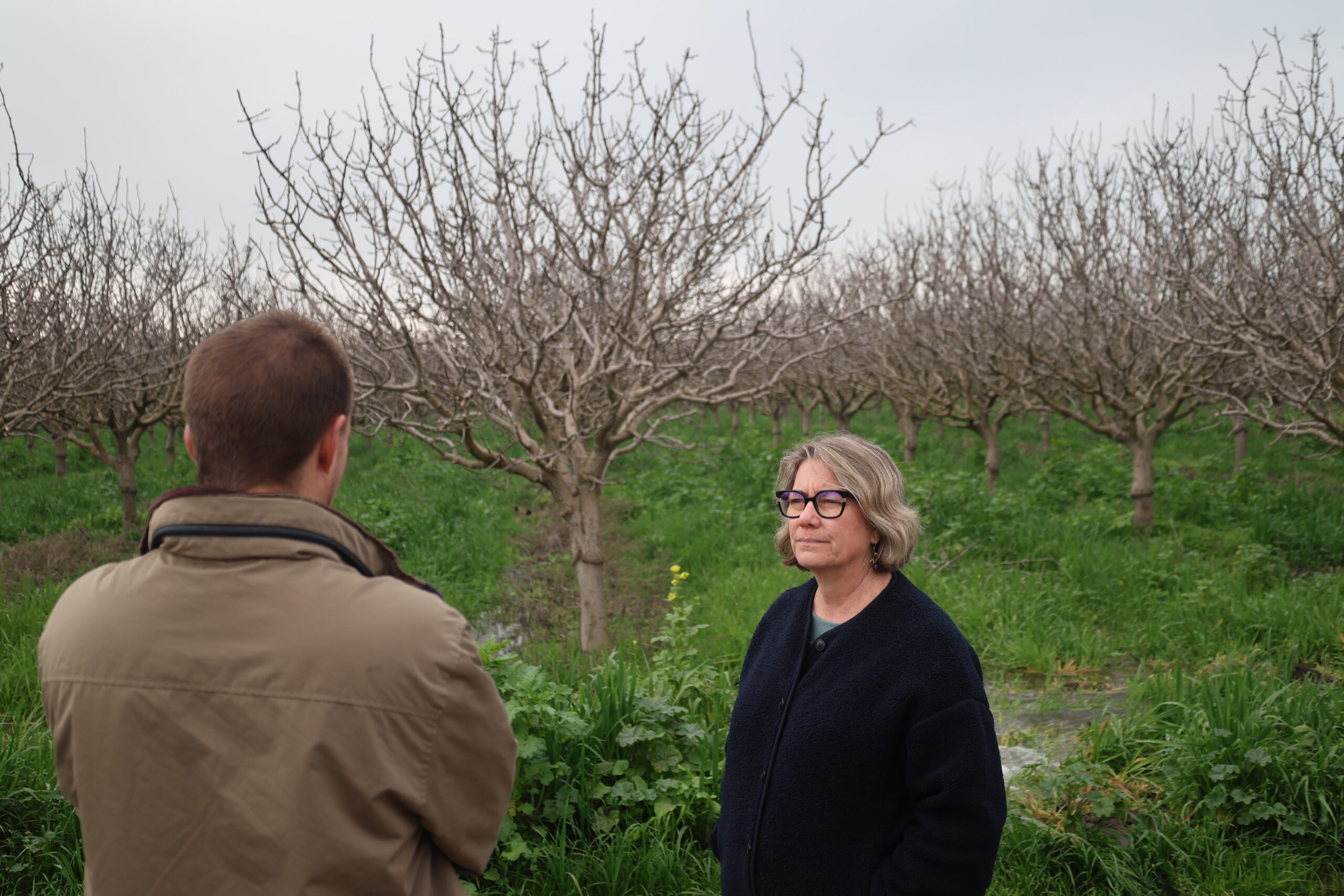
Jimi Valov speaking with Josette Lewis (SC, CEO)
Recharge itself isn’t new for Valov. His family has always recharged on older orchards with the intent to sink salts, but implementation of the 2014 Sustainable Groundwater Management Act (SGMA) convinced him, and many others, to experiment with recharge. SGMA established groundwater pumping limits at a subbasin level, effectively capping how much groundwater can legally be extracted. Several attendees mentioned this shift was incentive enough to experiment with new ways to curb groundwater demand.
When APG offered the opportunity to test the practice with cover crops, Valov jumped on the experiment.
Listening to more perspectives
Aaron Fukuda, General Manager (Tulare Irrigation District)
From the agency perspective, sites like this help ground recharge programs with real case studies. Aaron Fukuda, General Manager of the Tulare Irrigation District, shared how the passage of SGMA was enough of an incentive for growers to experiment with bringing their water use to sustainable levels.
“We now have over 200 growers participating in recharge,” Aaron said. “What got it to work? We talked to everyone.”
For others at the field day, including APG pilot partner grower Philip Cunha, the value was seeing the work in progress.
“I wasn’t even thinking about recharge or sampling my soil at first,” Philip said. “I just wanted to see how cover cropping goes.”
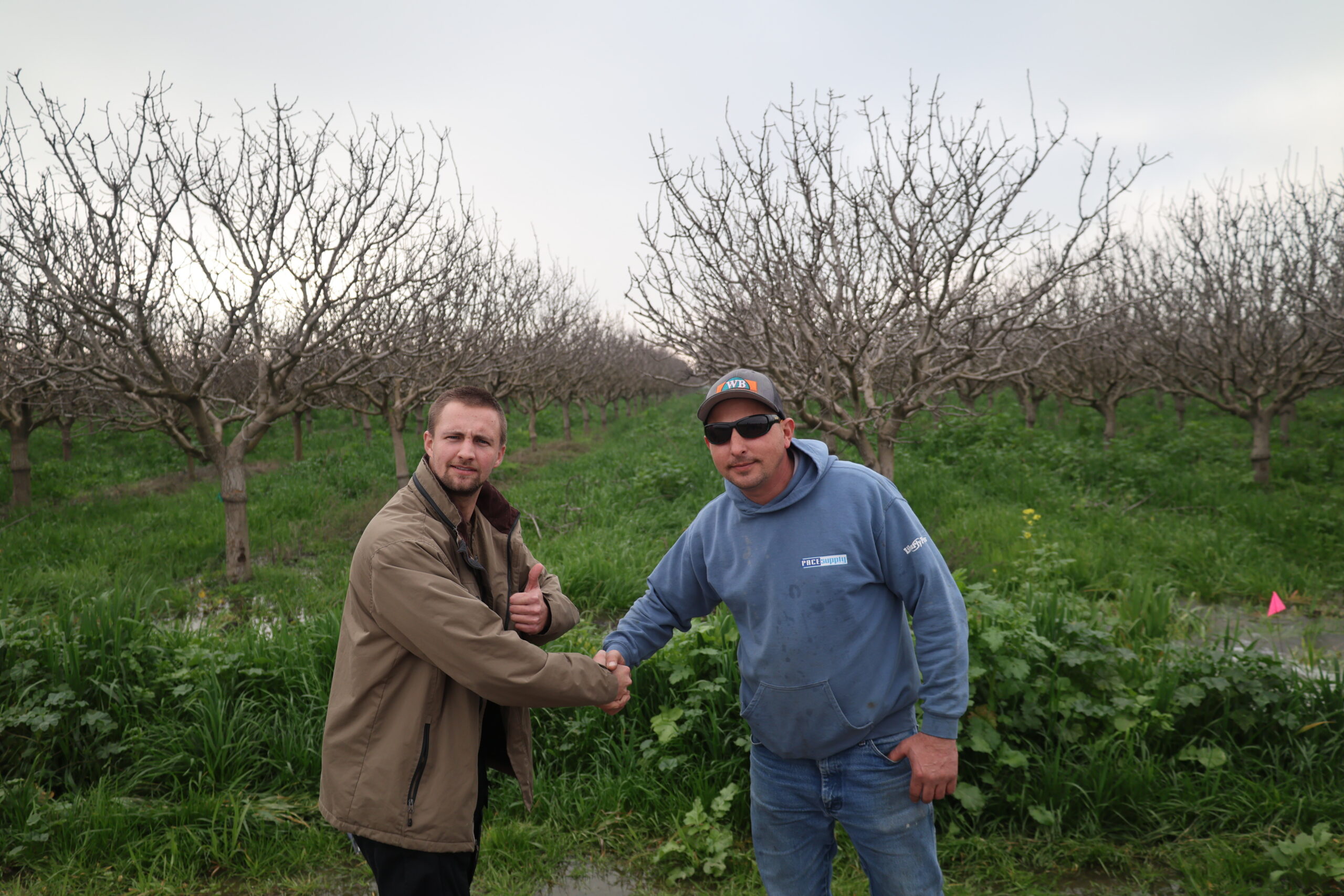
Pilot project growers Jimi Valov and Philip Cunha
Moments like these, with growers comparing notes, asking questions, and reacting to each other’s setups, reflect a broader shift underway. This work is about learning collaboratively and embracing culture change. “Farmers often try things out based on word of mouth,” Jimi reminded the group.
The work underway in the Mid-Kaweah basin won’t answer everything at once. As the recently published Watershed Studies show, recharge is a necessary tool for building resilient groundwater basins, but it will take much more to address the region’s existing and growing groundwater deficit, especially as climate change intensifies the unpredictability of California weather. Still, by directly comparing recharge on cover-cropped and bare pistachio orchards, this project is helping clarify how we can protect water quality while improving groundwater resources on our working lands.
This research project is a partnership between Sustainable Conservation, American Pistachio Growers, California State University, Fresno, UC Davis, and participating growers. Funding for this project was made possible by a grant/cooperative agreement from the U.S. Department of Agriculture (USDA) Agricultural Marketing Service. Its contents are solely the responsibility of the authors and do not necessarily represent the official views of the USDA.
Visit suscon.org/covercrops to learn more about our cover crop research and recommendations, sign up for our Cover Cropping in the SGMA Era newsletter, or reach out to our team at soils@suscon.org.