
Happy Groundwater Awareness Week! As we kick off this important week to raise awareness for one of our precious yet often unseen natural resources, I want to share why groundwater matters more than ever to California.
Groundwater supplies approximately 40% of our state’s water needs, and even more in dry years when less surface water is available. These needs include community drinking water, irrigation water, and baseflows for our rivers, wetlands, and ecosystems.
Climate change makes groundwater even more important to California. While our average precipitation isn’t expected to change with climate change, an increasing amount will fall as rain rather than snow. That’s not just bad news for California’s skiers and snowboarders. Snowpack is one of California’s largest and most important reservoirs, storing approximately 15 million acre-feet every year in the Sierras. We rely on the gradual melting of this snow for steady runoff during the spring and summer to sustain rivers, farms, and communities. With climate change shrinking this natural reservoir’s capacity, groundwater management becomes even more vital as we pursue water security.
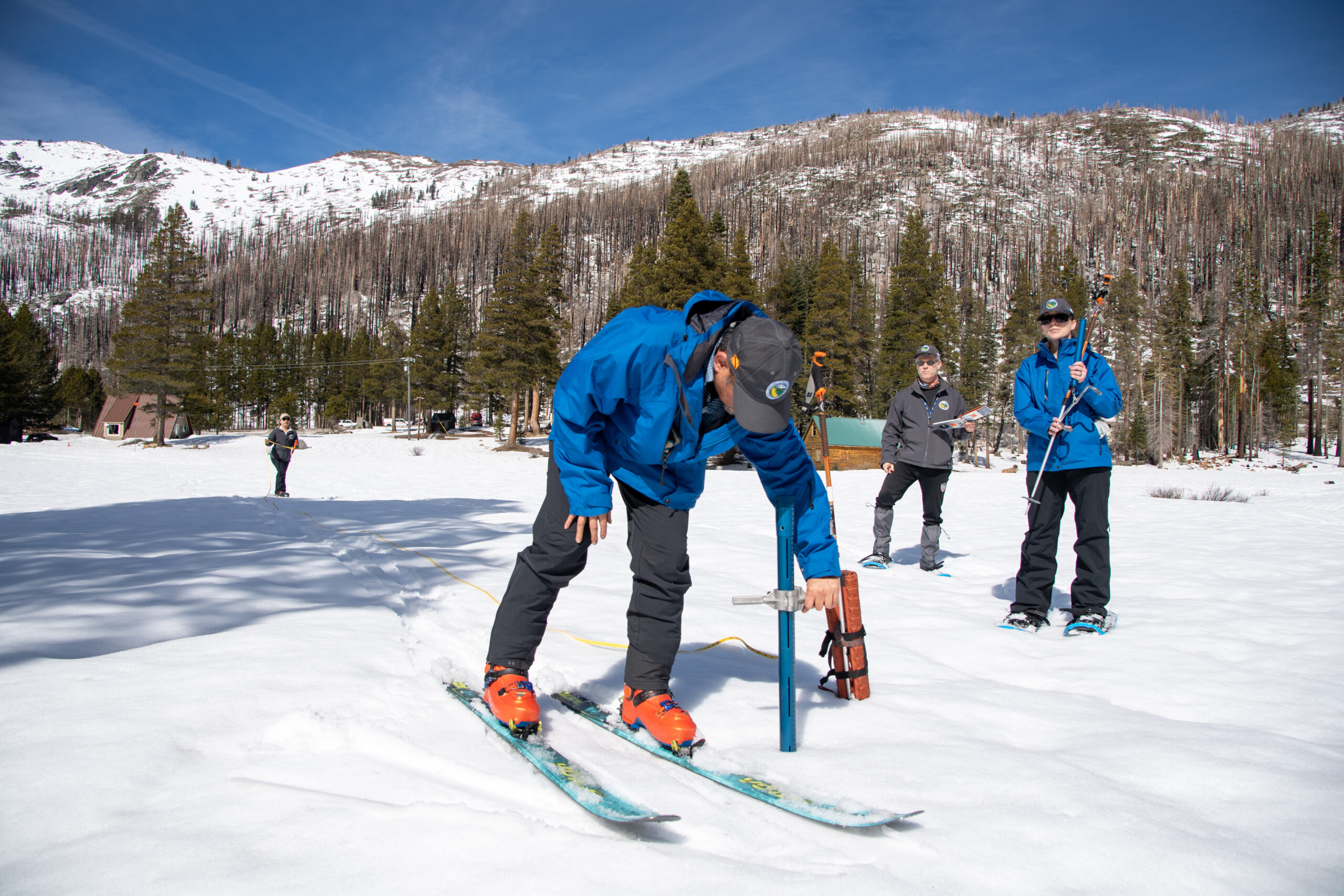
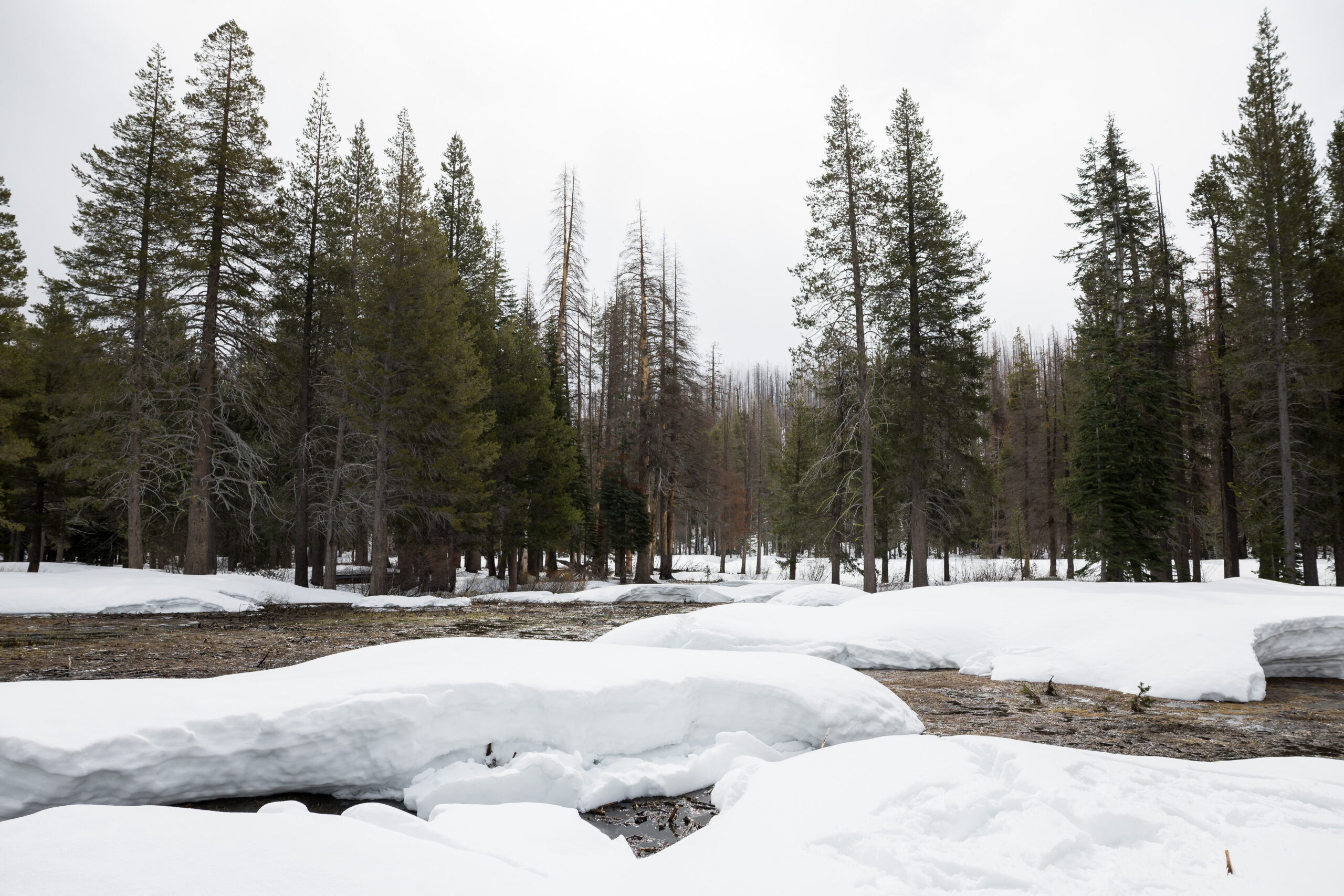
Left: DWR conducts a snow survey in February 2026 (Ken James/ CA DWR), Right: Water from snowmelt puddles in a Sierra Nevada meadow (Xavier Mascareñas / CA DWR)
Our groundwater aquifers have an incredible amount of untapped water storage that can help us navigate the volatility of climate change. According to Professor Rosemary Knight, the empty space in our state’s groundwater aquifers is equal to 140 million acre-feet, or about 30 Shasta Lakes. That’s nearly 10 times the amount of snowpack the Sierra Nevada gets each year. Compared to above-ground water storage solutions, recharging our aquifers offers an abundant and cost-effective way to store water.
We’re learning that each watershed is uniquely impacted by climate change, and that strategies like managed aquifer recharge can help us mitigate the impacts. Combined with smarter reservoir operations, managed aquifer recharge can reduce flooding in wet years and increase water supplies in dry years. Furthermore, recharge can be targeted in certain regions to prioritize multi-benefit outcomes, such as improving drinking water reliability or improving groundwater-dependent ecosystems.
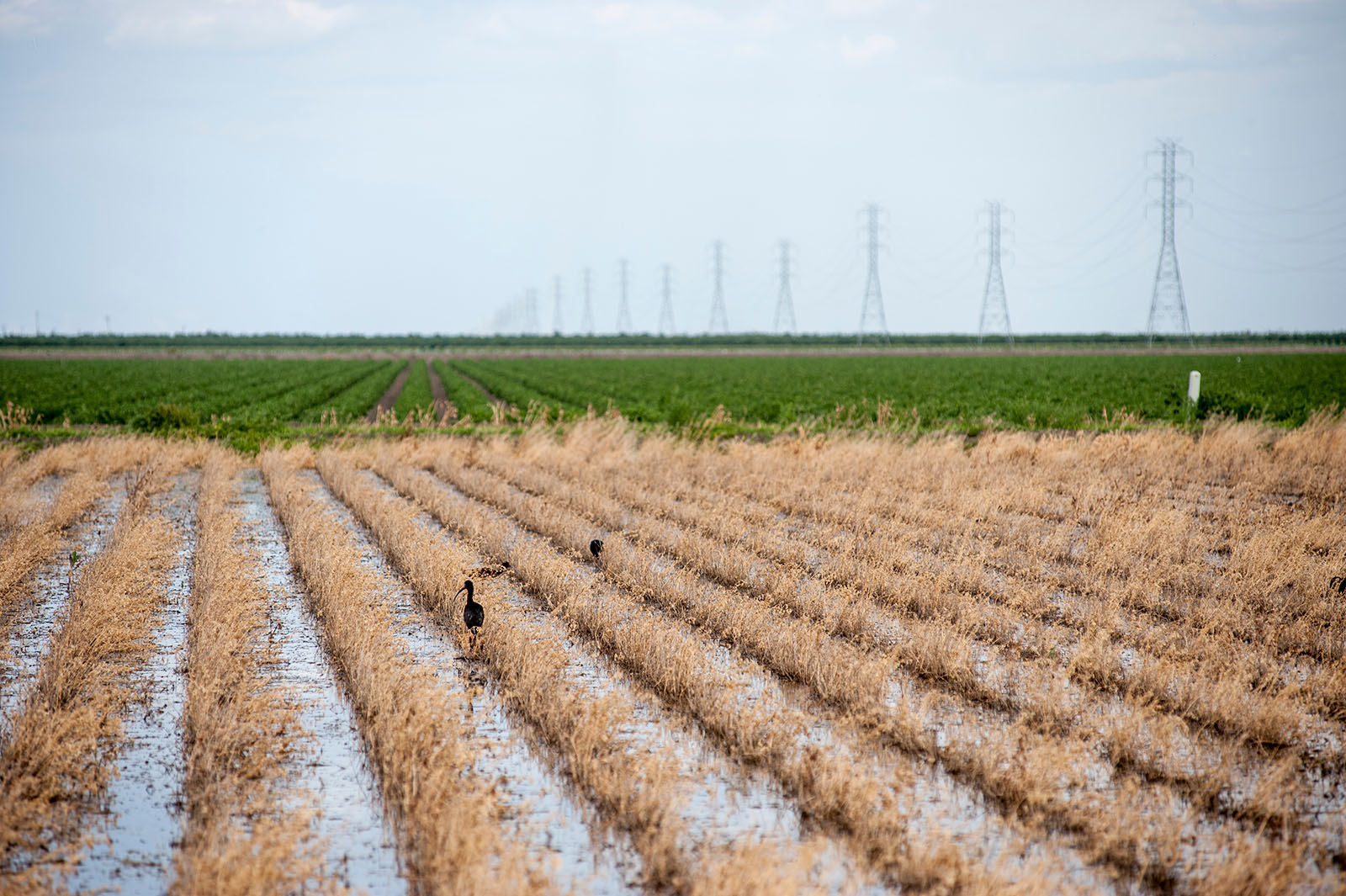
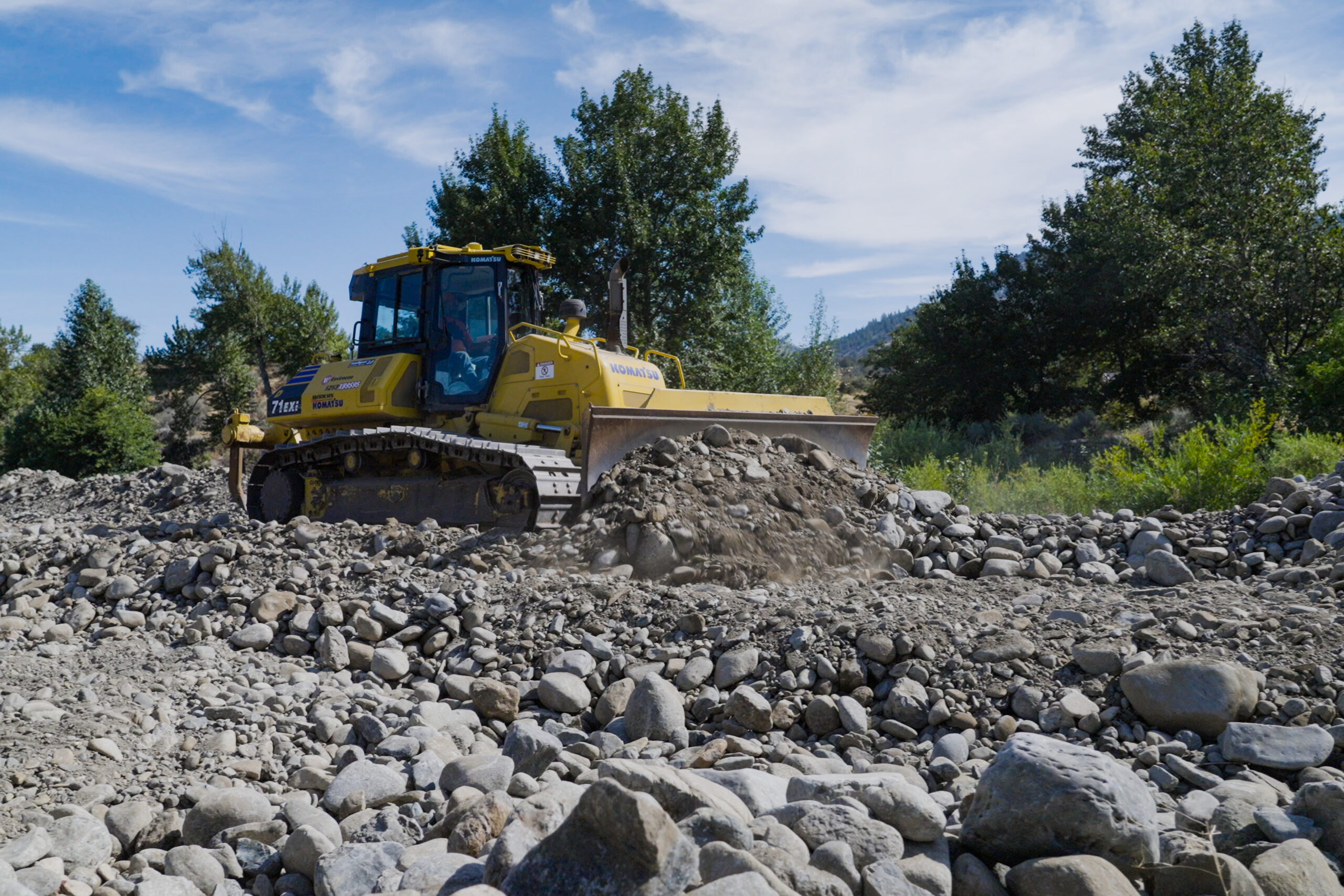
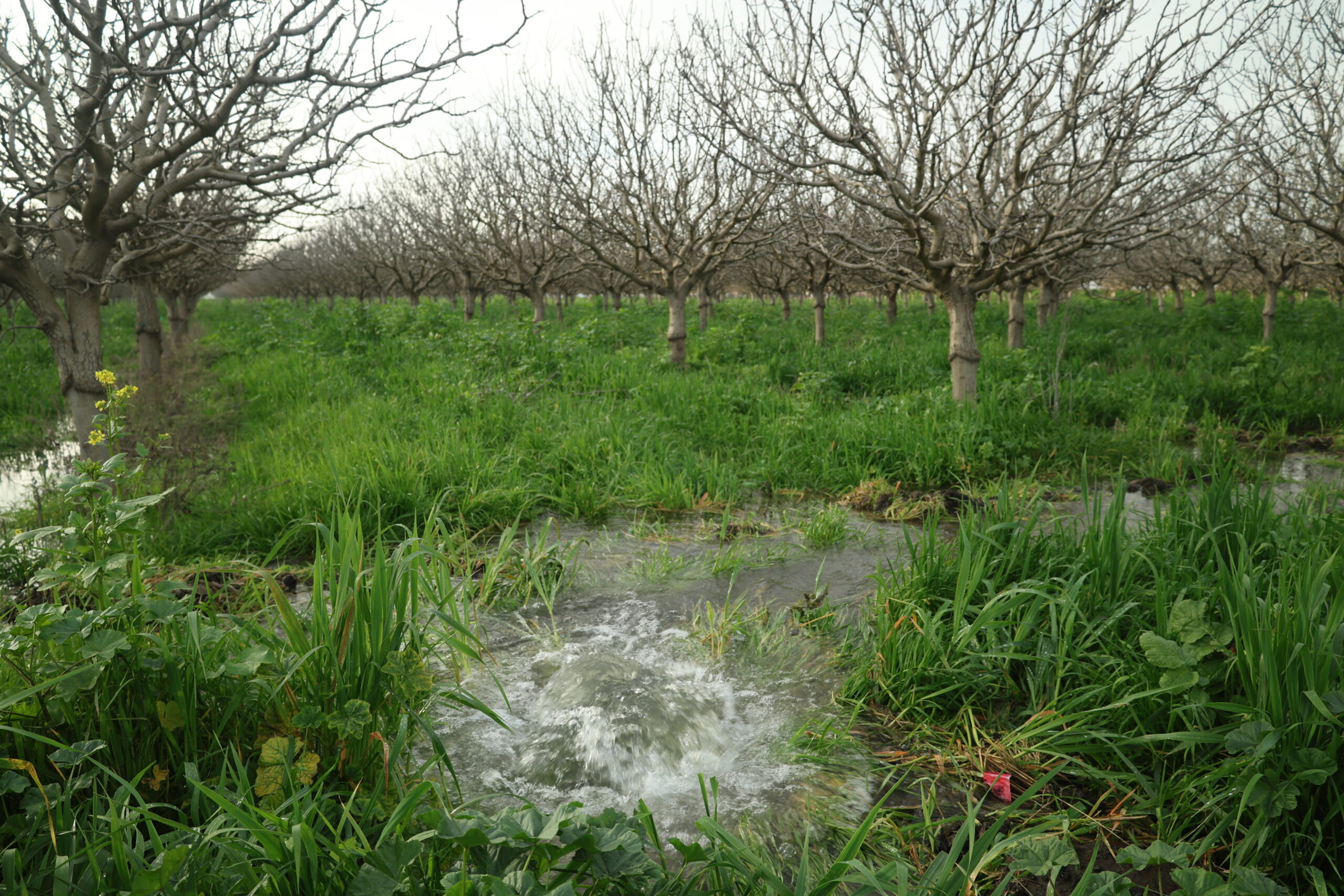
Top left: On-farm recharge with migratory birds in the field; Top right: Recharge pond (Kelly M. Grow/ CA DWR), Bottom: On-farm recharge on cover-cropped pistachio orchard
Sustainable Conservation’s team is hard at work to scale recharge and its multi-benefit opportunities. Recharge allows us to capture water in wet years, store it underground, and make it available in dry years. Aquifers are the natural infrastructure sitting right beneath our feet that can help us weather what climate change is bringing. We work with water districts, Groundwater Sustainability Agencies, state and federal agencies, and more to develop the institutions and incentives to scale recharge as a solution for California water.
— Richael Young, Senior Director, Water for the Future