
Authored by Sustainable Conservation’s Water for the Future Program Director Aysha Massell. Blog 4 of 4 in a series breaking down the DWR Watershed Studies.
The California Department of Water Resources’ San Joaquin Valley Flood-MAR Watershed Studies modeled the potential impacts of MAR-90/20 and the more comprehensive I-FIRM recharge scenario on five San Joaquin Basin watersheds (Calaveras, Stanislaus, Merced, Tuolumne, and Upper San Joaquin). The I-FIRM strategy models habitat improvements through reservoir reoperations and additional natural infrastructure that includes river restoration, flow-through basins, and shorebird habitat. This blog walks through each of these components and outcomes as they relate to ecosystem impacts in the Watershed Studies (the Study).
As a preview summary, the effects of the I-FIRM strategy on ecosystems were mixed. Positive benefits include more acreage devoted to shorebird habitat and flow-through basins, and some improvements in salmonid instream spawning and rearing habitat. However, off-channel salmonid habitat in most of the rivers was reduced due to recharge diversions.
Reservoir Reoperations using CEFF
Part of the reservoir reoperation strategy in the Study is the practice of releasing water to rivers below the dams for important environmental flows. The California Environmental Flows Framework (CEFF) served as the basis for this approach, which identifies five components of functional flows for most rivers (see Figure 1).
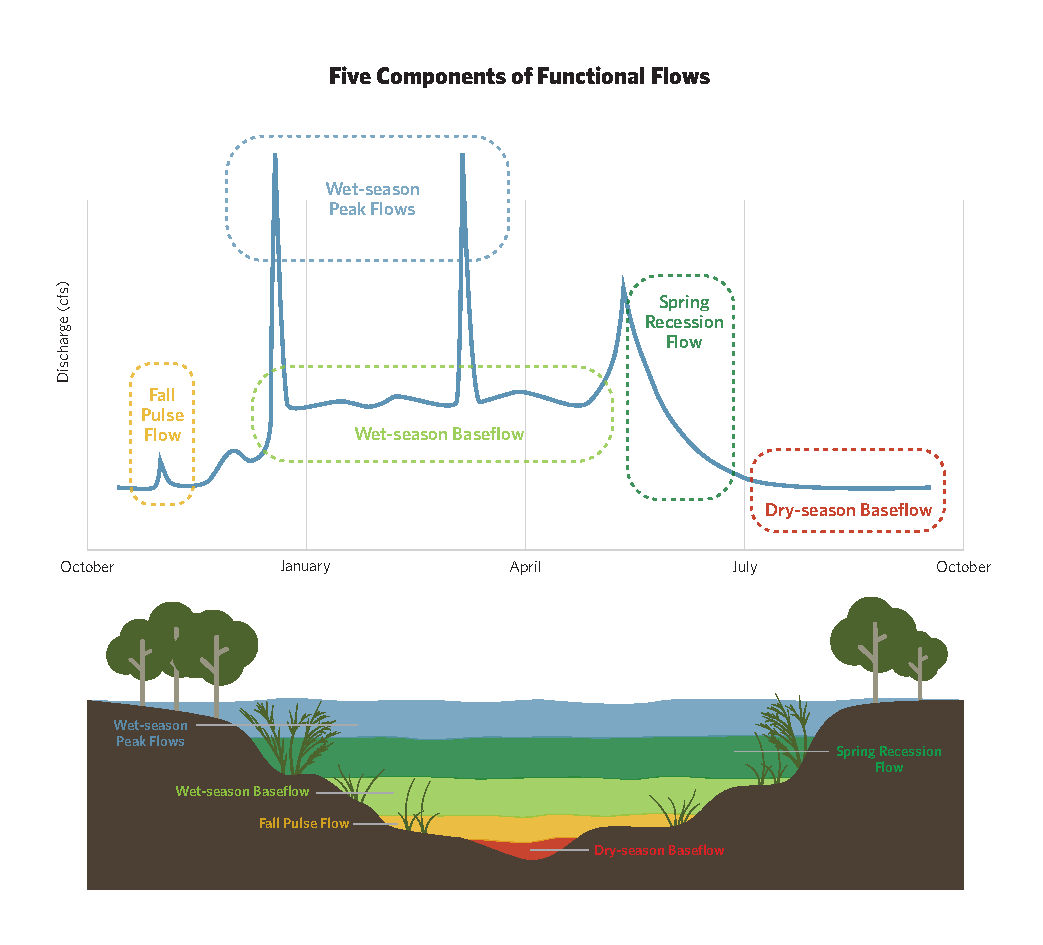
Figure 1: Five components of functional flows (UC Davis, CEFF) https://ceff.ucdavis.edu/functional-flows-approach
Given that the Study was limited to the wet season (November 1 – June 15), it only considered reservoir reoperation strategies that prioritized in-stream environmental flows during wet-season peak flows, wet-season baseflows, and spring recession flows. Each of these stages is essential for streambed health, nutrient flushing, and the formation of suitable salmonid habitat. The Study also modeled the habitat impacts of some limited off-channel restoration that would be seasonally inundated with floodwater.
Salmon Habitat
Salmon are a keystone species and an important indicator of river and watershed health. The conditions that support healthy salmon populations can also help streams remain resilient through both wet and dry extremes. To analyze how the I-FIRM approach, along with modeled recharge diversions from the dams, affected salmonid species, key metrics were established in the Study.
- Instream spawning and rearing habitat requires low river flows to provide valuable habitat, since higher flows flush out eggs and smolts (young salmon).
- Off-channel rearing habitat relies on extended, high river flows so that water can jump riverbanks and inundate floodplains for at least 2 weeks to build up the food chain that young fish rely on before their long journey to the ocean.
- Instream flow for juvenile emigration also requires high river flows.
Summary of I-FIRM model results compared to baseline conditions:
Salmon need different conditions – both low and high flows – at different times of their lives. Reservoir reoperations under the I-FIRM strategy can help to shape river flows for the habitat needs of different life stages of salmonids. In the Study results, instream spawning and rearing habitat was slightly improved in most of the rivers due to lower river flows from recharge diversions. However, off-channel habitat in most of the rivers was reduced due to recharge diversions, even with CEFF-informed dam releases. Some restoration between the levees helped partially compensate for less floodplain activation.
The temperature of water is another key factor for salmon survival that was not modeled in the Study but could be explored more, especially since model results showed about half of the recharged water eventually returned to the streams and rivers, potentially cooling that water in the process.
Shorebird Habitat
California’s Central Valley is an important flyway for numerous migratory bird species. Managed inundation of seasonally flooded wetlands and cropland provides important plant and invertebrate foods for waterbirds during the wintering period. The Study set aside some acreage for shorebird habitat and, when water was available, modeled flooding of these areas as part of the reservoir reoperation strategy in the I-FIRM scenario. As a result, the average yearly acreage of new suitable shorebird habitat ranged from 26 acres (in Stanislaus) to 376 acres (in Tuolumne) across the five watersheds.
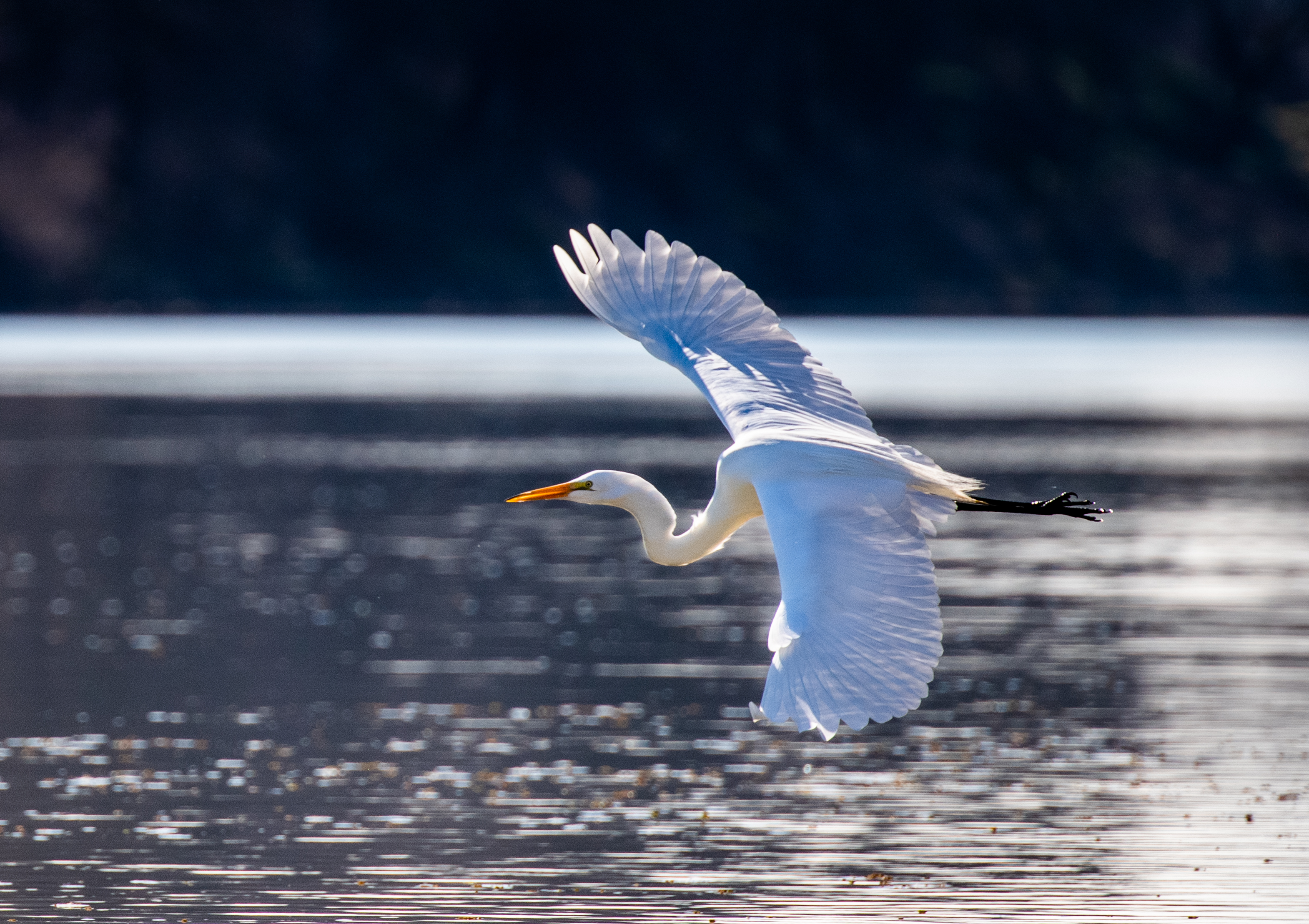
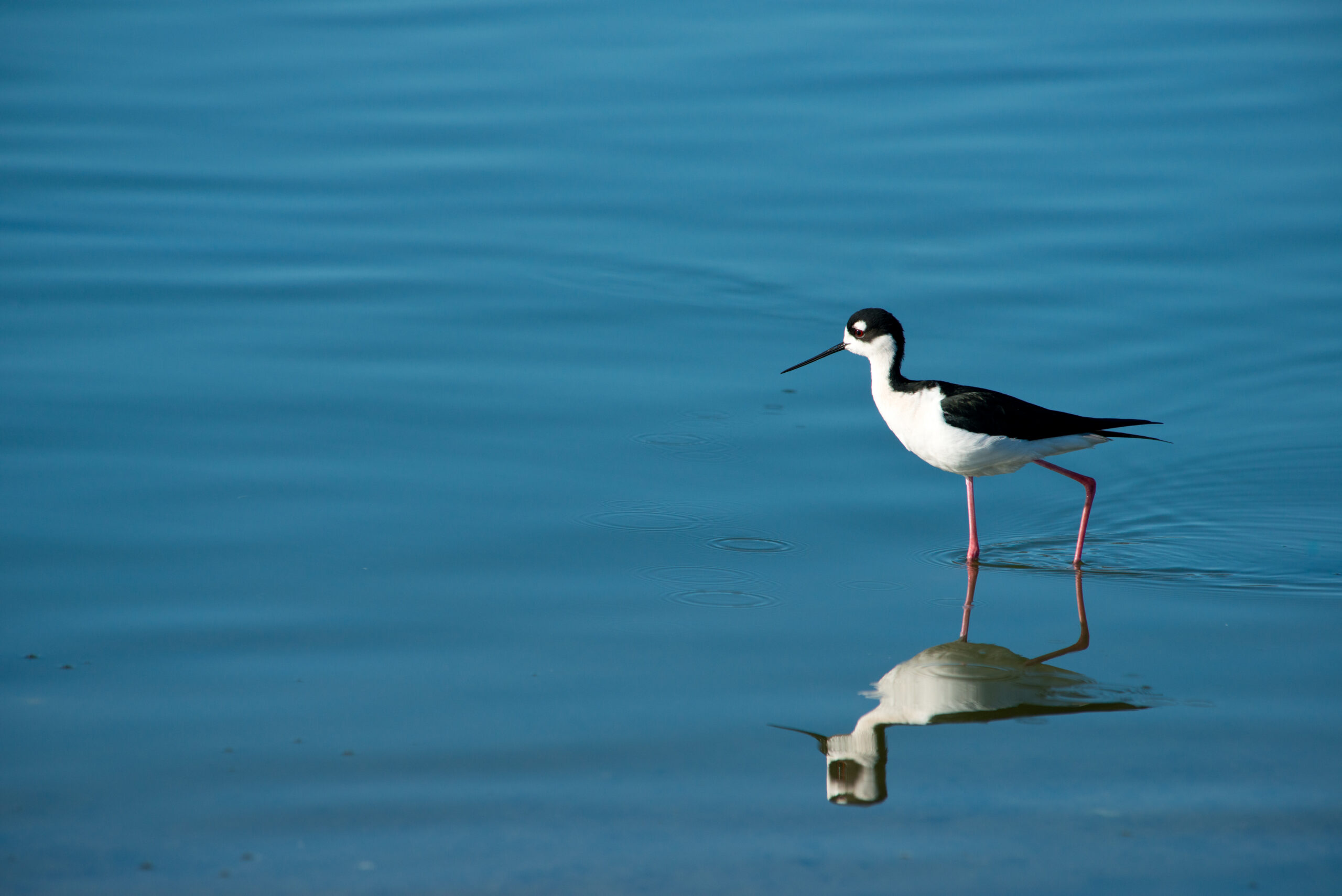
Photos of California shorebirds, courtesy of DWR
Flow-Through Basins
A flow-through basin (FTB) is a small floodplain or recharge basin located adjacent to small creeks and rivers. When properly sited and designed, FTBs can provide multiple benefits, such as shaving off floodwater from small creeks, thereby reducing peak storm flows and allowing the water to sit in the basin and recharge groundwater. FTBs can also enhance habitat when designed with ecological benefits in mind.
FTBs were included in the I-FIRM scenario of the Study as a multibenefit strategy. The Study simulated the placement of FTBs in several creeks in each watershed, and the 100-year model run showed the following effects from FTBs compared to the baseline scenario:
- Peak storm flows on small creeks were reduced between 17-71%, with an average reduction of 50%.
- In years when FTBs received water, between 46 and 4,836 acre-feet (AF) of water were recharged per year, depending on the creek, with an average of 1,280 AF recharged per creek per year.
- FTBs provided anywhere from 1.7 to 16.3 km of connected habitat along creeks.
The model results show that FTBs are an effective climate adaptation strategy that mimics natural floodplain processes to reduce peak storm flows, improve habitat, and recharge groundwater.
Summary
The I-FIRM strategy in the Watershed Studies includes several ways to support salmon and other wildlife, from reservoir releases timed with important life stages of salmon to creating more habitat through river restoration, shorebird habitat, and flow-through basins. Although some improvements to ecosystems are shown in the model results, much more could be done to improve habitat conditions for local and migratory species. Water agencies and communities can use their local watershed study results to further adjust strategies to meet their ecological goals, such as reducing recharge diversions at key life stages of salmon, exploring river restoration, and devoting more acreage to habitat.
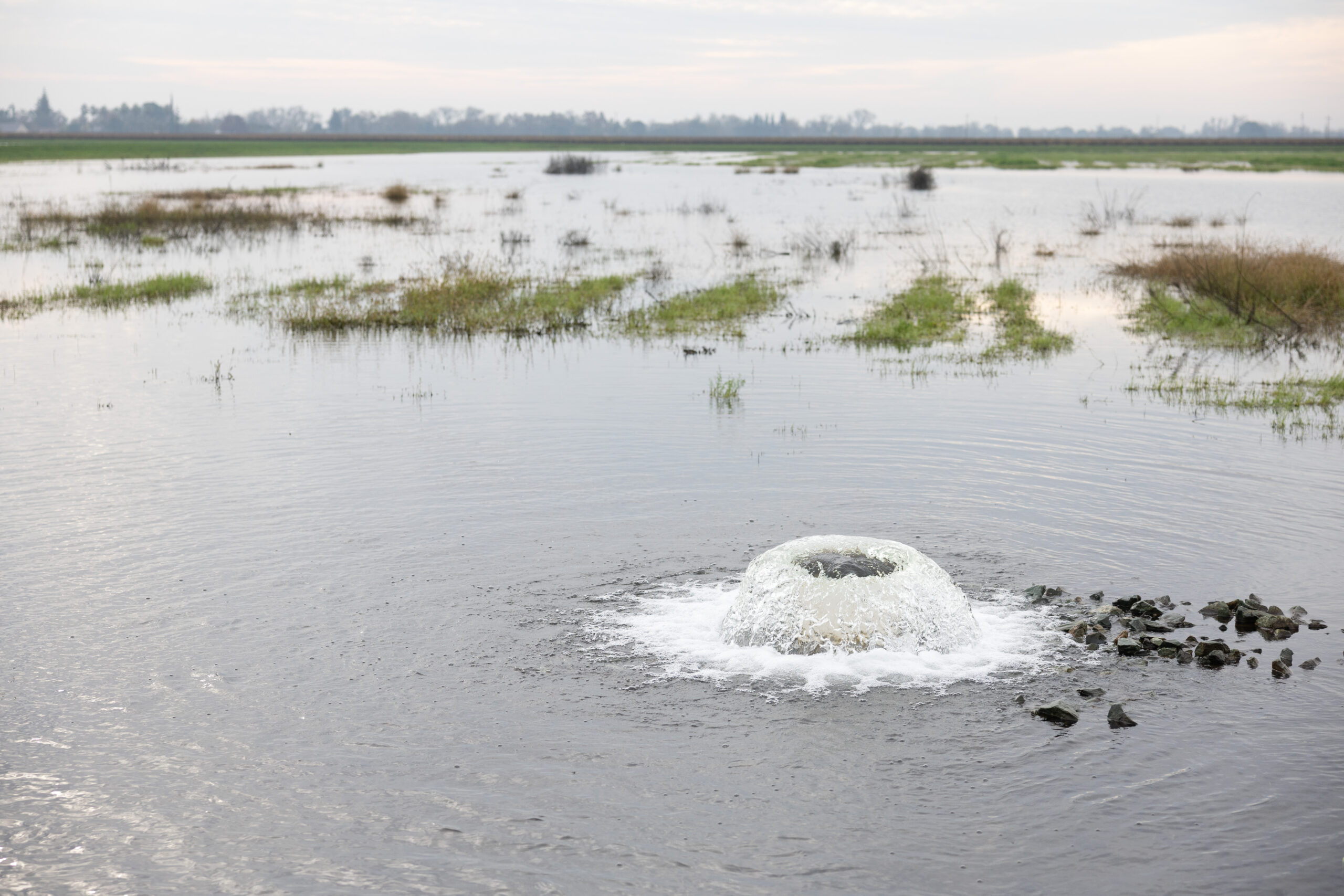
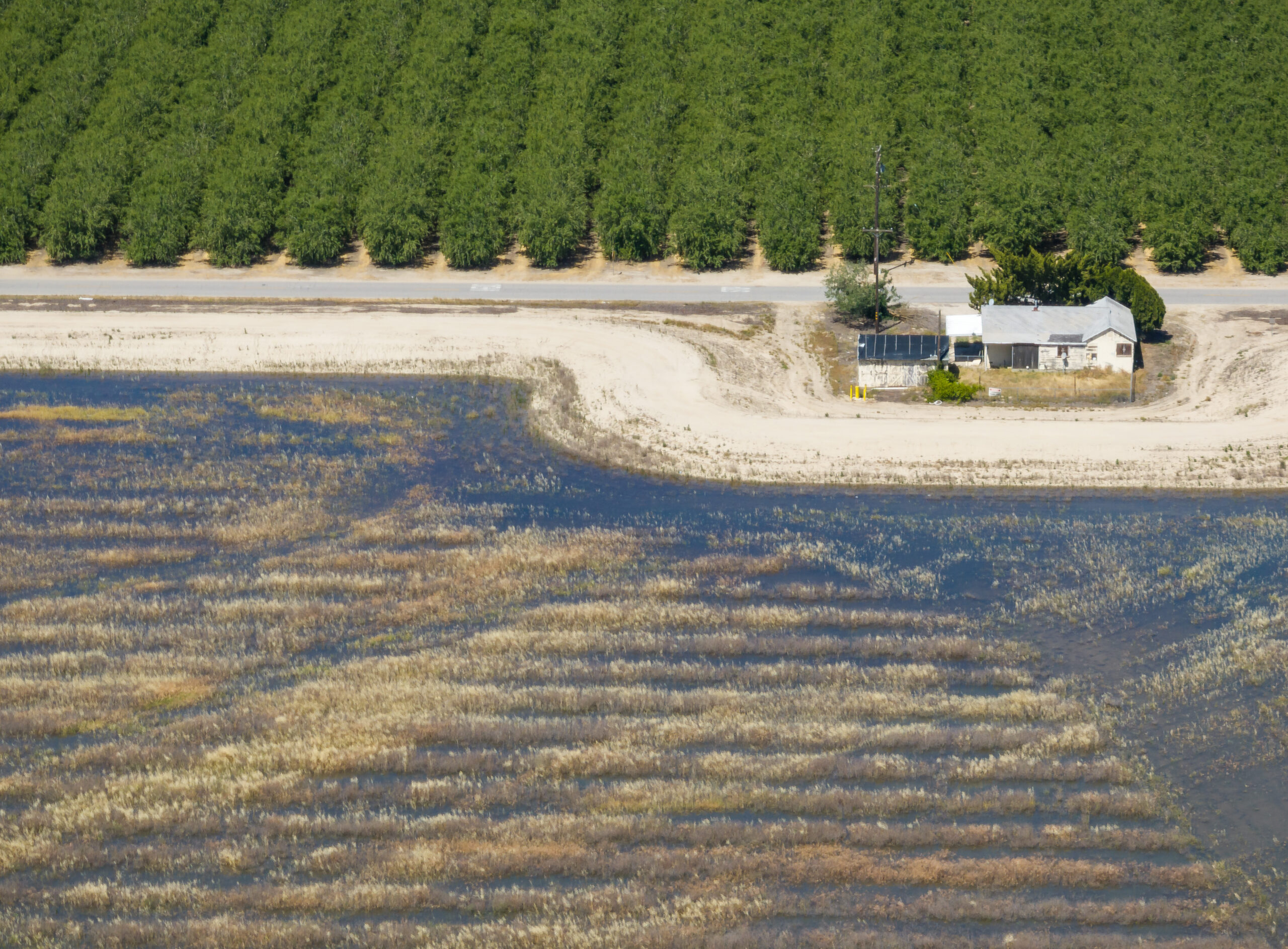
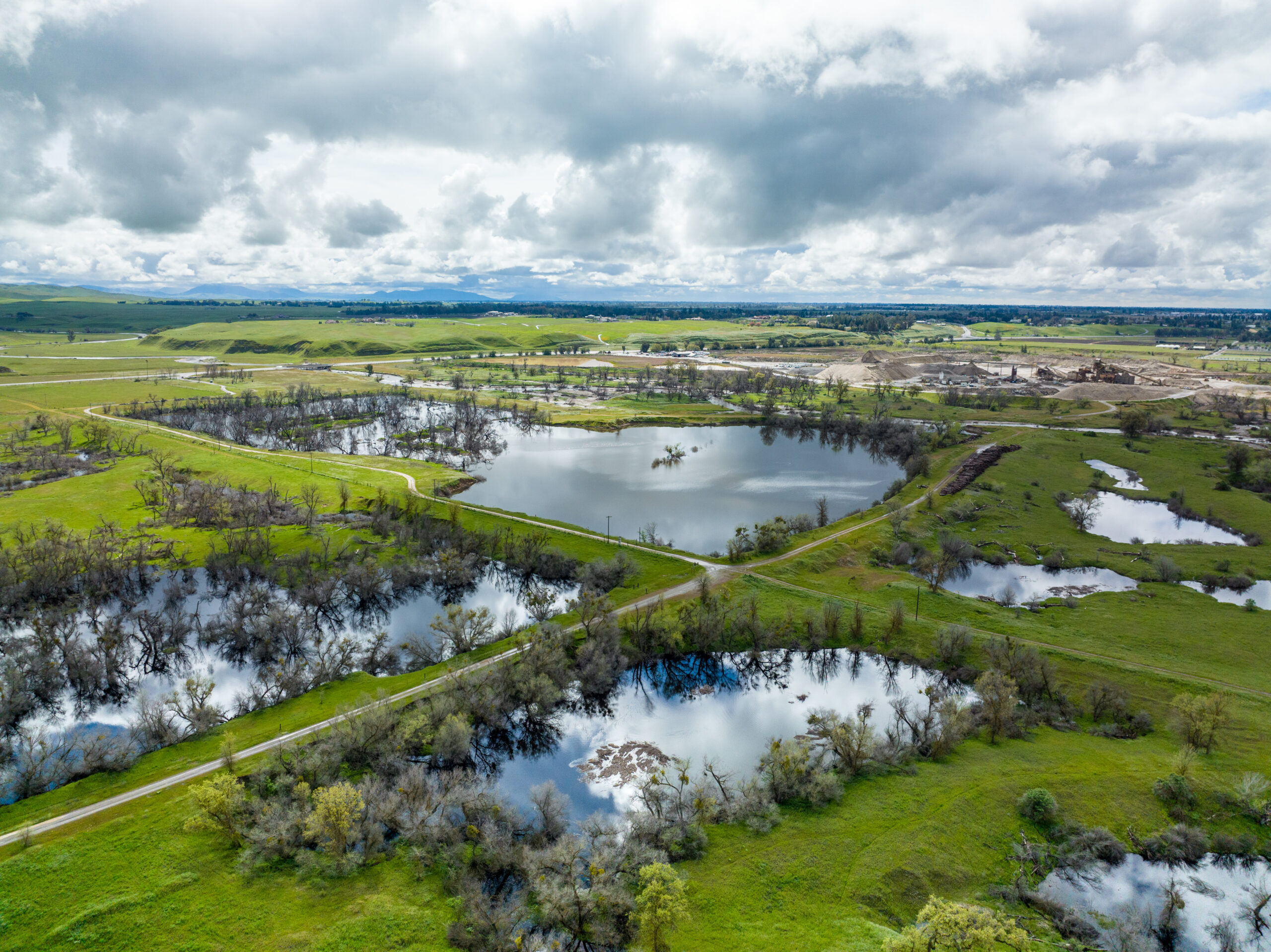
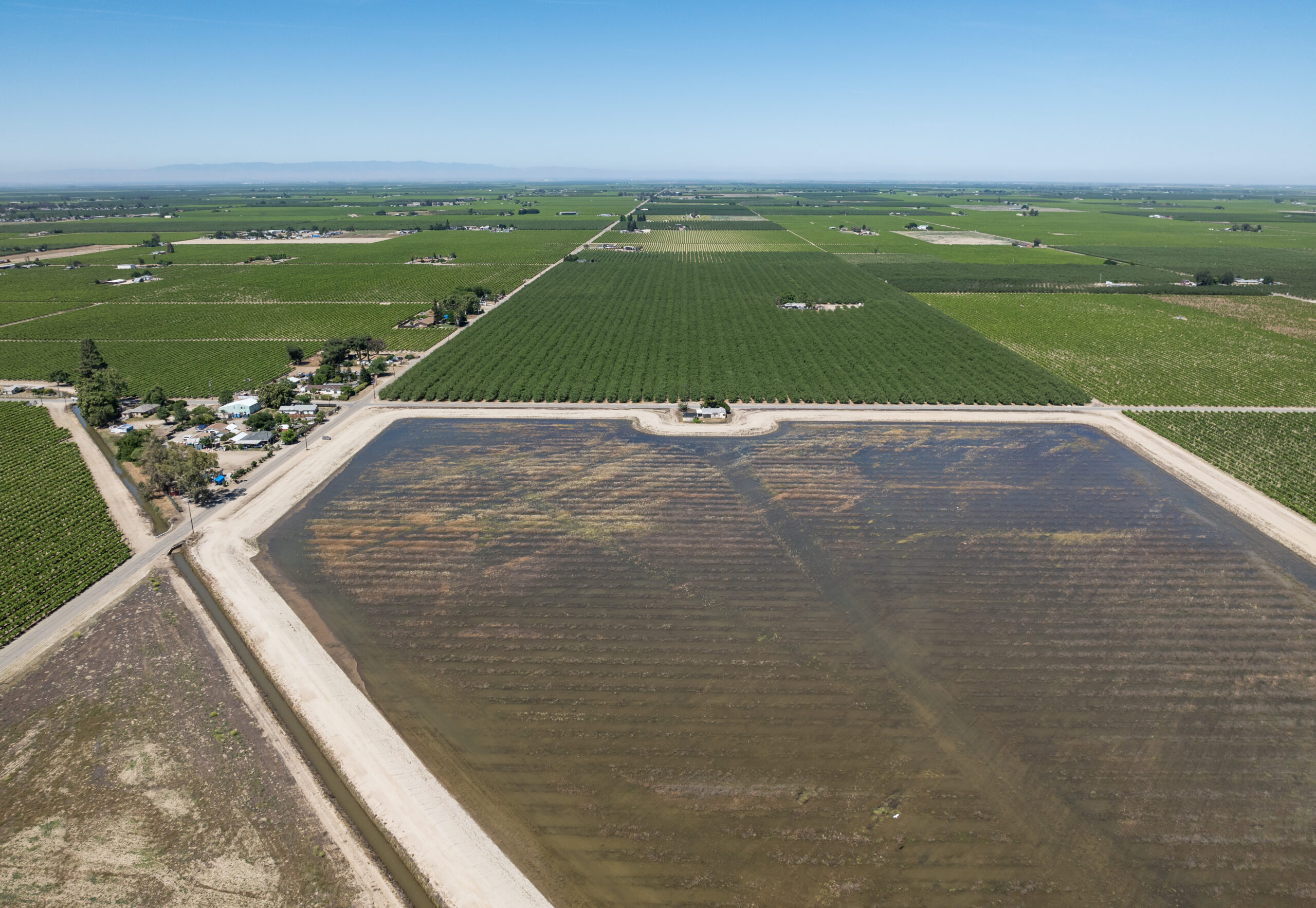
Photos of Flood-MAR. All photos courtesy of DWR