- Riparian zones (the thin ribbons of green along riverbanks) are California’s most wildlife-dense habitats, supporting over 225 species of birds, mammals, and reptiles.
Read full summary ▾
- Over the last 100 years, development and river regulation have destroyed between 90% and 95% of these critical corridors.
- Investing in riverbank restoration is a pragmatic alternative to concrete levees; natural infrastructure can save up to $248 billion globally compared to traditional “grey” solutions.
- Beyond wildlife, healthy riparian zones act as an “overflow valve” for floods, saving lives and preventing millions in property damage during extreme weather.
We talk about the specific techniques used to bring these ecosystems back to life, ranging from passive strategies like removing livestock fences to active bioengineering using bundles of live willow branches. And we look at why riparian zones are the most effective tool we have for building drought resilience and recharging California’s groundwater.
If you look at a satellite map of California’s Central Valley, you’ll notice that the land is mostly golden brown, but running through it are thin green lines that follow every river and creek. Those are riparian zones: strips of vegetation that grow along the banks.
Riparian zones cover only a small fraction of the state’s total land area, yet researchers consider them California’s most wildlife-dense habitat, home to over 135 bird species and nearly 90 additional mammals, reptiles, amphibians, and invertebrates that depend on them for food and shelter. The unfortunate reality is that we’ve lost a staggering 90% to 95% of these vibrant corridors over the last century due to development and river regulation.
Sustainable Conservation is changing that story. As a convener working at the intersection of agriculture and the environment, we believe that bringing these ecosystems back to life is the most pragmatic way to secure a climate-resilient future for every Californian.
- Riparian restoration definition
- What are riparian zones? Four interconnected systems
- Why are riparian ecosystems important?
- What are the most common riparian restoration techniques?
- What are the benefits of successful riparian restoration?
- Why California’s riparian habitats are under threat
- Frequently asked questions (FAQs)
Riparian restoration definition
Riparian restoration is the process of helping damaged riverbanks and stream zones heal. Riparian zones are the narrow strips of land bordering water that support incredible biodiversity and keep our water clean. In California, restoring these areas is a primary way we protect our shared natural resources.
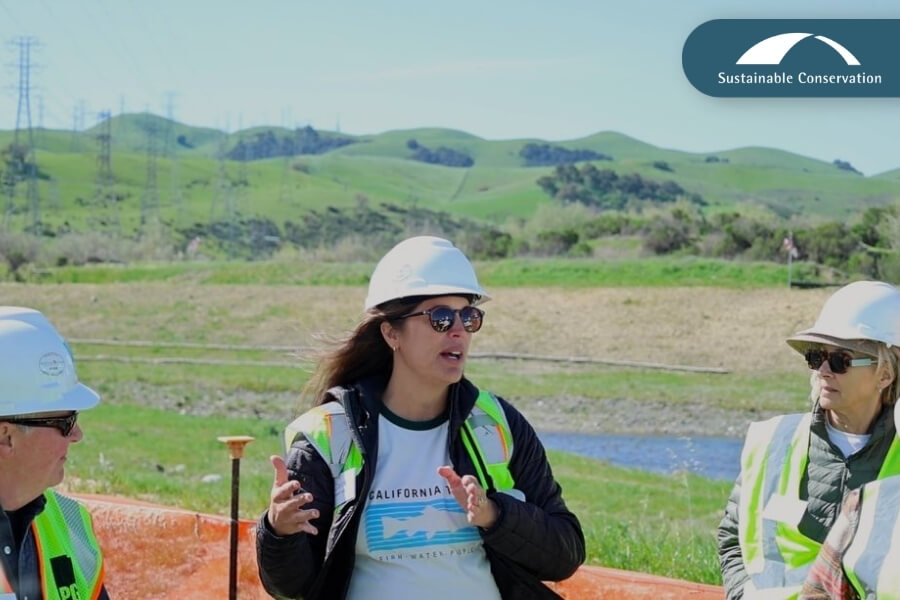
Riparian restoration vs. rehabilitation
These terms are often used interchangeably, but they describe different goals:
- Restoration usually aims to bring a site back to its original, natural state.
- Rehabilitation focuses on fixing the most important functions of the land, even if it doesn’t look exactly like it did centuries ago.
Passive riparian restoration vs. active restoration
How degraded a site is determines how much intervention it needs:
- Passive restoration removes the source of damage, like taking out a fence that allows livestock into the riparian zone, redirecting a drainage pipe, or halting a disruptive land use, and allows the site to recover on its own.
- Active restoration is required when the damage runs too deep for natural recovery. That means physical intervention: re-contouring eroded banks, removing established invasive species, and planting native vegetation. It’s more resource-intensive but necessary when soil seed banks are depleted, invasive species dominate, or hydrology has been significantly altered.
- Assisted Natural Regeneration (ANR) sits between the two. It removes stressors and provides targeted support like spot-planting or irrigation without full-scale revegetation. It can cost significantly less than active planting and may produce favorable biodiversity outcomes where soil conditions support it.
The right approach depends on the site, such as how degraded it is, what resources are available, and how much the land can do on its own. Many projects end up mixing all three.
What are riparian zones? Four interconnected systems
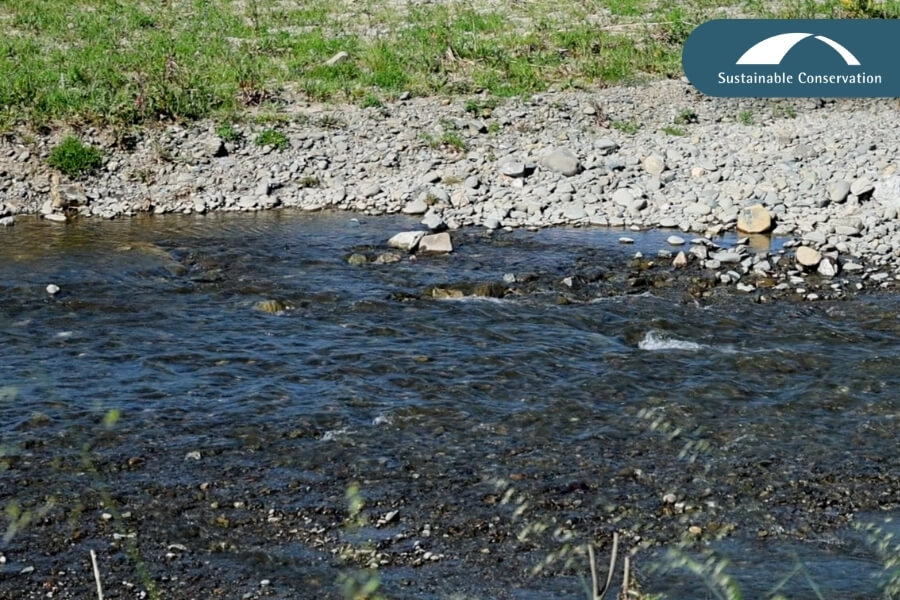
A riparian zone is the living border between land and water. It’s a transition area where the soil is moist, the plants are thirsty, and the wildlife is abundant. These zones act as a buffer between the surrounding landscape and the waterway itself, intercepting runoff, filtering out pollutants, holding soil in place, and slowing floodwaters before they reach the stream.
Water systems and natural flood cycles
In a healthy system, a river isn’t stuck in a straight, narrow channel, and instead has room to breathe. When the big winter rains hit California, a natural riparian zone allows water to spill over its banks and spread out across the floodplain. This process slows the water down, which reduces the destructive power of floods downstream.
Native vegetation and habitat structure
In riparian zones, you’ll see thickets of willow, towering cottonwoods, and sturdy valley oaks. Their roots act like an underground web, knitting the soil together so it doesn’t wash away during a storm. Above ground, their branches provide shade that keeps water temperatures cool enough for fish like salmon to survive.
Recent 2025 USGS data indicate that high native vegetation cover (over 50%) is a critical indicator for the presence of endangered species like the Least Bell’s Vireo.
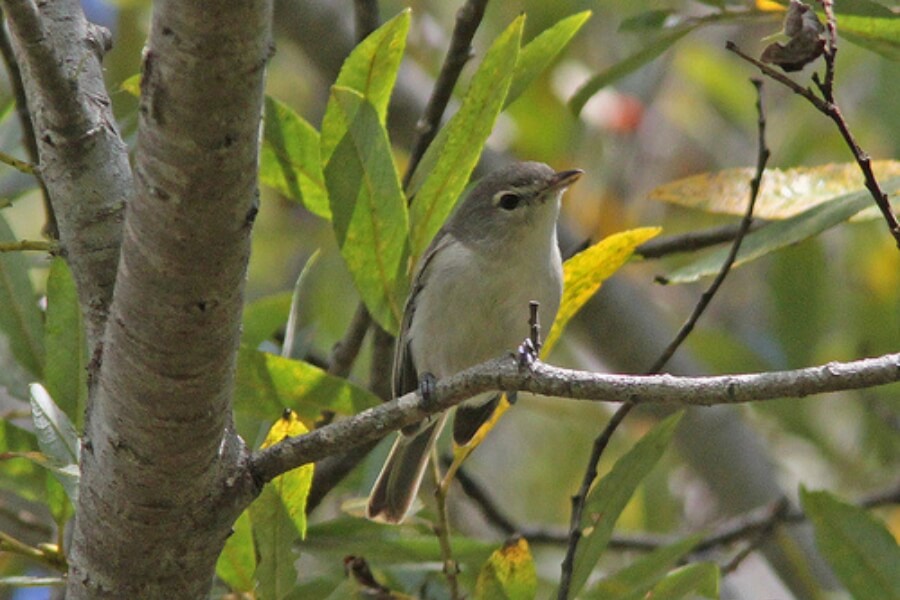
Wildlife communities supported by riparian corridors
If you’re looking for wildlife in California, the riparian zone is where the action is. Birds use them for nesting and migration, while mammals like deer and bobcats follow them to find water and cover. Even the smallest insects in the leaf litter play a role, feeding the fish in the stream and the birds in the trees.
Soil, groundwater, and nutrient exchange
There’s a lot happening beneath the surface, too. As water moves through the riparian soil, it gets filtered. Contaminants and excess nutrients are stripped out before they can reach the deeper groundwater. At the same time, these zones help “recharge” our aquifers. The water that slows down in the floodplain seeps into the earth, replenishing the supplies we rely on during the dry months.
Recent studies show that soil chemical properties, including organic carbon and base saturation, recover gradually along a restoration trajectory, significantly improving microbial efficiency over time.
Why are riparian ecosystems important?
It’s easy to overlook a muddy riverbank, but the services these areas provide are worth billions when you consider the cost of replacing them with man-made infrastructure. Research suggests that natural infrastructure can save up to $248 billion globally compared to traditional “grey” infrastructure like concrete levees.
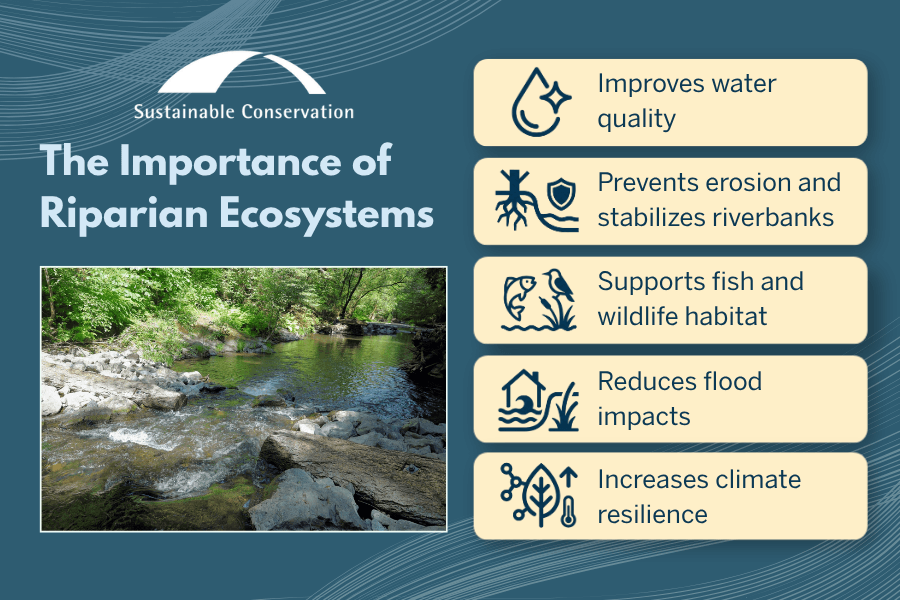
These are the reasons why protecting riparian ecosystems is important:
Improving water quality
When runoff from roads or fields flows toward a river, the thick vegetation and soil in the riparian zone catch the pollutants. Nitrogen and phosphorus, which can cause toxic algae blooms, are often absorbed by the plants before they ever hit the water. Restored wetlands effectively manage nitrogen removal through complex plant-soil interactions, providing a cleaner water source for people and wildlife alike.
Preventing erosion and stabilizing riverbanks
Without the deep, complex root systems of native trees and shrubs, riverbanks crumble. This leads to tons of sediment clogging our waterways and destroying fish spawning grounds. A healthy riparian zone keeps the land where it belongs, protecting property and preserving the integrity of the river itself.
Supporting fish and wildlife habitat
For many of California’s iconic species, these zones are non-negotiable. Cold-water fish need the shade from overhanging trees to keep from overheating in the summer. Migratory birds need dense cover for protection from predators. Without these strips of habitat, our state’s biodiversity would take a massive hit.
Reducing flood impacts
We often try to control floods with concrete levees, but nature has a better design. By allowing water to slow down and spread into riparian areas, we take the pressure off our infrastructure. This natural “overflow valve” saves lives and prevents millions of dollars in property damage when the weather gets extreme.
Capturing carbon and increasing climate resilience
As we face a changing climate, these green corridors are more important than ever. The lush vegetation is incredible at pulling carbon out of the atmosphere and storing it in wood and soil. Plus, by keeping water in the landscape longer, riparian zones help the entire ecosystem stay resilient during the long, hot droughts that are becoming a hallmark of California life.
Ninety percent of California’s imperiled species live on private land, which means protecting riparian habitat at scale requires working with the people who own it. Sustainable Conservation directly addresses this.
Through policy work like the Habitat Restoration and Enhancement Act, we’ve helped establish streamlined permits that have sped up voluntary restoration along California’s entire 1,000-mile coastline. On the ground, that translates to projects like the Sunol Valley Fish Passage Project, which is helping restore the 700-square-mile Alameda Creek watershed, and collaborative efforts on the Scott River that have restored salmon habitat while helping farmers conserve water.
Stay updated on California’s water future. Subscribe to our newsletter for the latest insights on riparian restoration, sustainable farming, and collaborative solutions that work for nature and people.
Subscribe to our newsletterWhat are the most common riparian restoration techniques?
Riparian restoration draws from a core set of techniques that are combined differently depending on site conditions. Below, we discuss how each one works and when it’s used.
Revegetation with native species
Revegetation is the most visible part of restoration, but species selection is what determines whether it succeeds. Native plants are chosen because they’ve co-evolved with local hydrology, soil chemistry, and wildlife over thousands of years. An introduced species, even a non-invasive one, can’t replicate those relationships.
In practice, restoration ecologists usually sequence planting in two layers:
- Fast-growing pioneer species like willows and Fremont cottonwoods go in first because they establish quickly, stabilize soil with their root systems, and provide immediate canopy shade that cools the water for fish.
- Long-lived structural species like Valley Oaks are planted alongside them to form the mature canopy over decades.
Establishment usually requires irrigation support in the first one to three growing seasons, after which well-placed native plants can typically sustain themselves on seasonal rainfall and shallow groundwater.
Invasive species management
Invasive plants are the single most common reason revegetation fails. Species like giant reed (Arundo donax) and tamarisk (Saltcedar), aside from competing with native seedlings, also fundamentally alter site conditions.
Arundo, for example, consumes two to three times more water than native riparian vegetation, drawing down the shallow groundwater that willows and cottonwoods depend on. It also accumulates flammable biomass that increases wildfire risk along the waterway.
Removal methods depend on the species and site, but might include:
- Mechanical cutting
- Targeted herbicide application
- Biological controls like introducing a natural predator or parasite to suppress the invasive plant without harming native species
But removal is only half the work. Without a sustained management plan, invasive species reestablish quickly from root fragments and seed banks before the native canopy is dense enough to shade them out. Effective programs treat removal and monitoring as a multi-year commitment.
Streambank stabilization and bioengineering
When a bank is actively collapsing, the conventional response has been to armor it with concrete or riprap. Hard armoring stops erosion in the short term, but it eliminates habitat, prevents natural sediment exchange, and often accelerates erosion on adjacent unprotected reaches by redirecting water energy.
Bioengineering uses live or natural materials to achieve the same stabilization goal while restoring ecological function. Fascines (bundles of dormant willow branches) are staked horizontally into eroding banks, where they root and knit the soil together from within. Live stakes, brush layering, and root wads (intact root masses from fallen trees) are used depending on the severity of erosion and the bank’s geometry.
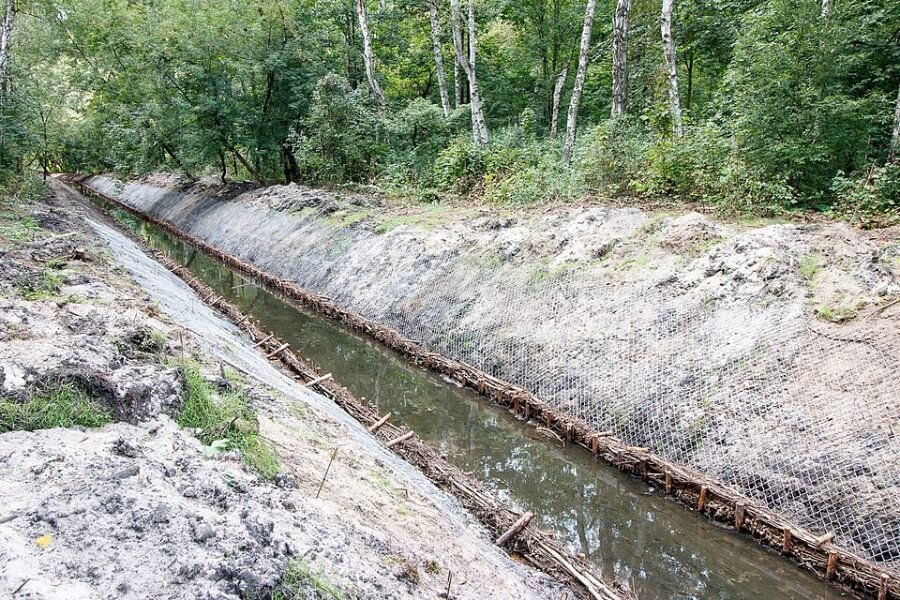
Dariusz Kowalczyk, CC BY-SA 4.0, via Wikimedia Commons.
Since these materials are alive or become living over time, they strengthen as the root systems grow, adapting to the bank’s natural movement in a way that rigid concrete cannot.
Floodplain reconnection and levee setbacks
Many of California’s rivers have been disconnected from their natural floodplains by levees built close to the water’s edge, which is a design that prioritizes flood control but eliminates the ecological and hydrological functions the floodplain once provided.
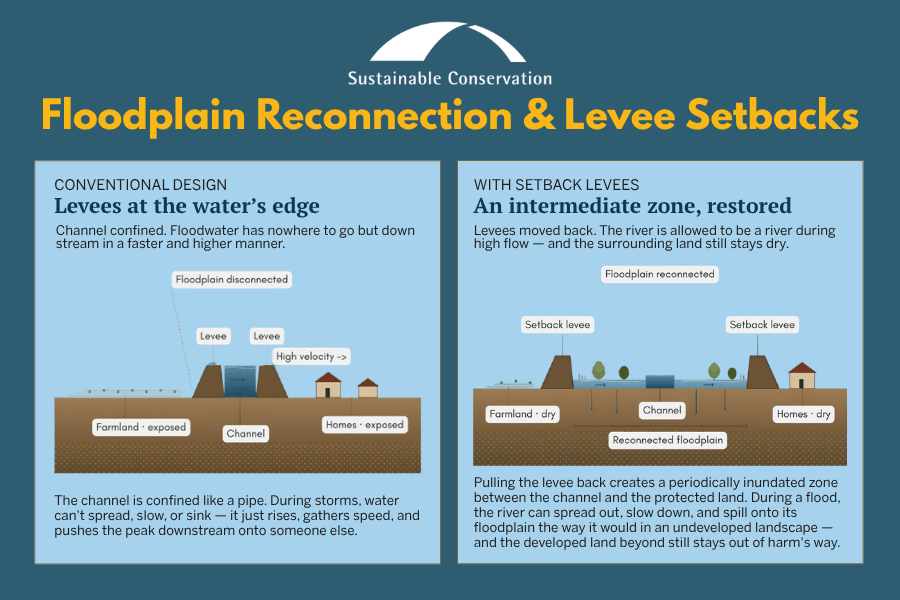
Levee setbacks move flood infrastructure further from the channel, restoring an intermediate zone where the river can safely expand during high-flow events. This reconnection serves several functions simultaneously:
- It slows floodwater velocity, which reduces downstream flood peaks.
- It lets water percolate into the soil, recharging the aquifers that farms and communities draw from during dry months.
- It recreates the dynamic, periodically inundated habitat that native riparian species depend on.
When sited correctly, setbacks can deliver these outcomes without increasing flood exposure to adjacent agricultural or residential land.
What are the benefits of successful riparian restoration?
When riparian restoration is done right, the benefits extend well beyond the riverbank and well into communities, economies, and species that depend on healthy waterways.
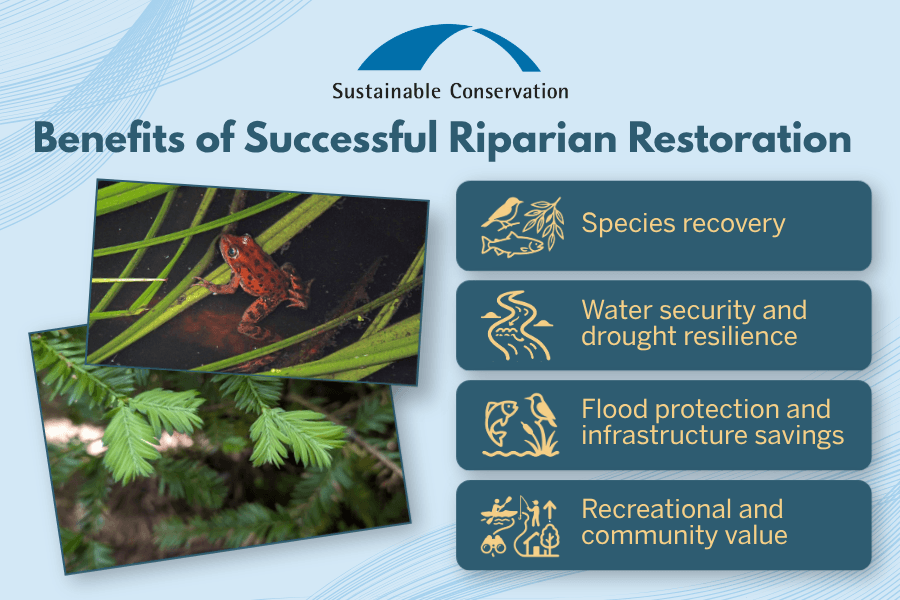
- Species recovery. For California’s most at-risk wildlife, riparian zones are often their last remaining habitat. Chinook salmon depend on cool, shaded waterways to complete their lifecycle, and restoring mixed willow riparian habitat remains the single most effective intervention for species like the Least Bell’s Vireo, whose populations track closely with riparian condition.
- Water security and drought resilience. Healthy riparian zones slow water down and hold it in the landscape longer. That means streams keep flowing later into the dry season, and water that would otherwise run off the surface seeps into the ground, replenishing the aquifers California farms and communities draw from during drought.
- Flood protection and infrastructure savings. A functioning riparian buffer absorbs and slows floodwater before it becomes destructive downstream. It also filters sediment and pollutants that would otherwise clog reservoirs or require expensive treatment. Techno-economic analyses confirm that when ecological benefits are factored into financial models, the return on restoration investment is consistently underestimated by conventional accounting.
- Recreational and community value. Restored rivers are places people use for fishing, kayaking, birdwatching, and access to green space in increasingly urbanized areas. Riparian greenways consistently raise adjacent property values and provide measurable public health benefits in communities that have lost open space.
Why California’s riparian habitats are under threat
Riparian zones sit exactly where human development pressure is highest: along water. That’s where we built our cities, diverted our rivers, and cleared land for farming. Over the years, those decisions removed the vegetation, altered the hydrology, and introduced invasive species that now outcompete natives faster than natural recovery can keep pace with.
Dams and altered river flows
California has one of the most complex water delivery systems in the world. While dams provide water for millions, they also change the heartbeat of a river. When natural seasonal floods are stopped, we also prevent rivers from depositing the silt and seeds that riparian forests need to regenerate.
Ecohydraulic simulations from 2025 demonstrate that reintroducing seasonal flow variation can lead to a sevenfold increase in riparian area compared to static minimum flow regimes.
Agricultural expansion and land conversion
To feed the world, we’ve converted vast stretches of the Central Valley and other regions into highly productive farmland. In many cases, this meant farming right up to the edge of the water. While this boosted our food supply, it often meant removing the very buffers that keep the water clean and the soil stable.
Urban development and infrastructure
As our cities grew, we paved over floodplains and built homes near the water. To protect that development, we straightened rivers and lined them with rock or concrete. This might keep the water in its place for a while, but it kills the biological life of the river and makes the system much more brittle.
Invasive species and ecosystem imbalance
Plants like Arundo (giant reed) and tamarisk have moved in and taken over. These invaders drink way more water than native plants and provide almost no value to local wildlife. They create a monoculture that chokes out the diversity that makes a riparian zone healthy. Additionally, pests like the shothole borer beetle are now actively damaging tall canopy trees in Southern California, further degrading these habitats.
Climate change impacts
Warmer temperatures and more erratic rainfall are pushing these ecosystems to the brink. Longer droughts dry out the soil, making it harder for native seedlings to take root, while more intense storms can rip through degraded banks that no longer have the strength to hold together.
Join us in protecting California’s riparian ecosystems
The science of riparian restoration is well established. What’s lagged behind is the infrastructure to put it into practice: the funding pathways, the regulatory clarity, and the landowner relationships that turn a good project into a completed one.
Sustainable Conservation’s Accelerating Restoration program is closing that gap. Learn how, or stay updated as the work unfolds!
Frequently asked questions (FAQs)
Riparian restoration is the process of repairing and rehabilitating the land and vegetation along the banks of rivers, streams, and other waterways. It usually involves replanting native plants, removing invasive species, and stabilizing eroded banks to rebuild a healthy, functioning streamside ecosystem.
A riparian environment is the green, vegetated corridor you’d find lining the banks of a river, creek, or stream. These areas exist at the transition between aquatic and upland habitats.
Riparian areas are specifically tied to the banks and margins of flowing water like rivers and streams, while wetlands are broader areas where the soil is saturated with water, such as marshes, bogs, or vernal pools, that aren’t necessarily connected to a waterway. The two can overlap, but not all wetlands are riparian, and not all riparian areas are wetlands.
The riparian zone is also commonly called the riparian buffer, streamside zone, or floodplain corridor. Scientists may also refer to it as the riparian ecotone, reflecting its role as a transition zone between land and water.
Riparian areas filter pollutants and sediment before they enter waterways, provide critical habitat for fish, birds, and wildlife, and stabilize streambanks against erosion. They also help recharge groundwater and play a key role in regulating water temperature, which is essential for species like salmon and steelhead trout.